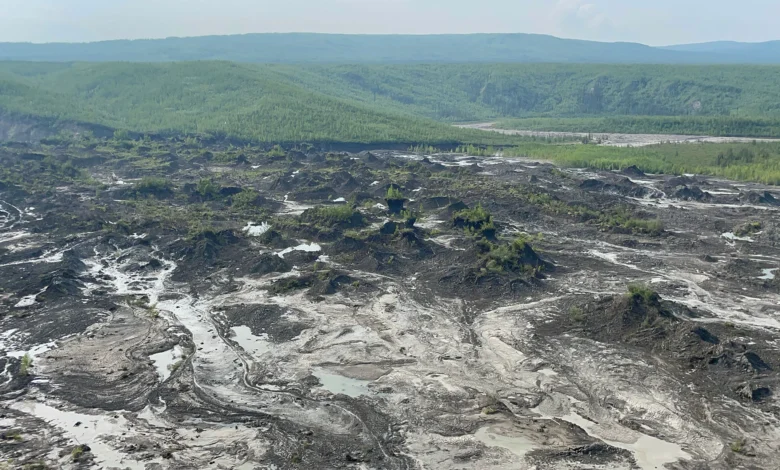
Nearly a decade ago, a helicopter pilot traversing the remote, rugged expanse of Canada’s Northwest Territories observed a sight that defied conventional geological understanding: a massive, sudden landslide that had effectively dammed a river, carving an entirely new lake into the landscape. While landslides are common in mountainous regions, the sheer scale and suddenness of this event signaled something fundamentally different. Researchers have now categorized this phenomenon as a “permafrost detachment slide,” a destructive process that represents a chilling new frontier in the study of climate change and landscape stability.
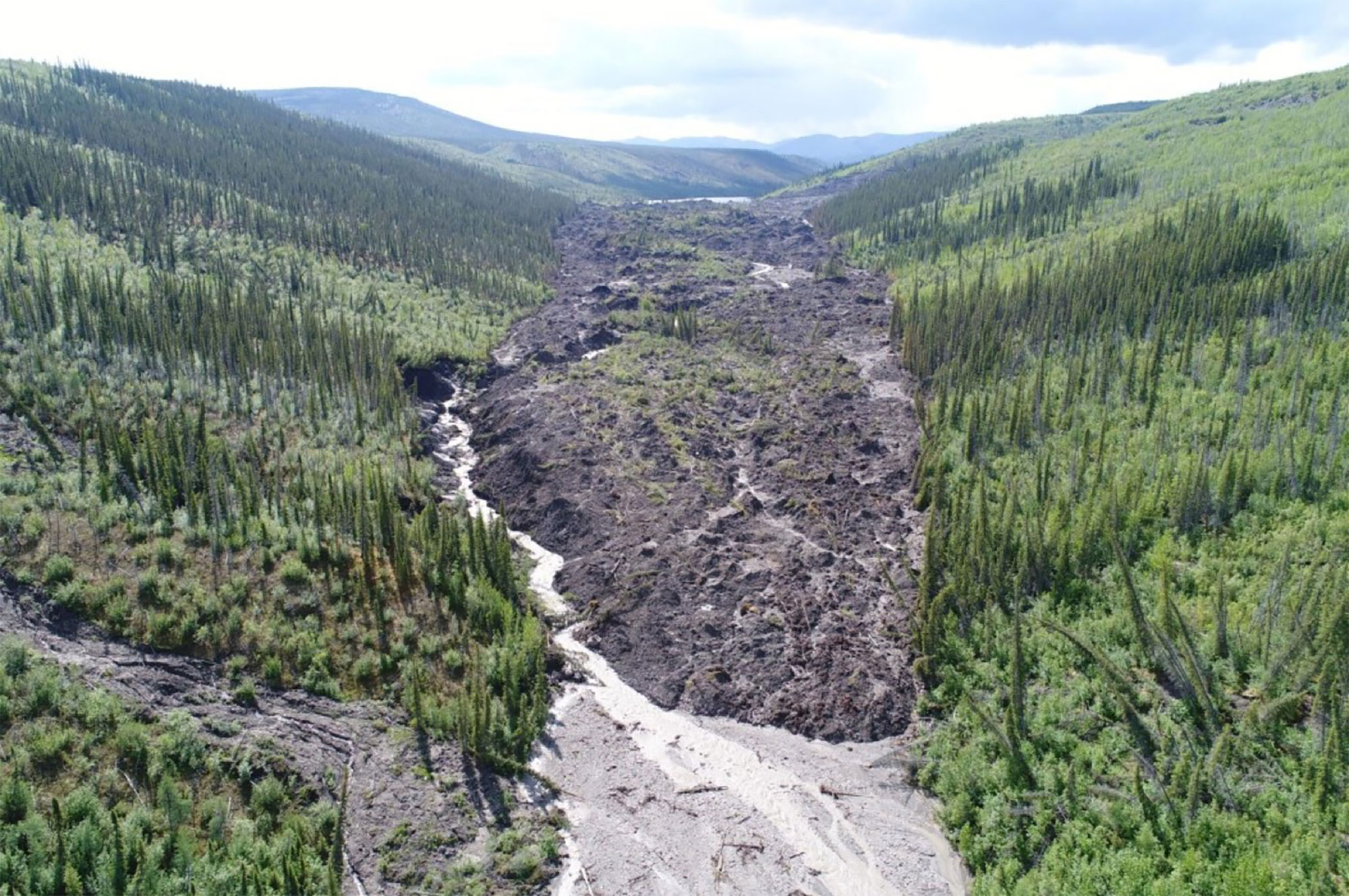
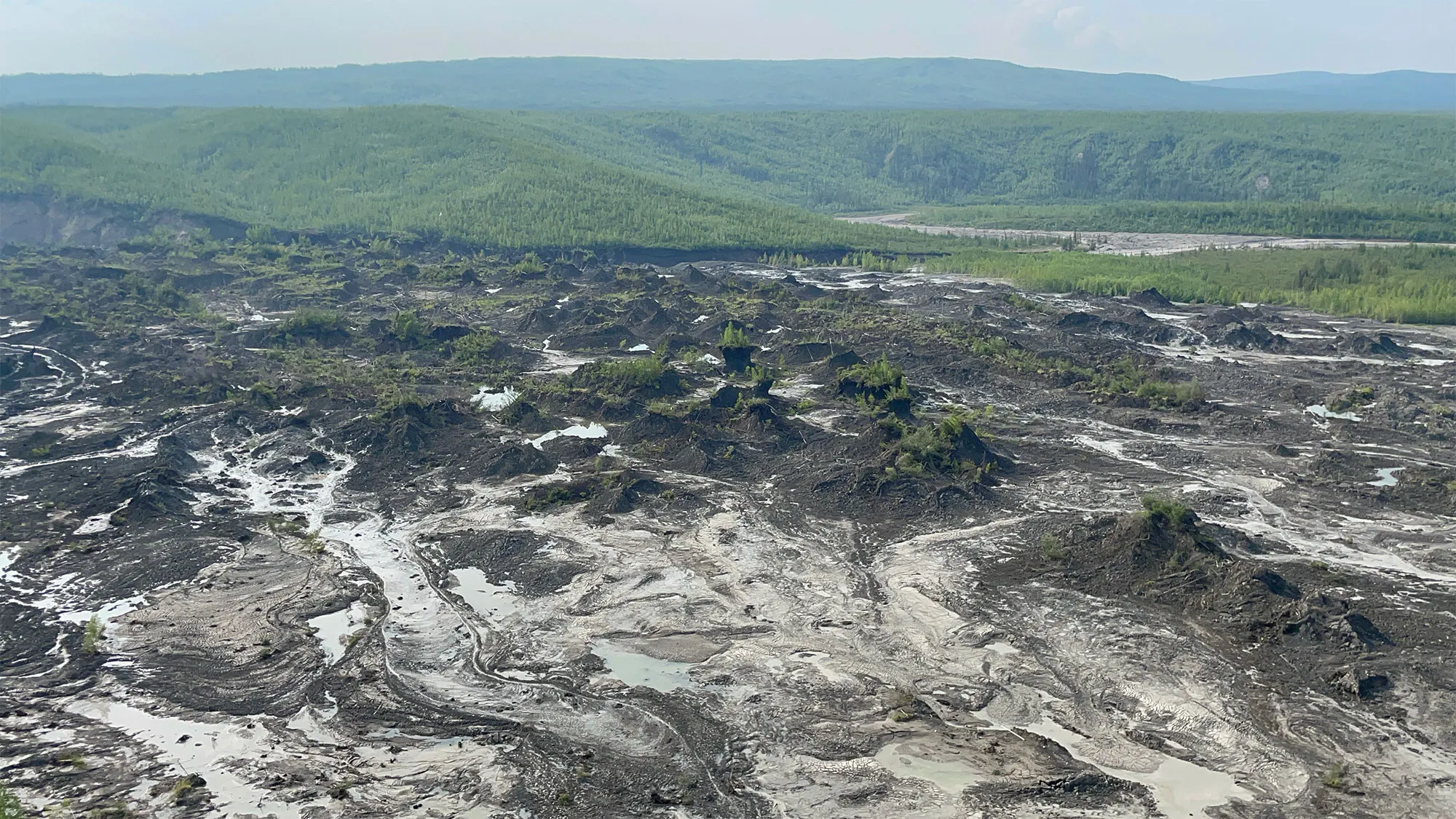
A recent study published in the scientific journal Geophysical Research Letters details two specific, massive events in the region. The first, occurring along the Johnson River in 2017, and the second, along the Redstone River in 2018, together displaced approximately 30 million cubic yards of earth. While traditional landslides are often triggered by surface-level saturation from rainfall or seismic activity, these permafrost detachments are born from the deep-seated degradation of frozen soils, leading to catastrophic structural failure.
A Chronology of Instability
The origins of these landslides trace back much further than their 2017 and 2018 discovery dates. The catalyst, according to the research team led by geoscientist Joseph Young, then of the University of Alberta, was a wildfire that swept through the region in 1995. The fire acted as an ecological tipping point, stripping away the dense vegetation and organic topsoil that provided a critical thermal shield for the permafrost below.
For roughly two decades, the land remained in a state of precarious equilibrium. As the forest cover failed to fully regenerate, the ground’s albedo and insulation properties were permanently altered. The "thermal signature" of the scorched landscape slowly migrated downward. By the second decade, the heat had penetrated to the base of the permafrost layer, creating a subterranean instability that went largely unnoticed.
When the failure finally occurred, it was swift. The researchers found evidence suggesting that the land did not simply erode; it experienced a structural collapse from the bottom up. As the base of the permafrost warmed, tension cracks propagated through the frozen matrix of ice, soil, and organic matter. This allowed surface water to infiltrate deeper, further lubricating the subsurface and causing the land to slide downhill at an accelerating pace—from a few feet annually to as much as 80 feet per year—before the final, sudden detachment occurred in a matter of days or even hours.
The Science of Bottom-Up Failure
The distinction between these detachment slides and more common forms of thermokarst—such as the formation of potholes or smaller slumps—is the depth and mass involved. When the researchers arrived at the sites, they discovered massive, intact blocks of frozen material, some reaching up to 650 feet in length. This is a critical diagnostic finding: had the slide been caused by surface-level melting, the material would have been reduced to a slurry of mud and debris. The presence of these massive, coherent blocks proves that the failure originated deep within the permafrost layer, indicating a systemic structural collapse rather than mere surface degradation.
Vladimir E. Romanovsky, a permafrost geophysicist and professor emeritus at the University of Alaska Fairbanks, draws an apt comparison to the behavior of surging glaciers. "This kind of movement can create its own release of energy because of friction and cracking on the bottom," Romanovsky noted. The landslide essentially acts like a glacier, where the force of gravity and the internal pressure of the frozen mass combine to trigger sudden, high-velocity movement.
The Global Context: A Warming Arctic
The implications of these slides extend far beyond the immediate damage to the Northwest Territories’ geography. Permafrost—ground that remains frozen for at least two consecutive years—acts as one of the planet’s largest carbon reservoirs. It contains millions of tons of ancient organic material, including dead plants and animals that have been locked away for millennia.
The Arctic is currently warming at approximately four times the global average rate. As this vast region, which covers an area two and a half times the size of the continental United States, continues to thaw, the potential for a feedback loop becomes a primary concern for climatologists. When permafrost thaws, microbial activity resumes. Bacteria begin to consume the previously frozen organic matter, releasing carbon dioxide and methane into the atmosphere. This release adds to the global greenhouse gas burden, which in turn leads to further warming and more rapid permafrost degradation.
"It’s a very dramatic manifestation of the changing climate," Young stated. "They’ve only started happening in the last 10 to 15 years, and it’s a very drastic and abrupt change in the landscape."
Secondary Effects and Ecological Feedbacks
The danger does not dissipate once the initial landslide has settled. The act of sliding leaves behind exposed, vertical walls of permafrost that were previously protected by the landscape. These fresh, raw faces of frozen earth are now directly exposed to solar radiation, accelerating the thawing process even further. As Young noted, the occurrence of one failure creates a "potential for more," as the landscape is left in a weakened, highly vulnerable state.
This instability is compounded by the "greening" of the Arctic. As temperatures rise, shrubs and trees are migrating northward, colonizing areas that were once strictly tundra. While this might appear to be a positive development, it creates a dangerous feedback loop. Shrubs tend to trap snow during the winter, which acts as an insulator for the ground. By preventing the deep, penetrating chill of the Arctic winter from reaching the soil, this snow cover hastens the degradation of the underlying permafrost.
Furthermore, the increased vegetation provides more fuel for wildfires. These fires often result in "zombie fires"—blazes that smolder deep within the carbon-rich peat layers, surviving through the winter under the snow, only to reignite when the spring thaw begins. This cycle of fire, thaw, and collapse is now a recognized, albeit poorly quantified, driver of carbon emissions.
Future Research and Policy Implications
The scientific community is currently racing to quantify the carbon contribution of these detachment slides. Because they are a relatively new discovery, current climate models often fail to account for the abruptness and scale of these events. Miriam Jones, a research geologist at the United States Geological Survey, emphasizes that this is a "major global concern" that requires urgent attention.
The primary challenge lies in the unpredictability of the events. While researchers can identify vulnerable zones, they cannot yet pinpoint exactly when and where a detachment will occur. The consensus among experts, including David Olefeldt of the University of Alberta, is that the scientific community should expect more "surprises." As global temperatures continue to push past previous records, the threshold for geological stability in the North is being tested in ways that have not been observed in recorded history.
The detachment slides in the Northwest Territories are more than just isolated geological events; they are a warning of the systemic risks posed by a changing climate. As the frozen foundations of the north begin to shift, they remind us that the Arctic is not a static environment, but a critical, dynamic component of the Earth’s climate system—one that is currently in the midst of a profound and potentially irreversible transition. Addressing this reality requires not only deeper scientific inquiry into these detachment mechanisms but also a broader recognition of how rapidly the Arctic landscape is being reshaped.