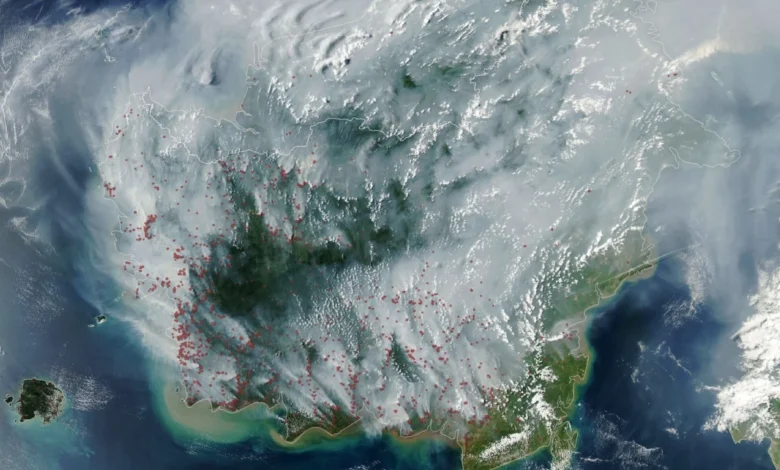
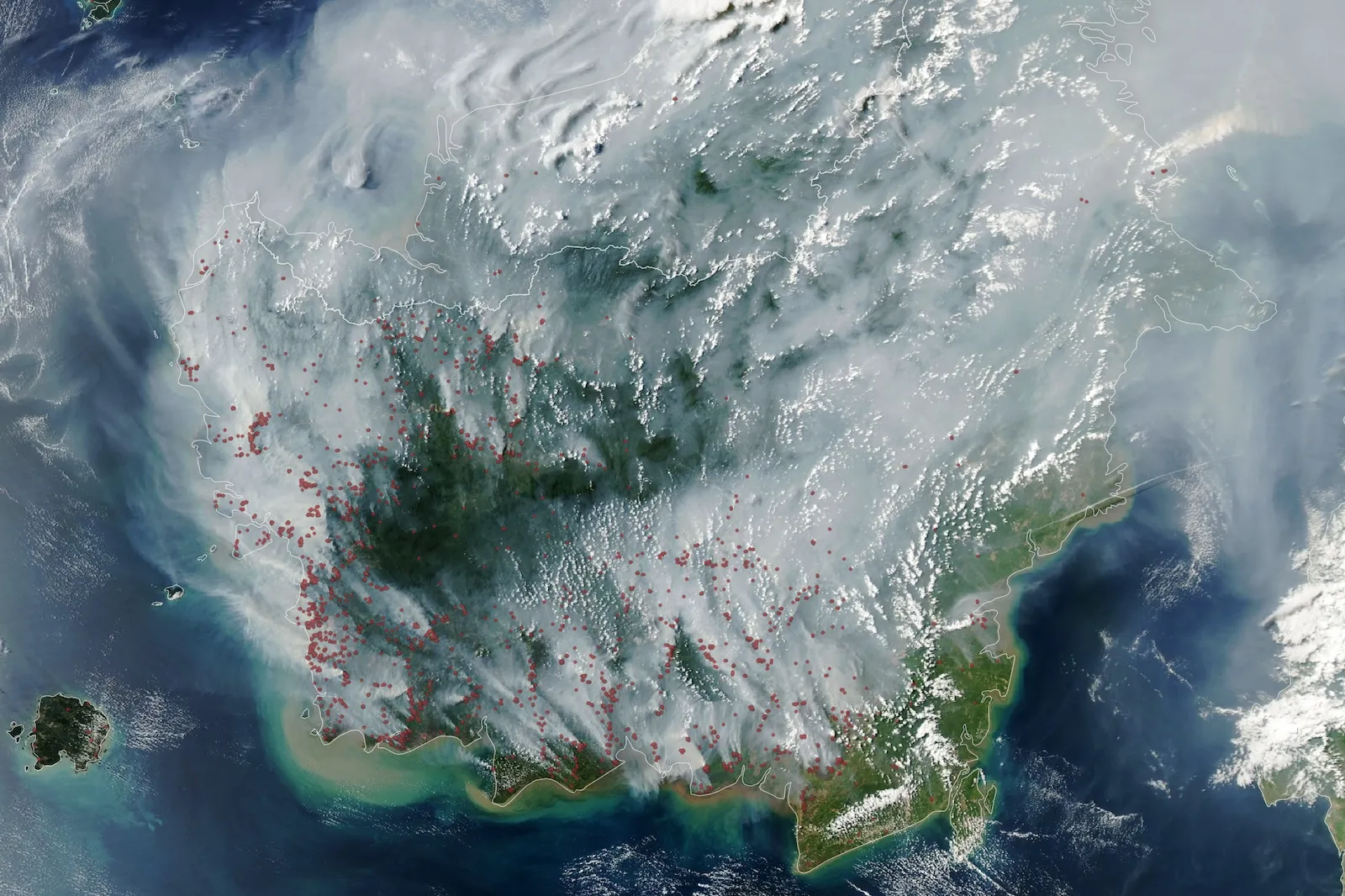
The Republic of Indonesia is currently grappling with a public health and environmental catastrophe of historic proportions. Since August, the nation has witnessed its most severe wildfire season in ten years, with more than 4.6 million acres of land scorched across the archipelago. The crisis has shrouded major island regions—most notably Kalimantan and Sumatra—in a thick, toxic blanket of smoke that has crossed international borders, degrading air quality for millions of people. As the government attempts to suppress the flames, the socioeconomic and ecological toll continues to mount, sparking widespread civil unrest and forcing a re-evaluation of the country’s land management policies.
A Chronology of the Crisis
The current disaster began to take shape earlier this year when climate scientists and government officials identified the emergence of a potent El Niño weather pattern. Historically, El Niño events in Indonesia are synonymous with prolonged, severe droughts that turn the country’s vast peatlands into tinderboxes.
By May 2026, the potential for a catastrophic fire season was already clear. Minister of Forestry Raja Juli Antoni issued a formal warning to the United Nations, emphasizing that the expected length of the dry season necessitated extreme vigilance. Despite these warnings, the situation deteriorated rapidly. By late summer, the fires had moved beyond control, consuming millions of acres of forest and agricultural land. Throughout September, images of exhausted firefighters collapsing in the rain and students protesting in gas masks became symbols of a nation pushed to its limit. The crisis has persisted well into the current season, with persistent, smoldering underground fires defying traditional suppression efforts.
The Science of Peatland Combustion
The volatility of the current situation is largely driven by the unique geological composition of the region. Much of the fire-affected area sits atop peat—a dense, carbon-rich soil composed of partially decayed plant matter. Under normal, water-saturated conditions, peat is a natural carbon sink. However, when the water table drops due to drought, the peat dries out, becoming highly combustible.
Once ignited, peat fires are notoriously difficult to extinguish. Unlike forest fires that move across the surface, peat fires often burn downward into the soil, smoldering for weeks or even months. Israr Albar, the former deputy director of forest fire management in Indonesia, noted that these fires are often invisible to satellite imagery because they burn beneath the surface. Even when smoke obscures the view, the fire remains active, capable of reigniting long after a localized rain shower appears to have dampened the flames. This subterranean nature makes traditional firefighting techniques, such as aerial water drops, largely ineffective, as the water rarely penetrates deep enough to douse the core of the fire.
Public Health and Economic Fallout
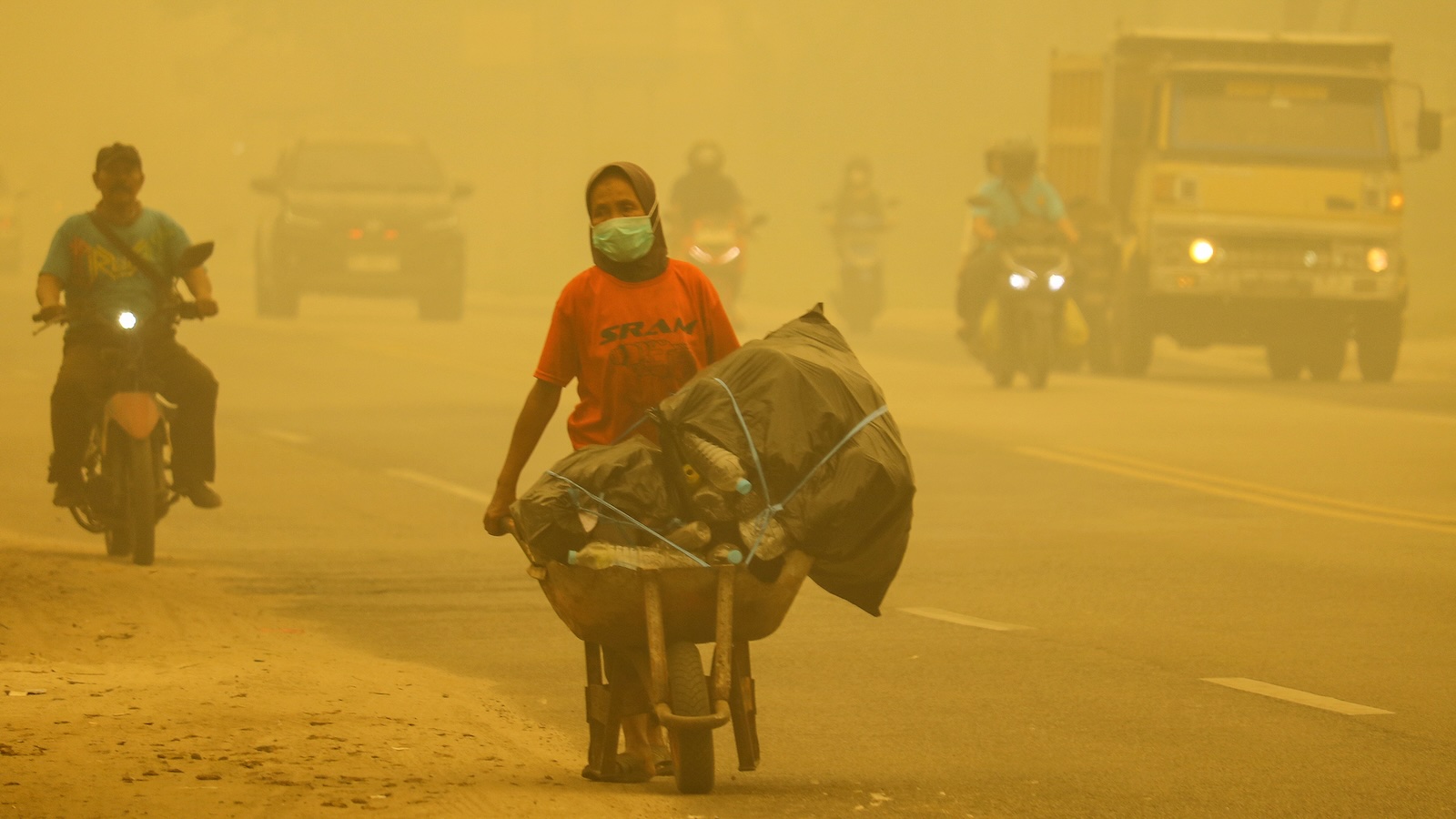
The human cost of the haze has been staggering. Government data indicates that over 300,000 citizens have sought medical intervention for acute respiratory distress, ranging from bronchitis to severe asthma exacerbated by particulate matter. In some regions, air quality indices have plummeted to levels more than 13 times higher than the World Health Organization’s recommended safety thresholds.
The infrastructure of the region has exacerbated the crisis. Many buildings in Indonesia are architecturally designed to facilitate cross-ventilation for cooling, which inadvertently allows the toxic haze to infiltrate homes, schools, and workplaces. Robert Field, a fire researcher at Columbia University, has characterized the situation as a “public health catastrophe.” Field notes that while the environmental impacts—including massive carbon emissions and the destruction of critical orangutan habitats—are grave, the immediate necessity of addressing the air quality crisis has paralyzed other public policy goals.
The economic implications are equally grim. Beyond the direct cost of firefighting efforts, the loss of agricultural productivity, the disruption of transportation networks due to poor visibility, and the long-term healthcare burden on the state are expected to cost the Indonesian economy billions of dollars.
Policy, Prosecution, and Civil Unrest
The intensity of the fires has ignited a fierce political debate regarding accountability. President Prabowo Subianto, during a high-level Cabinet meeting last week, adopted an aggressive stance, labeling those responsible for the illegal ignition of fires as perpetrators of “environmental terrorism.” The government has vowed to conduct a thorough investigation into agriculture companies and individual landowners who may have used fire as a low-cost method to clear land for palm oil and other industrial crops.
This rhetoric follows a decade of fluctuating policy success. In 2014, Indonesia implemented a ban on drainage canals designed to dry out peatlands, and subsequent years saw a notable decline in deforestation rates. However, the gains achieved between 2017 and 2022 have been challenged by the recent spike in illegal land clearing. The disconnect between policy and on-the-ground reality has fueled public frustration. Recent weeks have seen large-scale protests in major cities, where demonstrators—many of them students—have carried signs bearing slogans such as “If we burn, you burn with us,” highlighting a growing perception that the government has failed to protect the populace from the interests of large-scale agriculture.
A Nation in Transition
The wildfire crisis is merely one of several existential threats facing Indonesia. The nation is currently grappling with the reality of being one of the world’s most disaster-prone countries. In the previous year alone, the country suffered a catastrophic flooding and landslide event in Sumatra that claimed over 1,200 lives. Furthermore, the capital city, Jakarta, faces the dual threats of land subsidence and rising sea levels, forcing the government to accelerate plans for the construction of a new, purpose-built capital on higher ground.
These compounding disasters—flooding, land loss, and now, the most severe fires in a decade—paint a picture of a nation at the front lines of climate change. While scientists note that it is difficult to isolate the exact influence of global temperature rise on the current fires compared to the cyclical El Niño, there is a clear consensus that the frequency and intensity of such events are being exacerbated by a warming planet.
Looking Toward Recovery
As the region moves toward the rainy season, there is a cautious hope for relief. However, experts like Albar warn that the conclusion of the visible fires does not necessarily signal the end of the crisis. The risk of smoldering peat remains, and the long-term health consequences for the population will continue to be felt for months.
For the Indonesian government, the task ahead is twofold: they must manage the immediate humanitarian fallout and strengthen law enforcement to prevent future land-clearing practices. The challenge of managing fire in a country as vast and geographically complex as Indonesia remains a daunting endeavor. As the smoke eventually clears, the political, environmental, and health-related fallout will likely define the national discourse for the remainder of the decade. The lessons learned from the 2026 fire season will be instrumental in shaping the country’s future resilience against a changing global climate, forcing a difficult but necessary reckoning with how the nation manages its most precious, and most flammable, natural resources.