The lunch hour at the Haywood County Public Library in Canton, North Carolina, provided a stark window into the political temperament of a state still grappling with the physical and emotional wreckage of Hurricane Helene. As voters filed in on October 19 to cast their ballots, the midterm elections were inextricably linked to the ongoing, uneven recovery from a storm that fundamentally altered the landscape of the western part of the state. Two years after the catastrophic flooding, the scars remain visible, and for many residents, the slow pace of federal and state assistance has transformed from a logistical frustration into a defining electoral issue.
A Chronology of Crisis and Stalled Recovery
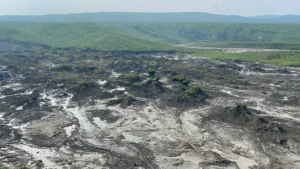
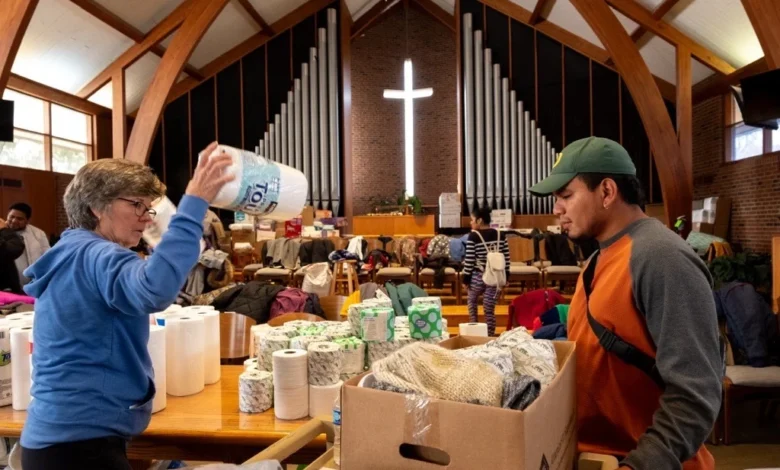
Hurricane Helene struck with unprecedented force, leaving a path of destruction that experts and local officials initially struggled to quantify. In the immediate aftermath, the focus was on life-saving search and rescue operations, followed by the daunting task of restoring power and basic infrastructure to isolated mountain communities. By early 2025, the narrative had shifted toward long-term reconstruction. However, as of late 2026, the recovery process has entered a period of stagnation that has left survivors, such as Sandra Moody, questioning the competency of the systems designed to protect them.
"We aren’t weather experts, but these floods that keep coming—they’re supposed to be 500-year events," Moody remarked while waiting to cast her ballot. "When you see them happen repeatedly, you have to ask what is going on and why we aren’t better prepared."
The timeline of the recovery has been punctuated by mounting costs and bureaucratic hurdles. Following the storm, North Carolina officials estimated nearly $60 billion in total damages and essential recovery needs. While approximately $10 billion in federal assistance has been funneled into the region, a massive gap remains. State authorities currently estimate the unmet need at roughly $41 billion, a deficit that has become a flashpoint in both local and national campaign rhetoric.
Data-Driven Discontent
Public opinion polling reflects the depth of this frustration. A comprehensive survey commissioned by television stations WRAL and WSOC revealed that half of all North Carolinians are dissatisfied with the governmental response to the disaster. Even more telling is the localized data: in the western counties most severely impacted by Helene, a mere 5 percent of residents expressed that they were "very satisfied" with how officials have managed the recovery effort.
This dissatisfaction has manifested in surprising ways within the electoral landscape. In North Carolina’s 11th Congressional District, which spans sixteen rural, mountainous counties as well as the urban center of Asheville, the race has shifted from a presumed Republican stronghold into a dead-heat toss-up. Republican candidate Jennifer Balkcom, who entered the fray following the withdrawal of incumbent Chuck Edwards, is currently running even with Democrat Jamie Ager. The volatility of the race led a prominent pro-Trump political action committee to cancel over $1 million in advertising support for Balkcom, signaling a lack of confidence in the party’s ability to secure the district amidst the backdrop of the recovery.
The Intersection of Politics and Disaster Relief
The 2026 election cycle represents a unique reversal of fortune from the initial political fallout of the storm. In 2024, Republicans leveraged the immediate disaster response to criticize the Biden administration, arguing that federal agencies were failing the citizens of western North Carolina. Two years later, the political map has shifted; the Republican party now holds the White House and majorities in Congress, placing them squarely in the position of being held accountable for the lingering recovery failures.

This shift has resulted in highly visible, and sometimes controversial, attempts by federal leaders to link disaster aid to political success. Former President Donald Trump faced scrutiny for comments suggesting that additional aid to North Carolina might be contingent on the electoral success of his hand-picked candidate, Michael Whatley. Similar patterns have emerged in other states, where disaster declarations and funding announcements have been timed to coincide with high-profile campaign stops. While the White House has consistently denied that aid distribution is influenced by political optics, the perception of a "transactional" recovery effort has undeniably impacted voter sentiment.
Official Responses and the "Recovery Czar" Controversy
The Senate race in North Carolina has been heavily defined by the role of Michael Whatley, who was appointed by the Trump administration to oversee the recovery effort as a "Helene recovery czar." His campaign has faced intense criticism regarding the efficacy of this role. An investigation by the Asheville Citizen-Times revealed a lack of substantive communication between Whatley and FEMA officials, documenting only a handful of text messages and phone calls over a two-year period.
Whatley’s campaign has defended his record, asserting that he helped "deliver more aid for Hurricane Helene than any other natural disaster" in the state’s history. Conversely, the campaign of Democrat Roy Cooper—the governor serving during the initial disaster response—has argued that Whatley’s tenure was a failure, citing that the state has received only 16 percent of the funding necessary to bridge the $41 billion gap.
Despite the back-and-forth, both campaigns have found it difficult to turn the recovery into a definitive advantage. Political scientist Chris Cooper of Western Carolina University suggests that the reason the topic has not dominated campaign airwaves is that neither side has clean hands. "Both candidates have experience that might allow folks to blame them for what almost everyone agrees was a poor response," he noted.
Broader Implications for Governance and Climate Policy
The political fallout of Hurricane Helene extends beyond individual candidates; it has reignited the debate over climate change and long-term infrastructure resilience. For many voters, the storm was not an anomaly but a harbinger of a new reality. Maggie Panther, a Democratic voter in Canton, noted that the frequency of the flooding has moved climate change from an abstract policy debate to a visceral, personal concern. "I hate to sound partisan, but there is one party trying to address the cause of these disasters and one that denies it," she said.
Economists and public policy researchers suggest that the "incumbent penalty" is a well-documented phenomenon in the aftermath of natural disasters. Penny Liao, an economist at Resources for the Future, explains that while disasters are inherently bad news for an incumbent, a swift and efficient response can sometimes turn a crisis into a political asset. However, a failure to meet the scale of the challenge—as appears to be the case in North Carolina—is almost always punished by an electorate that feels abandoned by its representatives.
Looking Toward the Future
As the election approaches, the situation in western North Carolina serves as a case study in the vulnerability of political systems to climate-induced catastrophes. The residents of the region are looking for more than just rhetoric; they are looking for sustainable, long-term solutions to flooding, improved reimbursement timelines for FEMA claims, and a sense of regional stability.
The data suggests that regardless of which party is in power, the failure to execute a successful recovery creates a vacuum that is difficult for any politician to navigate. As voters in the 11th District and beyond weigh their choices, the shadow of Hurricane Helene remains a constant presence. Whether the electoral results reflect a mandate for a change in leadership or a cynical resignation toward government efficacy remains to be seen. What is clear is that the recovery process in western North Carolina has become a litmus test for the capacity of American institutions to respond to the increasingly severe and frequent environmental challenges of the 21st century. The outcome of these races will likely influence how future disaster relief is administered, and whether the federal government can adapt to the expectations of citizens who have learned, through bitter experience, that disaster recovery is far more than a logistical task—it is a fundamental measure of the social contract.