Indonesian cinema is experiencing a profound renaissance, driven by a new wave of narrative depth, regional authenticity, and international acclaim. Among the most anticipated voices returning to the forefront of this movement is filmmaker Ariani Darmawan. After a self-imposed hiatus of more than a decade dedicated to raising her family, Darmawan has made her triumphant return to feature filmmaking with Jani Be Good. The deeply intimate family drama is currently competing in the Asian Future section of the prestigious Tokyo International Film Festival, capturing global attention for its acute observations of domestic life, generational friction, and the quiet sacrifices of womanhood.
Produced by the acclaimed Jakarta-based production banner Palari Films—co-founded by producers Muhammad Zaidy and Chantissa Taurisia—the film is scheduled for a wide theatrical release across Indonesia on December 10. For Darmawan, whose previous credits include celebrated short films and documentaries that traveled the international festival circuit, this project represents more than a career comeback. It is a creative reckoning with the realities of motherhood, the complexities of female lineage, and the unspoken emotional labor that sustains households behind closed doors.
Main Facts and Plot Overview
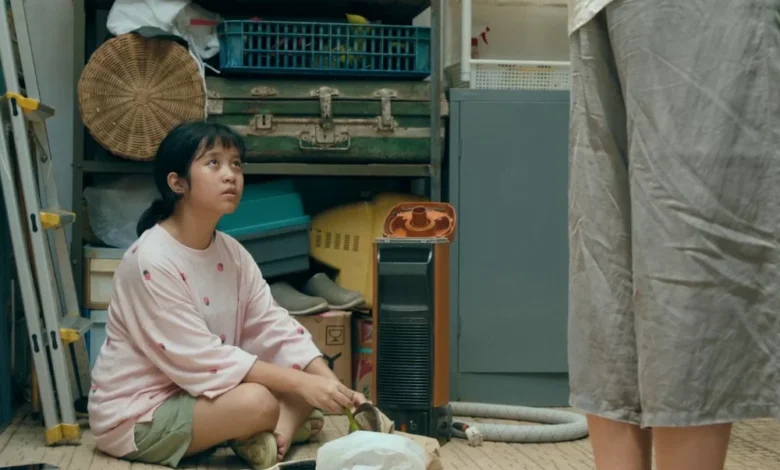
Set against the festive backdrop of the December holiday season, Jani Be Good unfolds over the course of four tense days leading up to Christmas. The narrative centers on 13-year-old Jani, portrayed by newcomer Chempa Puteri, whose world is abruptly upended after she overhears a ferocious argument between her 18-year-old sister Julia and their mother, Winnie. Following the confrontation, Julia packs her bags and leaves home, shattering the fragile equilibrium of their Chinese-Catholic household.
Winnie, a single mother juggling the relentless demands of her job as an accountant alongside a side business fulfilling fruit hamper orders, responds to the domestic crisis by tightening her grip on the remaining household members. Stressed and overworked, she grows increasingly short-tempered with Jani. Meanwhile, Jani maintains a clandestine digital correspondence with her departed sister while seeking solace and guidance from her grandmother, Oma, played by veteran actress Tutie Kirana. Oma spends her days diligently making spring rolls to sell, systematically saving every coin for her own eventual cremation—a stark, pragmatic detail reflecting the self-reliance ingrained in the family’s matriarchal structure.
Alongside Puteri and Kirana, the film features Sigi Wimala as Winnie and Hyori Mika as Julia. The screenplay was co-written by Darmawan and author Cyntha Hariadi, bridging the gap between literary prose and cinematic visual storytelling.
The Creative Genesis and Personal Motivations
The genesis of Jani Be Good dates back to 2022, when producer Chantissa Taurisia reached out to Darmawan with an invitation to direct a family drama. Having known Darmawan since her early short film days in the early 2000s, Taurisia remained confident in the director’s distinct creative voice and maturity.
For Darmawan, the timing could not have been more aligned with her personal evolution. Stepping away from directing in her late twenties to embrace motherhood fundamentally transformed her perspective on the women who came before her. Growing up as the youngest sibling, Darmawan was often relegated to the periphery of family decision-making—a position she now views as a unique blessing in disguise.
"As the youngest, I was treated as the one who understood least, but that’s exactly what gave me the freedom to watch things from a distance," Darmawan reflects. "You could say you can only see the constellation when you’re standing outside it."
This observational distance informs the lens through which Jani is framed. Throughout the film, Jani is constantly instructed by the adults around her to "be good," despite already embodying obedience. As the narrative progresses, Jani slowly begins to perceive her mother, sister, and grandmother not merely as authoritative figures, but as flawed human beings burdened by their own unfulfilled desires and personal disappointments.
Challenging Myths of All-Female Households
A central theme explored in Jani Be Good is the dismantling of the romanticized notion that households consisting entirely of women are inherently harmonious or immune to conflict. Darmawan argues that patriarchal structures and traditional expectations do not simply vanish in the absence of men. Instead, power dynamics manifest differently, often dictated by who brings home the primary income.
"Family problems are the same whether it’s all women or a mix of men and women, if there’s a problem in there to begin with," Darmawan explains. "Communication can break down between women too, especially because of the power dynamics in a family, where the mother, especially if she’s the breadwinner, feels she has the most right to speak the loudest."
Furthermore, the film addresses the cultural inclination within many Asian families to suppress disagreements and avoid direct confrontation to preserve superficial peace. Darmawan notes that while silence is often deployed as a protective mechanism to spare relatives’ feelings, it ultimately breeds festering emotional wounds that are inadvertently passed down to subsequent generations. This emotional confinement is visually mirrored in the film’s setting—a domestic space insulated by locked gates and barred windows, where keeping up appearances and swallowing grievances are treated as survival skills.
Despite the heavy emotional stakes, Darmawan was careful to avoid reducing Winnie to a conventional antagonist. Drawing from her own lived experience as a working mother, the director empathized with the exhaustion of juggling professional survival with domestic care work.
"I didn’t want Winnie to be a villain, because she isn’t one," Darmawan states. "I think I understand Winnie because I’m a mother too. I know how easy it is to feel like the one who has the right to speak the loudest. So I didn’t want to judge her."
Production Chronology and Collaboration
The making of Jani Be Good was characterized by a rigorous, highly collaborative production schedule designed to foster deep chemistry among the cast. Palari Films orchestrated a compact 13-day principal photography window in a residential house in Bandung—marking one of the fastest shooting schedules in the studio’s operational history.
The developmental timeline began two months prior to filming, when Darmawan, co-writer Cyntha Hariadi, and the four lead actresses gathered for a preliminary script reading at the Bandung location. This was followed by intensive rehearsals in Jakarta, before the cast and crew returned to the house for a final two-week pre-production phase alongside esteemed cinematographer Teoh Gay Hian and production designer Suherina. Because none of the four principal actresses had previously worked together, casting involved meticulous chemistry auditions centered primarily around young star Chempa Puteri.
Transitioning from her roots in experimental short films and documentaries—such as her critically acclaimed shorts Sugiharti Halim (which competed at Clermont-Ferrand and screened at Rotterdam and Busan) and Silenced—Darmawan faced the distinct challenge of adapting Hariadi’s literary prose into a cohesive, commercially viable cinematic structure without diluting the author’s distinct voice. Taurisia praised the director’s execution, comparing the creative hierarchy to a culinary endeavor: "She’s the chef, and she knows her ingredients best."
Broader Industry Context: Palari Films and Distribution Hurdles
Jani Be Good arrives at a critical juncture for Palari Films, a studio renowned for pushing the boundaries of Indonesian cinema since its founding in 2016. Palari secured international renown when its feature Vengeance Is Mine, All Others Pay Cash captured the prestigious Golden Leopard at the 74th Locarno Film Festival. Over the years, the studio’s diverse catalog has ranged from domestic box-office hits like Posesif and Aruna and Her Palate to high-profile Netflix original titles including Borderless Fog, Dear David, and Sleep No More.
Despite their international acclaim and festival triumphs, Palari’s leadership remains vocal about the structural challenges plaguing the Indonesian film ecosystem. According to Taurisia, international festival success, while valuable for raising the studio’s profile and validating artistic experimentation, can occasionally alienate domestic investors who fear the projects may be perceived as overly esoteric or commercially inaccessible.
More pressingly, distribution remains a glaring structural bottleneck across the archipelago. Indonesia possesses a growing number of multiplex screens, but lacks a cohesive distribution network capable of servicing regions outside major urban centers. Taurisia highlights the high-stakes pressure placed on independent cinema, where a film’s theatrical lifespan is frequently determined by its box-office performance during a single Thursday-to-Sunday opening weekend.
To combat this systemic vulnerability and cultivate sustainable viewership, Palari launched the Kelas Komunitas Palari (Palari Community Class) initiative. This nationwide workshop series trains local film communities to organize independent screenings and paid watch parties within their own regions. Jani Be Good will serve as the pioneering test case for this grassroots distribution model.
"Many directors struggle to make a second film after their first, and this gap in the film value chain doesn’t help," Taurisia observes. "How can we build film careers, let alone sustainable ones?"
Looking Ahead
Palari Films continues to champion diverse narratives through an ambitious upcoming slate that pairs veteran auteurs with visionary first-time directors. Projects in development include Edwin’s coming-of-age feature Dancing With My Shadows (working title) in collaboration with singer-songwriter Baskara Putra (Hindia), Aditya Ahmad’s Busan Asian Project Market triple-award-winning debut feature Goldfish, and Khozy Rizal’s forthcoming feature debut, I Wanna Dance With Myself.
For Ariani Darmawan, who concurrently co-founded the independent library and bookstore Kineruku, the journey behind the camera will undoubtedly continue, though guided by organic momentum rather than frantic output. Whether exploring domestic interiors or regional narratives, her creative compass remains anchored in human connection.
"As for themes, I’m open to anything, as long as it has sad and sweet relationships between people," Darmawan concludes. "That’s where things get complicated and interesting."