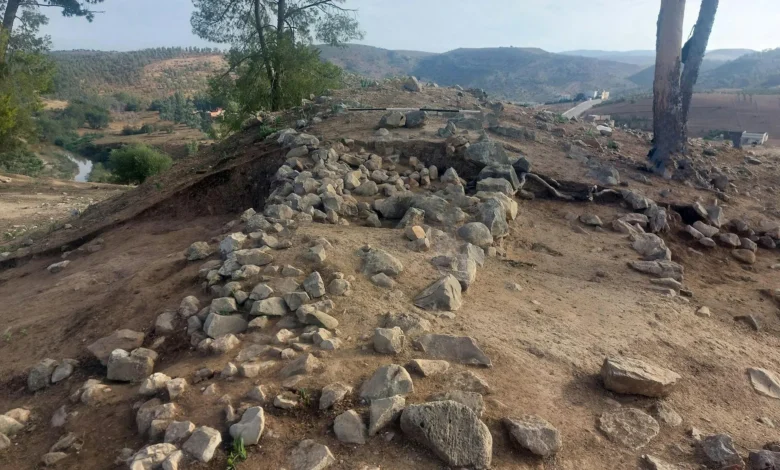
Recent archaeological excavations in the rugged hills of north-west Morocco are fundamentally reshaping our understanding of ancient North African history, pushing back the timeline of complex societal organization and regional defense by millennia. At the heart of this historical revision is the Oued Beht archaeological site, which overlooks the river of the same name. New findings from a collaborative international research initiative, including recent fieldwork conducted in 2023, have brought to light a massive, built defensive structure dating back to the second millennium BC. This monumental architecture indicates that prehistoric communities in the Maghreb were not isolated or simplistic, as long assumed by Eurocentric historiography, but were instead active participants in dynamic environmental shaping and broad Mediterranean trade networks.
The ongoing investigations at Oued Beht have systematically dismantled long-held assumptions regarding the later prehistory of North Africa. For generations, the Maghreb—encompassing Morocco, Algeria, and Tunisia—has remained conspicuously underrepresented in global archaeological narratives. While neighboring regions such as the Iberian Peninsula in south-west Europe or the Aegean centers of the eastern Mediterranean have yielded vast troves of well-documented prehistoric and Bronze Age architecture, North African prehistory has historically suffered from fragmentary evidence and a severe lack of systematic excavation. Oued Beht is rapidly filling this profound historical vacuum, emerging as one of the most critical archaeological sites in the western Mediterranean.
Main Facts and Chronology of the Site
The chronology of Oued Beht spans multiple eras, revealing a landscape that was repeatedly inhabited and strategically valued across thousands of years. The earliest major phase of human activity at the site dates to the Final Neolithic period, specifically between 5,400 and 4,900 years ago (the mid-fourth and early third millennia BC). During this foundational epoch, Oued Beht functioned as a sprawling, highly productive agricultural complex, covering a concentrated area of at least ten hectares. Environmental analyses of preserved plant and animal remains indicate that these early inhabitants cultivated staple crops such as wheat and barley, gathered wild botanical resources, and managed herds of domesticated livestock.
Furthermore, Oued Beht operated as a vital center of craft production and industrial-scale manufacturing. Excavations have yielded thousands of meticulously polished stone axes, specialized lithic tools, and an abundance of finely crafted ceramics, some of which feature elaborate painted patterns. This wealth of material culture underscores the technological sophistication of the Final Neolithic community residing along the river ridge.
The narrative of Oued Beht took an even more dramatic turn during the subsequent Bronze Age, approximately 4,000 to 3,500 years ago (the second millennium BC). It was during this era that the site’s inhabitants undertook a massive civil engineering project: the construction of the earliest known large-scale defensive architecture in North Africa outside the Nile Valley.
The Evolution of Ancient North African Defense
The existence of earthworks and wall configurations at Oued Beht has been noted by researchers since the 1930s. French archaeologist Armand Ruhlmann originally documented a complex of three walls protecting the site, with the fourth boundary naturally secured by the steep scarp of the river ridge—a defensive configuration known in French archaeological terminology as an éperon barré (barred spur). However, due to technological limitations and a lack of precise dating methods in the mid-20th century, the true age and precise function of these earthworks remained a matter of speculation for decades.
The recent excavations and subsequent radiocarbon dating campaigns have definitively resolved these longstanding questions. Researchers have mapped a multi-phase system consisting of deep ditches, substantial earthen ramparts, and stone walls engineered across the narrowest section of the Oued Beht ridge, strategically positioned between the river and an adjacent ravine. This defensive barrier effectively cut off and fortified the southern tip of the ridge.
The labor required to plan, coordinate, and construct such an extensive embankment and ditch system implies a high degree of social stratification, centralized leadership, and communal organization. Archaeologists note that while the earlier Neolithic settlement was characterized by a more expansive and open layout focused on the northern sector of the site, the Bronze Age marked a distinct strategic pivot toward the narrower, highly defensible southern ridge. This spatial reorganization likely reflects evolving settlement strategies and changing regional dynamics.
Socio-Political Implications and Regional Drivers
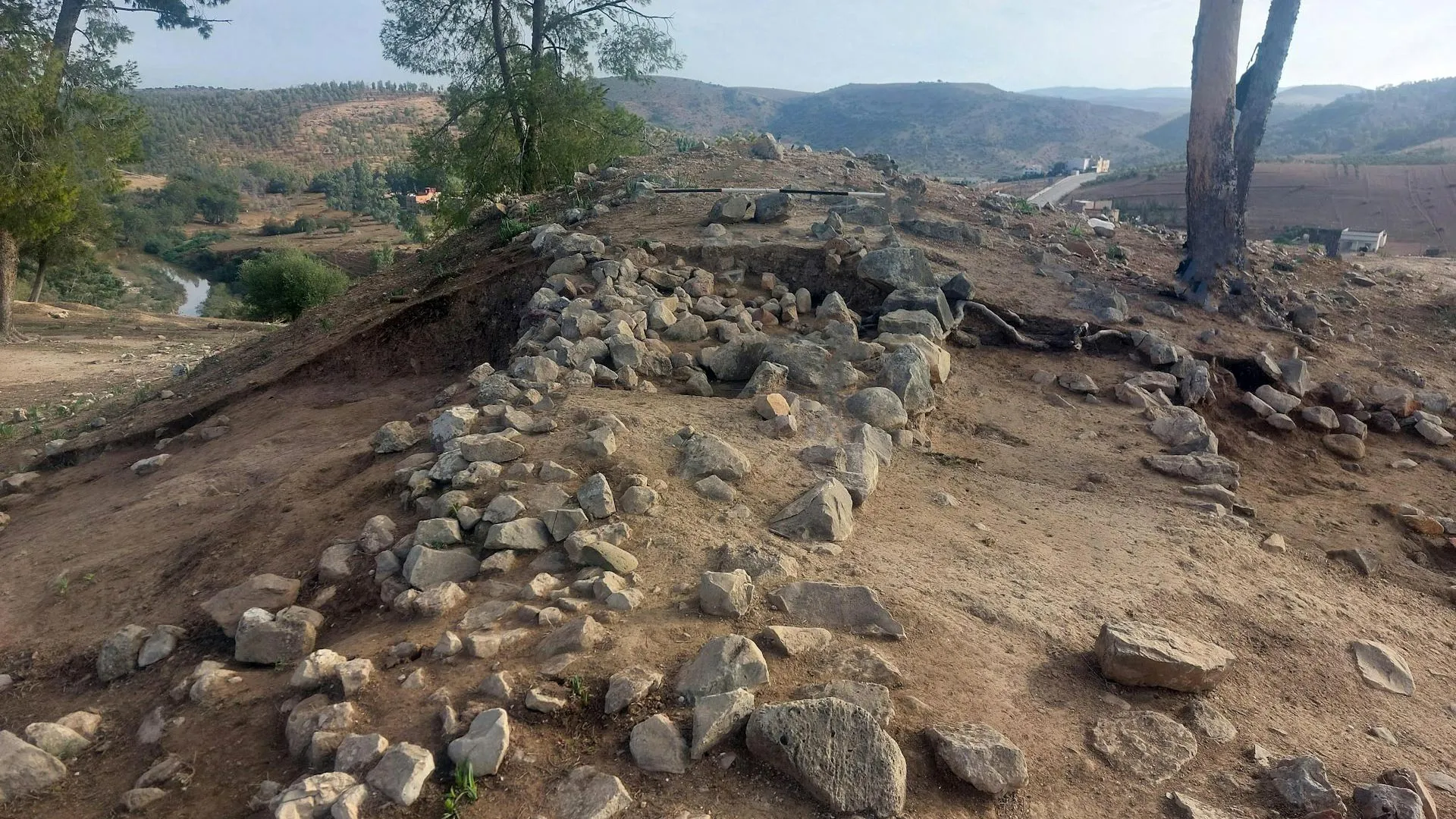
The emergence of monumental defensive architecture during the second millennium BC raises critical questions regarding the nature of the threats faced by the inhabitants of Oued Beht. Rather than attributing these defensive structures to catastrophic foreign invasions, contemporary archaeological consensus points toward internal socio-political pressures. These likely included intensifying competition over fertile agricultural land, vital water resources, and the strategic control of movement and trade routes traversing the landscape.
Constructions of this magnitude suggest that local communities felt a pressing need to safeguard their assets, protect populations, or project power over strategically vital geographical corridors. This points to a level of societal complexity in the prehistoric Maghreb that rivals contemporary developments in southern Europe.
Crucially, the timeline of Oued Beht’s defensive phase coincides with a period of intense dynamism across the wider Mediterranean world. In south-west Iberia, for instance, the Argaric culture (flourishing roughly between 2200 and 1550 BC) was developing complex, hilltop-oriented societies characterized by urban planning, advanced metallurgy—particularly bronze production—and marked social hierarchies manifested in distinct burial customs. These Iberian communities frequently constructed fortified settlements to dominate surrounding territories.
The discoveries at Oued Beht provide compelling evidence that north-west Africa was deeply intertwined with these broader western Mediterranean networks. The Maghreb was not an isolated geographic backwater; instead, its societies participated in the larger socioeconomic and political transformations shaping the region during the Bronze Age. The presence of shared architectural impulses, trade goods, and cultural practices points to robust cross-sea mobility and communication between the coasts of modern-day Morocco, Spain, and Portugal.
A Multi-Layered Landscape: The Medieval Reoccupation
The historical significance of Oued Beht extends far beyond its prehistoric and Bronze Age foundations. Archaeological data from recent surveys and excavations indicate that the ridge experienced a significant resurgence centuries later during the medieval period, specifically between the 11th and 13th centuries AD.
During this era, medieval populations returned to the same strategic landscape. They notably rebuilt and adapted the ancient prehistoric defensive structures, established a rural hamlet or agricultural farm on a nearby hilltop, and interred their dead in a dedicated cemetery situated between the habitation areas. This continuous human selection of the same geographic feature across millennia highlights Oued Beht as a persistent landscape of profound regional importance.
Together, these multi-period findings provide rare and invaluable archaeological insights into rural communities during both prehistoric and medieval times in North Africa. They illuminate how local societies adapted, developed, and maintained socio-economic resilience in a geographic region that has historically been marginalized or omitted from mainstream historical curricula.
Broader Impact and Future Research Directions
The ongoing revelations at Oued Beht carry significant implications for the broader field of archaeology and the historiography of the Mediterranean and North Africa. By demonstrating that ancient Maghrebi communities possessed the organizational capacity to execute large-scale, coordinated construction projects, the site challenges outdated Eurocentric paradigms that underestimated the indigenous development of complex societies in North Africa.
As excavation and laboratory analyses continue, Oued Beht is poised to serve as a cornerstone for future research into how societies in the Maghreb transitioned from early Neolithic farming villages into the complex socio-political networks of the Bronze Age and the structured rural economies of the medieval world. The collaborative efforts of international archaeological teams are gradually rewriting the deep history of the region, ensuring that the ancient civilizations of north-west Africa receive the academic and historical recognition they have long warranted.