Antoni Gaudí’s vision for the Passion Façade of the Sagrada Família was rooted in a deliberate, visceral aesthetic. He famously noted that the entrance should appear "harsh and cruel, as if made of bones," a stark departure from the jubilant, organic narrative of the Nativity Façade. While Gaudí’s mastery of skeletal forms—most notably in the vertebrae-like balconies of Casa Batlló and the rib-cage arches of Casa Milà—is often cited as the pinnacle of biomimetic architecture, his work represents merely one chapter in a multi-millennial human obsession with the skeleton as both a structural foundation and a profound symbolic medium.

A Chronology of Skeletal Symbolism
The architectural and cultural utilization of skeletal remains dates back to the Neolithic period. Archaeological evidence from the Levant, specifically sites such as Jericho (dating to approximately 7,200 BCE), indicates that early human societies practiced the ritualistic display of human skulls within domestic dwellings. These skulls were often modeled with plaster and inset with shells, serving as ancestral conduits that bridged the gap between the living and the deceased.
As civilizations evolved, the use of skeletal remains shifted from domestic veneration to public displays of state power and religious ideology. In Mesoamerica, the Aztec civilization developed the tzompantli, or skull rack. These monumental structures were designed to display the skulls of sacrificial victims, serving as a terrifying testament to the power of the empire and the cosmic necessity of sacrifice.

In Europe, the advent of the Middle Ages brought a shift toward the memento mori tradition. Following the catastrophic demographic collapse caused by the Black Death in the 14th century, the inevitability of death became a central theme in European art and architecture. This obsession manifested in the creation of ossuaries, where the shortage of burial space necessitated the exhumation of remains. Notable examples include the 16th-century Capela dos Ossos (Chapel of Bones) in Évora, Portugal, and the Sedlec Ossuary in the Czech Republic, where thousands of human bones were repurposed into decorative elements, transforming the visceral reality of death into a site of contemplative architecture.
Gaudí and the Anatomical Revolution
By the late 19th century, the role of the skeleton in architecture underwent a fundamental transition. Antoni Gaudí, a pioneer of Catalan Modernism, moved beyond using bones as purely decorative motifs. Influenced by the burgeoning field of structural engineering and his own observations of natural morphology, Gaudí began to view the skeleton as an optimal structural system.

Gaudí understood that the human skeleton is a marvel of evolutionary engineering: it provides maximum support with minimum weight, a principle he sought to replicate in his buildings. At Casa Milà, the structural load is distributed through a series of complex, undulating stone arches that function similarly to a rib cage, allowing for an open floor plan that was revolutionary for the time. This transition from "bone as ornament" to "bone as infrastructure" marked a watershed moment in the history of architecture, prefiguring the biomimetic design movements of the 21st century.
Structural Logic and Biomimetic Innovation
In modern engineering, the skeleton is no longer just a metaphor; it is an analytical tool. Contemporary architects and structural engineers now employ computer modeling to mimic the density and distribution of trabecular bone—the spongy tissue found inside bones—to optimize the material efficiency of skyscrapers and bridges.

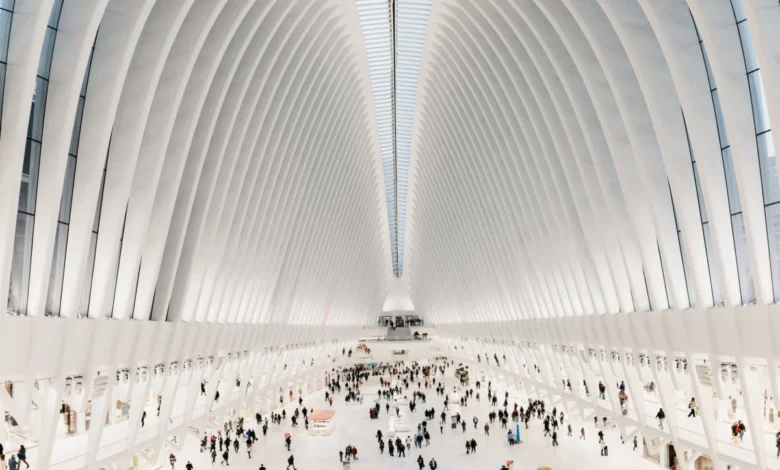
According to data from the Council on Tall Buildings and Urban Habitat (CTBUH), the shift toward "skeletal" structural systems, such as diagrid frameworks, has allowed for the construction of increasingly complex building geometries while reducing the total mass of steel and concrete required. By emulating the skeletal structure of a bird or a mammal, modern buildings can achieve greater stability against wind loads and seismic activity. This objective, fact-based approach to structural design mirrors Gaudí’s intuition that nature had already solved the most pressing problems of stability and durability.
Implications for Contemporary Practice
The integration of skeletal design principles has significant implications for sustainable development. As the construction industry seeks to reduce its carbon footprint, the emphasis on material efficiency—a hallmark of skeletal structures—has become a primary objective. By analyzing how bones distribute stress, architects can design buildings that require fewer resources to achieve the same level of structural integrity.

Moreover, the psychological impact of these spaces cannot be ignored. Architectural critics often note that buildings utilizing skeletal, organic forms evoke a stronger emotional response from the public than traditional, rectilinear structures. This is perhaps because human beings possess an innate, evolutionary recognition of skeletal forms. The "harshness" that Gaudí sought for the Passion Façade is a subconscious trigger, grounding the observer in the reality of the human condition while simultaneously elevating the building to a work of high art.
Official Perspectives and Academic Analysis
Academic discourse surrounding the legacy of skeletal architecture often emphasizes the dichotomy between the "sacred" and the "functional." Architectural historians argue that the transition from the ossuaries of the Middle Ages to the structural experiments of the Modernist era represents a secularization of the skeleton. While the monks who built the Sedlec Ossuary were focused on the theological "transience of life," architects like Gaudí were focused on the mechanical "permanence of structure."

However, both schools of thought converge on the idea that the skeleton is the ultimate architecture. It is the only structure that is self-repairing, self-assembling, and perfectly adapted to its environment. As engineering technology advances, the boundary between biological anatomy and architectural design continues to blur. Modern projects, such as those utilizing 3D-printed metal joints that mimic the porosity of bone, represent the logical conclusion of the path started by Gaudí over a century ago.
The Future of Structural Morphology
Looking ahead, the influence of skeletal design is expected to grow alongside advancements in artificial intelligence and generative design. Algorithms are now being used to "grow" building structures in virtual environments, iterating thousands of variations based on the structural logic of skeletal systems to find the most efficient form.

This methodology, often referred to as "morphogenesis," ensures that the aesthetic of the skeleton is not just an imitation, but a functional necessity. The endurance of the skeleton as a muse for architects is a testament to the fact that, regardless of the technological tools available, the most effective design solutions are often those that have been refined by millions of years of natural selection.
In summary, the journey from the ritualistic skull racks of Mesoamerica to the calculated, algorithmic structures of contemporary skyscrapers reveals a consistent human impulse: to align our built environment with the underlying logic of the natural world. Antoni Gaudí’s vision for the Sagrada Família was not merely an architectural stylistic choice; it was an acknowledgement of the inherent structural brilliance of the human form, an insight that continues to guide the evolution of global architecture. Whether through the lens of history, theology, or engineering, the skeleton remains a primary source of inspiration, serving as both a reminder of our mortality and a blueprint for our most ambitious structural achievements. As we move further into the 21st century, the marriage of biological inspiration and digital precision will undoubtedly ensure that the "harsh and cruel" beauty of the skeleton remains at the forefront of architectural innovation.