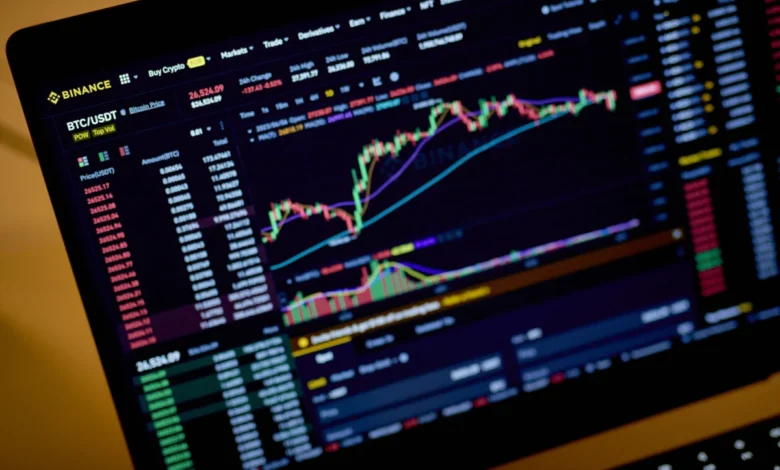
The global cryptocurrency landscape was thrust into chaos this week as Binance, the world’s largest digital asset exchange, confirmed it is managing a major security incident involving the unauthorized drainage of funds from its hot wallets. The breach, which has sent shockwaves through the financial technology sector, appears to be one of the most significant exploits in the history of decentralized finance. As of the latest reports, estimates suggest that upwards of $5.7 billion in digital assets may have been siphoned off, though official verification of the total loss remains ongoing as the exchange struggles to contain the impact.
A Rapidly Unfolding Crisis
The situation began to materialize early Thursday when observant on-chain analysts noted massive, unexplained outflows from Binance-associated wallets. These "hot wallets"—internet-connected storage systems used by exchanges to facilitate rapid withdrawals and trading liquidity—became the primary targets of an sophisticated attacker.
Hours after the first alerts were raised, Changpeng Zhao, the founder of Binance and its largest shareholder, took to the social media platform X to signal that the firm had likely been compromised. While Zhao no longer manages the day-to-day operations of the company, his confirmation served as a grim validation of the fears circulating among crypto traders. In his statement, Zhao expressed optimism that user funds would be "fully covered," a remark that aimed to stabilize market panic even as the technical details of the breach remained opaque.
Binance officially acknowledged the incident shortly thereafter, telling stakeholders that they were investigating "reports of a potential security issue." In a move to mitigate further losses, the exchange’s security team initiated a total freeze on withdrawals across multiple blockchain networks. Binance spokesperson Ross O’Leary characterized the halt as a "precautionary measure" designed to prevent the further movement of stolen assets.
Coordinated Containment Efforts
The scale of the theft necessitated immediate intervention from major industry players who act as the gatekeepers of the crypto ecosystem. Tether, the issuer of the world’s largest stablecoin, acted with uncharacteristic speed, freezing approximately $1.56 billion in assets linked to the addresses identified as belonging to the attackers. Similarly, financial technology giant Circle intervened to lock roughly $800 million in Tether passing through its networks.
These freezes represent a rare instance of centralized intervention in a decentralized market. By blacklisting the wallets associated with the breach, Tether and Circle have effectively rendered a significant portion of the stolen funds unusable, preventing the attackers from off-ramping the assets into fiat currency or moving them into untraceable "privacy" coins. However, security researchers note that a substantial portion of the stolen assets remains in other tokens, creating a complex web of blocked funds and ongoing investigative challenges.
Analyzing the Scope of the Breach
While Binance has maintained that user funds are "completely safe," the sheer volume of assets affected has prompted intense scrutiny from the cybersecurity community. Estimates regarding the total value lost vary wildly, with some independent analysts on the decentralized platform Bluesky reporting that at least $2 billion has been drained, while other industry watchdogs suggest the figure could reach $5.7 billion if all affected assets are accounted for.
If these figures are verified, the Binance breach would eclipse the 2025 Bybit exploit, which saw roughly $1.4 billion stolen in a breach attributed to North Korean state-sponsored actors. The historical context of such thefts highlights a troubling trend: as cryptocurrency exchanges grow in size and liquidity, they become increasingly attractive targets for sophisticated Advanced Persistent Threat (APT) groups. The complexity of the attack—which involved the systematic draining of hot wallets—suggests a high level of technical proficiency, potentially pointing toward state-level involvement or a highly organized cyber-crime syndicate.
A Turbulent Thursday for Crypto Infrastructure
The breach at Binance was not the only security concern to emerge on Thursday. In what appears to be a separate, though coincidentally timed, incident, the prediction market platform Polymarket was forced to suspend trading operations. Security researchers identified that a third-party script provided by the software developer DebugBear had been compromised, allowing attackers to inject malicious code into the site.
This vulnerability facilitated the theft of approximately $2 million in user funds. While the financial impact of the Polymarket breach is significantly lower than the crisis at Binance, it underscores a systemic vulnerability in the crypto ecosystem: the reliance on third-party integrations. Both incidents serve as a stark reminder that even the most robust platforms are only as secure as their weakest link, whether that link is internal infrastructure or a secondary service provider.
Official Guidance and Security Protocols
Binance has issued a series of warnings to its global user base, urging extreme caution against opportunistic scams. In the immediate aftermath of the hack, a wave of "phishing" attempts has been reported, with malicious actors posing as Binance support staff or security personnel, requesting account passwords or private keys under the guise of "verification."
"Users should remain cautious of scams and should not trust unofficial links, messages, or requests for account information," the company stated. Binance maintains that it will only provide updates through verified, official channels and that it will never reach out to users to ask for security credentials.
For the average user, the advice is clear: avoid interacting with any emails or social media messages claiming to be from the exchange during this period of instability. The exchange has also committed to providing regular, verified updates as their security teams complete their forensic analysis.
Broader Implications for the Industry
The incident arrives at a precarious time for the cryptocurrency industry, which has been working to regain mainstream trust following a series of high-profile collapses and thefts over the past three years. A hack of this magnitude is expected to trigger a significant regulatory response. Lawmakers in the United States, the European Union, and Asia are likely to use the event as a catalyst to push for stricter oversight of exchange security standards and mandatory cold-storage requirements.
Industry analysts suggest that the "hot wallet" model—while essential for the user experience and liquidity of a high-volume exchange—may now face a reckoning. Exchanges may be forced to move a larger percentage of assets into "cold storage" (offline, air-gapped systems), which would theoretically increase security but potentially slow down the speed of transactions for everyday traders.
Furthermore, the involvement of stablecoin issuers in freezing assets poses a fundamental question regarding the ethos of the crypto movement. While the freezing of $2.3 billion in funds prevented a total loss for the ecosystem, it demonstrates that the "decentralized" nature of these assets is often subject to the control of the entities that issue them. This tension between security and censorship-resistance will likely dominate the conversation in the coming weeks.
Looking Ahead: The Investigation Continues
As of this writing, there has been no official claim of responsibility for the Binance hack, and the exchange has not disclosed whether it has received any communication from the perpetrators. The investigation is currently in its nascent stages, involving collaboration between internal security teams and external blockchain forensic firms.
The crypto market remains in a state of high alert. Traders and investors are keeping a close watch on the addresses flagged as belonging to the attackers to see if any of the assets move, while regulators monitor the situation to determine if the exchange’s security protocols were in compliance with existing financial mandates.
For Binance, the priority is twofold: restoring normal service and providing a transparent account of how such a massive volume of assets could be extracted from their internal systems. Until the root cause—whether it was a software vulnerability, a social engineering attack on an employee, or a sophisticated injection of malicious code—is identified, the global digital asset market will likely continue to experience volatility.
The coming days will be critical. The exchange must demonstrate that it has the financial reserves to back its promise of covering user losses, and it must successfully patch the vulnerabilities that allowed this breach to occur. In the volatile world of digital finance, the success or failure of this recovery effort will define the trajectory of the exchange—and perhaps the industry at large—for the foreseeable future.