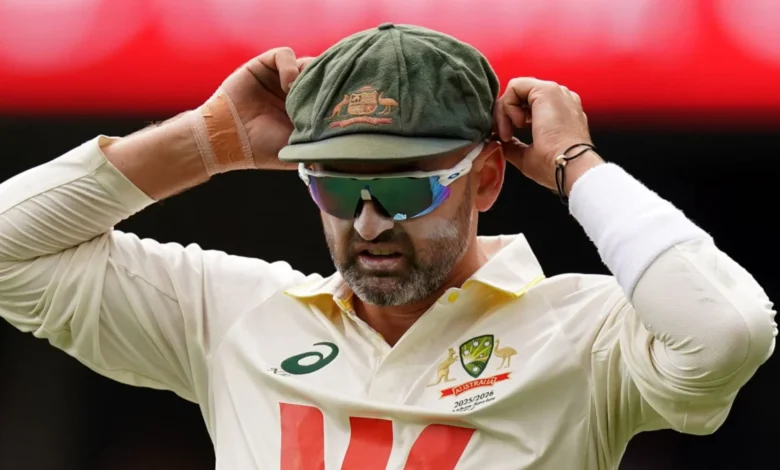
The landscape of Australian Test cricket has undergone a seismic shift following the selection panel’s bold decision to omit veteran off-spinner Nathan Lyon from the squad for the upcoming Test series against New Zealand in Perth. The omission of the 39-year-old bowler marks a definitive turning point for a team that has relied heavily on his skill, durability, and tactical acumen for more than a decade. Lyon, who has cemented his legacy as one of the greatest spin bowlers in the history of the sport, finds himself on the outside looking in after accumulating 577 Test wickets across 145 matches.
The announcement has sent shockwaves through the cricketing fraternity, prompting intense speculation regarding the future of the red-ball stalwart. While timing has aligned with recent off-field turbulence involving former and current teammates, sources close to Cricket Australia have firmly distanced the selection decision from the ongoing media storm surrounding revelations in Usman Khawaja’s recently published autobiography. Instead, national selectors have framed the omission through the lens of long-term strategic planning, squad balance, and conditions expected at the Perth venue.
Background and Context of the Selection Shock
To understand the magnitude of Lyon’s omission, one must examine his monumental contribution to Australian cricket since his unexpected debut in 2011. Emerging from the grounds of Adelaide Oval as a curator before rising through the ranks of state and international cricket, Lyon quickly dispelled any notions of being a short-term solution. Affectionately nicknamed "GOAT" (Greatest of All Time) by teammates and fans alike, he surpassed Glenn McGrath’s tally of Test wickets for an Australian fast bowler to become the most prolific finger-spinner in the country’s rich cricketing history.
Sitting comfortably among the elite tier of global wicket-takers—alongside legends like Muttiah Muralitharan, Shane Warne, James Anderson, Anil Kumble, and Stuart Broad—Lyon has been the tactical fulcrum of Australia’s bowling attack. His ability to extract bounce, generate over-spin, and relentlessly attack the off-stump has made him indispensable on both turning tracks in the subcontinent and abrasive, pace-friendly pitches at home.
However, elite sport is notoriously unforgiving of the aging curve. At 39 years of age, Lyon has faced increased scrutiny regarding his workload management, recovery times, and lateral mobility in the field. Although his performance metrics remained strong through recent home and away assignments, modern selection policies increasingly prioritize future-proofing squads, especially when transitioning toward a new generation of talent capable of dominating the next World Test Championship cycle.
Chronology of Events Leading to the Perth Test
The lead-up to the Perth series against New Zealand was already tracking as a high-stakes Trans-Tasman encounter, but the squad announcement has dramatically shifted the narrative focus.
Weeks prior to the selection meeting, the Australian media landscape was dominated by the serialisation of Usman Khawaja’s autobiography. The book detailed renewed perspectives on the infamous 2018 ball-tampering scandal in Cape Town, colloquially known as "Sandpapergate," dragging historical wounds back into the public eye. Although Lyon has maintained a strict silence regarding the explosive claims made within the publication, conspiracy theories inevitably flourished across social media platforms and sports talk radio, linking his sudden exclusion to internal cultural frictions.
Cricket Australia’s selection panel, led by George Bailey, moved quickly to quell any narrative connecting off-field controversies to on-field selections. The panel convened in Melbourne to finalize the 15-player traveling party, weighing the historical success of Lyon against the tactical demands of the Perth Stadium wicket, which traditionally favors high-velocity fast bowling and steep bounce over traditional spin.
Following intensive deliberations, the final squad list was distributed to media outlets, confirming the conspicuous absence of the veteran spinner. The decision triggered immediate emergency editorial updates across major sports networks globally, with analysts attempting to dissect whether this represents a temporary rest period or the definitive end of Lyon’s illustrious international career.
Supporting Data and Statistical Overview
A granular examination of Nathan Lyon’s career statistics underscores just how monumental a presence he has been within the Australian dressing room.
- Total Test Matches: 145
- Total Wickets Taken: 577
- Bowling Average: Approximately 30.2
- Five-Wicket Hauls: 23
- Ten-Wicket Matches: 4
His durability is perhaps his most remarkable trait. For thirteen consecutive years, Lyon has shouldered the heavy burden of bowling long, economic spells to allow Australia’s formidable pace trio of Pat Cummins, Mitchell Starc, and Josh Hazlewood crucial periods of physical recovery. His ability to maintain a tight economy rate while simultaneously hunting for wickets has provided captains with unmatched tactical flexibility.
In home conditions specifically, Lyon has been a decisive weapon. Across Australian venues, he has dismantled numerous visiting batting line-ups, exploiting the extra bounce generated by pitches in Perth, Brisbane, Melbourne, and Sydney. Omitting a bowler with such a formidable home record for a series opener in Western Australia represents a massive gamble by the coaching staff, signaling immense faith in alternative tactical configurations.
Official Responses and Internal Reactions
While Nathan Lyon himself has yet to issue a formal public statement regarding his omission, reaction from the broader cricketing community has been swift and divided.
National selector George Bailey addressed the media following the squad reveal, emphasizing that conversations with veteran players are invariably complex and emotionally charged. Bailey stressed that selection decisions are made strictly with an eye toward winning the immediate series while maintaining a sustainable pathway for younger players. "Nathan has been an incredible servant of the game and remains an integral part of our broader plans, but for this specific assignment in Perth, the panel felt a different tactical balance was required," Bailey noted during the press conference.
Former teammates and pundits have offered mixed assessments. Some have argued that omitting a bowler of Lyon’s caliber—especially without a clear, definitive farewell series—risks undermining team morale and disrespecting his immense legacy. Others have suggested that modern international cricket demands ruthless forward-planning, noting that selectors must make tough calls before form or fitness forces their hand irreversibly.
Broader Impact and Strategic Implications
The decision to drop Nathan Lyon carries profound implications not only for the immediate outcome of the Test series against New Zealand but also for the strategic architecture of Australian cricket moving forward.
Tactically, the absence of an experienced frontline off-spinner forces the Australian captain and coaching staff to rethink their bowling strategies. Without Lyon to tie up one end and create foot-hole rough for fast bowlers to exploit, the burden on the pace attack increases exponentially. It also places immense pressure on whichever replacement spinner is selected to step into the breach. Young tweakers waiting in the wings—such as Todd Murphy or Matthew Kuhnemann—will now view this as a potential watershed moment to stake their claim for regular international exposure.
Culturally, the handling of senior players approaching the twilight of their careers is a critical litmus test for Cricket Australia’s leadership. Ensuring that legends of the game are shown appropriate respect while simultaneously executing necessary generational transitions is a delicate tightrope walk. Missteps in this arena can lead to public relations friction and perceived disharmony within the squad.
As the build-up to the Perth Test intensifies, all eyes will be on the training sessions at the venue, the final composition of the playing XI, and how the team responds to a dressing room environment noticeably missing its most experienced spinner. Whether this moment serves as a temporary detour for Nathan Lyon or the final chapter of a legendary career remains one of the most compelling storylines in contemporary international cricket.