The 2026 Formula 1 World Championship season has entered its dramatic closing stages, and the paddock has been caught completely off guard by a staggering display of pace from the Mercedes-AMG Petronas F1 Team. As the motorsport circus gathered at the state-of-the-art Lusail International Circuit for the Qatar Grand Prix, Friday’s practice sessions delivered an unexpected narrative. Rising star Kimi Antonelli and teammate George Russell established an imposing benchmark, leaving their closest challengers trailing by nearly half a second and sparking frantic overnight data analysis up and down the pit lane.
Mercedes’ commanding form on the 5.419-kilometre (3.367-mile) layout in Lusail has completely altered expectations for the weekend. While the second half of the 2026 campaign has been defined by a razor-thin competitive margin separating the leading quartet of constructors—Mercedes, Ferrari, Red Bull Racing, and McLaren—Friday’s running suggested that the Silver Arrows have unlocked a mysterious performance window. With the desert venue serving as the penultimate stop on the grueling calendar, the Silver Arrows’ sudden resurgence threatens to turn the battle for the final trophies of the year into a one-sided affair.
Chronology of a Disastrous Friday for Ferrari
The contrasting fortunes of the paddock were nowhere more apparent than in the Ferrari garage, which endured what can only be described as a dismal opening day of track action. The Scuderia arrived in Qatar anticipating a challenging weekend due to the circuit’s high-speed sweeping corners and lengthy full-throttle straights—characteristics that historically do not align ideally with the aerodynamic traits of the red cars. However, the reality of Friday afternoon exceeded even their most pessimistic projections.
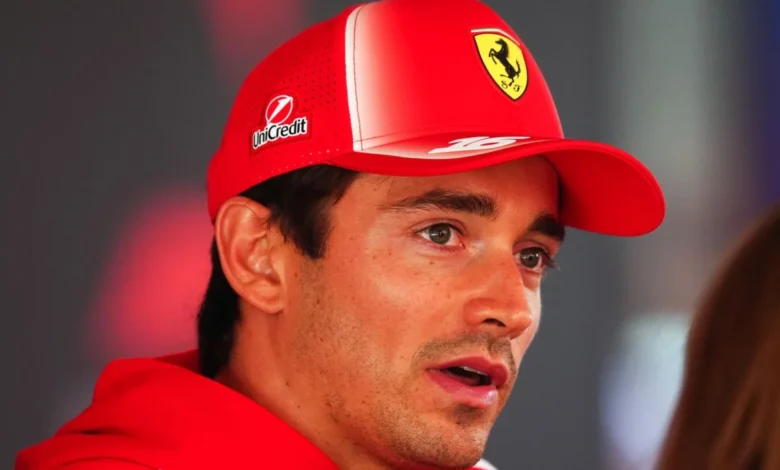
During the second practice session (FP2), Monegasque driver Charles Leclerc suffered a high-speed spin that inflicted significant floor and suspension damage to his SF-26. The incident brought an abrupt halt to his data-gathering program. Meanwhile, British teammate Lewis Hamilton encountered a sudden and terminal engine problem that crippled his Ferrari, forcing him to coast to a halt on the circuit and bringing out yellow flags.
The technical gremlins and handling imbalances meant that Ferrari finished over a full second adrift of Antonelli’s pacesetting time. Leclerc’s post-session remarks painted a bleak picture of the team’s struggles. The 28-year-old revealed that the car’s handling was erratic from the outset, noting that he was unable to improve his lap times even after transitioning from medium compound tyres to fresh sets of softs. The inability to extract performance from different tyre compounds has left Ferrari engineers scrambling through telemetry deep into the night.
Technical Analysis: Unraveling the Mercedes Outlier
The core talking point in the Lusail paddock centers around what Leclerc termed an "outlier." Mercedes’ dominance was so pronounced that observers immediately drew comparisons to their historic periods of supreme regulation-era supremacy. Yet, this performance advantage arrived unexpectedly on a weekend where no major aerodynamic packages were slated for deployment by the Brackley-based squad.
Antonelli, continuing his impressive trajectory in his debut years at the absolute sharp end of the grid, comfortably topped both FP1 and FP2. Russell slotted neatly into second position behind his teenage teammate throughout Friday’s running. Telemetry analysis later revealed an ominous statistic: neither Mercedes driver managed to complete a clean, optimized low-fuel qualifying simulation on the soft tyres. This detail suggested that the true performance ceiling of the W17 machine remains unexploited, sending a shiver down the spines of rival team principals.
McLaren’s Lando Norris, who captured the world championship last season, was blunt in his assessment of the reigning constructors’ situation. Speaking to media outlets after climbing out of his MCL40, Norris dismissed the possibility of fighting the Silver Arrows during Saturday’s qualifying hour.
McLaren had pinned hopes of competitiveness on a newly designed floor specification—initially trialed at the preceding Las Vegas Grand Prix—which is scheduled to be bolted onto both cars for Saturday’s final practice and qualifying. Despite the anticipated minor performance gain, Norris admitted that a deficit of roughly seven tenths of a lap places Mercedes in an entirely separate competitive tier. He emphasized that focusing on internal optimization relative to Red Bull and Ferrari is a more realistic objective than chasing the runaway leaders.
Red Bull and Max Verstappen Search for Balance
Red Bull Racing, spearheaded by four-time world champion Max Verstappen, found themselves grappling with familiar mechanical recalcitrance. The Dutchman reported severe balance discrepancies across the high-speed transitions of the Lusail circuit, noting that the RB22 felt fundamentally disconnected between entry and apex.
Verstappen adopted a characteristically pragmatic tone when addressing reporters, acknowledging that Red Bull lacked the mechanical stability required to challenge for the top spots on either short-run qualifying simulations or longer race stints. Engineers within the Milton Keynes-based outfit spent Friday evening making wholesale setup changes to alter the car’s aerodynamic platform, hoping to mitigate the time lost in the sweeping sector two complexes.
Implications for Saturday Qualifying and Sunday Grand Prix
As the Formula 1 community prepares for Saturday’s high-stakes schedule, the spotlight rests firmly on whether Mercedes can maintain their Friday momentum or if rival outfits can decode the setup secrets of the Lusail tarmac.
The weekend timetable dictates a compressed run of sessions. Final practice (FP3) commences at 2:30 PM local time on Saturday, November 28, offering teams a final 60-minute window to refine their setups before the crucial parc fermé conditions take effect. The fight for pole position will commence under the floodlights at 6:00 PM local time, preceded by the F2 Sprint Race and qualifying build-up coverage.
Sunday’s Qatar Grand Prix, scheduled to get underway at 4:00 PM local time on November 29, promises to test tyre degradation management and powertrain reliability under extreme thermal conditions. With track temperatures expected to plummet once the sun sets over the Persian Gulf, strategic execution will play a decisive role.
For Mercedes, the objective is straightforward: capitalize on their Friday speed and convert it into a decisive front-row lockout. For Ferrari, McLaren, and Red Bull, the challenge is an urgent race against the clock to bridge a performance gap that threatens to render the remainder of the Qatar Grand Prix weekend a damage-limitation exercise.