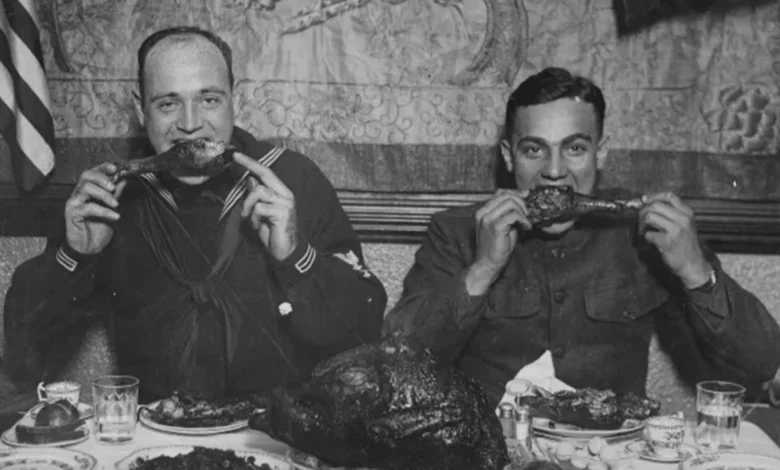
In November 1966, twelve American soldiers stationed at a remote, isolated outpost deep within a hostile Vietnamese war zone found themselves thousands of miles from the familiar comforts of a traditional Thanksgiving celebration. Their sole connection to the outside world was the precarious lifeline of aerial resupply. Yet, the United States military was determined to provide a symbol of home. A mess sergeant at Bien Hoa meticulously prepared turkey and all the traditional trimmings, sealing the meal in insulated containers before it was loaded onto a helicopter. That bird, transported into the volatile environment of War Zone D, served as more than just sustenance; it represented a strategic commitment to morale that has defined the American military experience across generations.
This endeavor was not a singular anomaly but a chapter in a massive, recurring logistical operation that the U.S. military has executed during nearly every major conflict in the nation’s history. From the blood-soaked battlefields of the Civil War to the rugged, high-altitude firebases of Afghanistan, the delivery of Thanksgiving dinner remains a unique intersection of culinary tradition, military logistics, and psychological warfare—a concerted effort to maintain the connection between the service member and the nation they defend.
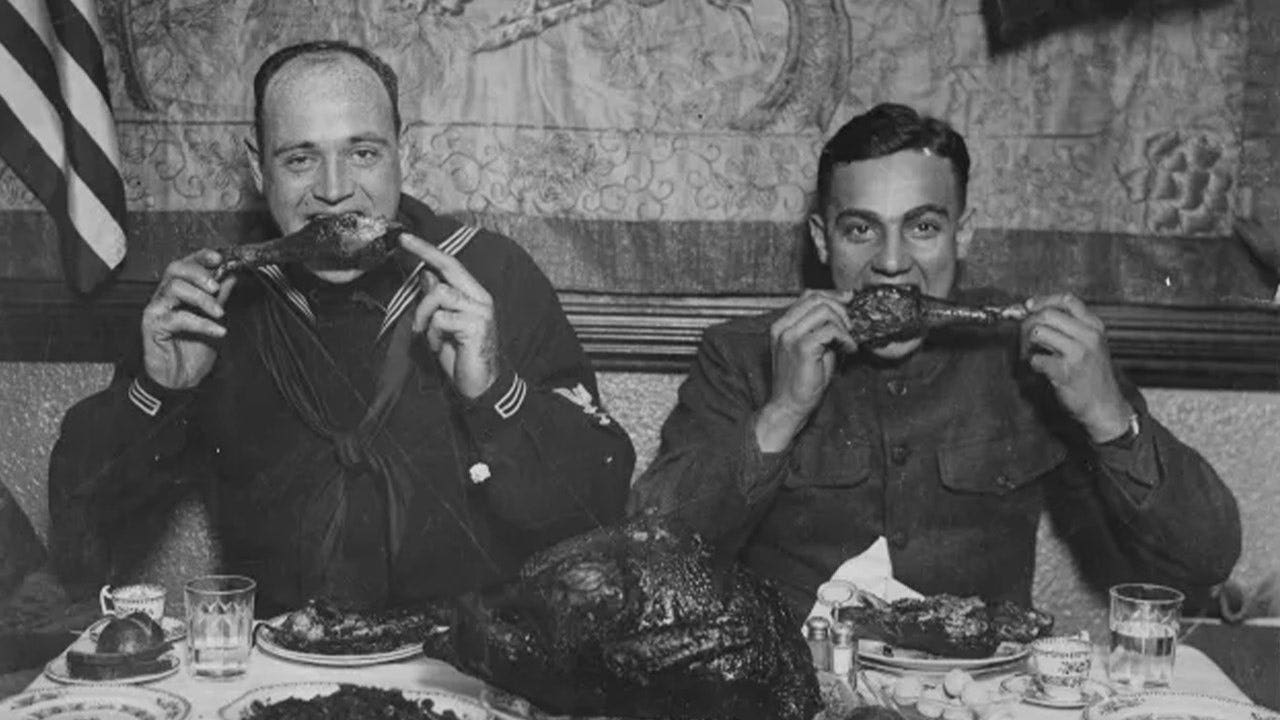
The Origins of a Wartime Tradition
Thanksgiving as a national institution was forged in the heat of conflict. It was in 1863, as the American Civil War entered its third year of unprecedented carnage, that President Abraham Lincoln issued his historic proclamation. Amidst a fractured nation, Lincoln called upon Americans to observe the final Thursday of November as a day of "Thanksgiving and Praise."
By the following year, the civilian population had mobilized to ensure the troops were not forgotten. The "Great Turkey Movement" of 1864 remains one of the earliest recorded instances of massive, citizen-led logistical support for the front. In New York, civic organizers successfully procured and shipped 20,000 turkeys to the Union lines. A similar committee in Philadelphia coordinated the transport of 4,000 birds specifically for the troops serving under General Philip Sheridan. These early efforts established a precedent: the Thanksgiving meal was not merely a luxury, but an essential component of the soldier’s morale.
World War II: The Scale of Global Logistics
By the time the United States entered the Second World War, the logistical challenge of feeding the military had ballooned to an industrial scale. The demand for turkey became so immense that it directly impacted the availability of the poultry for the American public. In August 1943, the War Food Administration took the drastic step of restricting domestic turkey sales, prioritizing the millions of pounds required for the armed forces.

Records from the era indicate that the initial goal was to provide 10 million pounds of turkey for troops serving overseas. This mandate was quickly expanded to include domestic military installations, resulting in the government securing approximately 30 million pounds of turkey before the restrictive order was lifted in October. This massive allocation of resources underscores the importance the military placed on the holiday as a tool for sustaining the mental fortitude of millions of men and women serving on multiple global fronts.
The Risks of the Table: From Europe to Korea
The delivery of these meals often occurred in the shadow of combat, turning a celebratory act into a tactical risk. In November 1944, during the harrowing fighting in Germany’s Hürtgen Forest, Lieutenant Paul Boesch of the 121st Infantry Regiment faced a moral dilemma. He was informed that hot turkey dinners had arrived for his men, despite the fact that his unit was positioned in an area heavily targeted by German artillery.
Boesch argued that ordering men to congregate in open areas to retrieve the food would make them sitting ducks for enemy fire. His warnings proved tragically prescient; as the troops moved to collect their rations, a German artillery strike hit the area, resulting in several casualties. The event remains a somber reminder of the complexities involved in maintaining normalcy in an abnormal environment.

Six years later, during the Korean War, the challenge shifted from artillery fire to the environment itself. On Thanksgiving Day 1950, Marines stationed around the Chosin Reservoir were served a full traditional meal. However, the subzero temperatures were so extreme that the food began to freeze almost immediately upon being served. This dinner occurred in a window of false hope; shortly after the meal, the "Home-by-Christmas" offensive launched by General Douglas MacArthur was shattered by the arrival of massive Chinese ground forces, leading to one of the most brutal retreats in American military history.
Modern Conflicts and the Presidential Presence
The tradition continued into the 21st century, with the U.S. military adapting its methods to the asymmetric nature of conflicts in Iraq and Afghanistan. In 2003, the logistical effort took a high-profile turn when President George W. Bush conducted a secret, high-security flight into Baghdad. To ensure the safety of the mission, Air Force One arrived at Baghdad International Airport with cabin shades drawn and lights dimmed.
The President’s arrival at a hangar filled with 600 troops served as a massive boost to morale. During the event, President Bush took on the role of a server, joking, "I was just looking for a warm meal somewhere," as he helped distribute the food. While the presidential visits provided high-visibility support, the daily reality for soldiers in the field remained far more challenging.

In 2007, during the war in Afghanistan, the military executed complex helicopter operations to move hot meals from Bagram Airfield to remote firebases in the Tagab Valley. For many soldiers, this represented the first hot meal they had consumed in months. The operations were so integrated into the mission that troops had to rotate between sitting down for turkey and standing watch on the perimeter to ensure the base remained secure. "The white meat was magnificent," noted Pfc. Matt Lorimer of the 82nd Airborne Division, a sentiment that echoed the relief felt by thousands of service members across the theater.
Fact-Based Analysis of Military Morale
The commitment to delivering these meals is supported by internal military doctrine regarding unit cohesion and psychological resilience. Psychologists embedded with the military have noted that rituals—such as holiday meals—serve as "temporal anchors." In the chaotic, high-stress environment of a combat zone, where the sense of time and normalcy is often obliterated, these meals provide a link to the life left behind.
Data from the Defense Department suggests that even in the age of MREs (Meals Ready-to-Eat) and advanced nutritional technology, the demand for "fresh" or "traditional" meals remains high. Logistical commands prioritize these deliveries not merely for their caloric value, but for their role in signaling that the command structure, and by extension the nation, remains invested in the individual soldier’s well-being.

The Future of Field Logistics
As the U.S. military looks toward future operations, the methods of delivering comfort to the front lines continue to evolve. Whether through drone-assisted supply drops or improved thermal packaging, the core objective remains unchanged: the pursuit of a piece of home in the most unforgiving corners of the globe.
The story of the Thanksgiving turkey in the military is, at its heart, a story of endurance. From the 20,000 birds sent to the Union army in 1864 to the high-altitude helicopter drops in the mountains of Afghanistan, the military has consistently demonstrated that it views the sustenance of morale as being as critical to victory as the sustenance of the body. As long as American troops are deployed far from home, the logistical machinery of the armed forces will continue to bridge the gap, ensuring that even in the midst of conflict, the tradition of the Thanksgiving meal endures.