The global shipping industry, the backbone of international trade, finds itself at a historic and perilous crossroads as delegates from 176 nations gather at the International Maritime Organization (IMO) headquarters in London this week. The meeting occurs against a backdrop of unprecedented maritime instability and a widening diplomatic rift that threatens to derail a multi-year effort to decarbonize the sector. For the first time in modern history, the world’s two most vital maritime arteries—the Strait of Hormuz and the Red Sea—have faced simultaneous, prolonged disruptions, sending shockwaves through global energy markets and complicating the United Nations’ efforts to implement a landmark "net-zero" framework for the high seas.
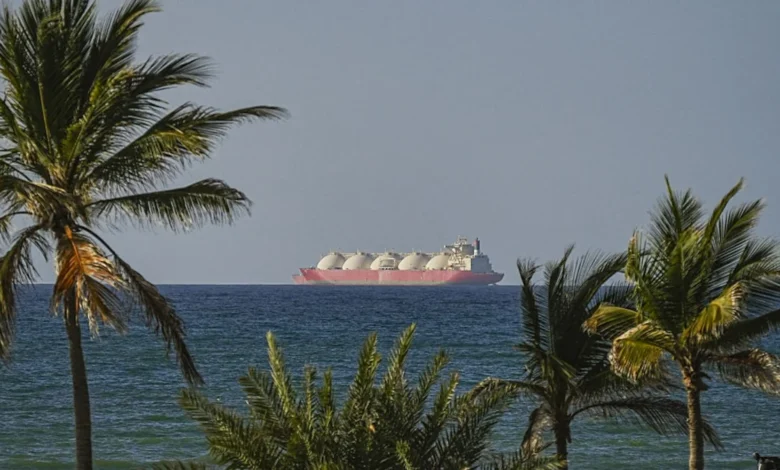
Since early March, the convergence of regional warfare and targeted attacks on commercial vessels has effectively paralyzed transit through the Middle East’s critical waterways. Iran’s recent seizure of the Strait of Hormuz, following weeks of threats and Houthi rebel strikes in the Red Sea, has restricted a passage that carries approximately 20 percent of the world’s daily oil supply. This dual-chokehold has forced more than 150 vessels into a state of limbo, while hundreds of others have opted for the arduous and expensive detour around the Cape of Good Hope at the southern tip of Africa. The resulting surge in crude oil prices and maritime insurance premiums has fundamentally altered the economics of shipping, even briefly making certain biofuels more cost-competitive than traditional heavy fuel oil (HFO) due to the sheer volatility of fossil fuel markets.
The IMO Net-Zero Framework: A Transition in Jeopardy
At the heart of the London deliberations is the proposed IMO Net-Zero Framework, a policy intended to address the shipping industry’s contribution to global warming. Currently, maritime transport is responsible for approximately 3 percent of global greenhouse gas emissions—a figure that experts warn could grow significantly as other sectors decarbonize more rapidly. The framework, which has been under negotiation for three years, proposes a "polluter pays" model: shipping companies would be required to pay a mandatory fee for every ton of greenhouse gas emitted above a specific efficiency threshold.
The revenue generated from these fees, estimated by some independent analysts to reach $12 billion annually by 2030, is designed to serve two primary purposes. First, it would provide the necessary capital to subsidize the development of zero-emission fuels, such as green hydrogen, ammonia, and methanol. Second, it would provide financial assistance to lower-income and island nations, which are disproportionately affected by both climate change and the rising costs of maritime logistics. However, the political consensus required to codify this framework has largely evaporated, replaced by a fractured landscape of competing national interests and ideological opposition.
A Chronology of Diplomatic Friction
The path to this week’s deadlock began with a significant shift in U.S. foreign and environmental policy. Throughout 2024 and early 2025, momentum for a global carbon levy appeared to be building. However, the intervention of the Trump administration in the summer of 2025 fundamentally altered the trajectory of the negotiations.
In a coordinated move, Secretary of State Marco Rubio and leaders of several U.S. agencies issued a stern warning to the international community. The administration characterized the proposed framework as an illegitimate "global carbon tax" that would unfairly penalize American consumers and businesses. The U.S. warned that any nation voting to adopt the framework could face punitive measures, including visa restrictions, increased port fees, and the imposition of new tariffs.
This aggressive stance had an immediate chilling effect. At an IMO meeting in October 2025, several nations that had previously signaled support for the levy opted to delay the final vote by at least a year. Since then, the political backing for a unified global policy has continued to dissipate. While technical committees have continued to refine the mechanisms of the framework, the "political will" necessary for adoption has been superseded by the immediate pressures of the Middle East crisis and the threat of U.S. retaliation.
Competing Proposals and the Search for Middle Ground
As the current session begins, the IMO is faced with a "plethora of proposals" that reflect the deep divisions among member states. Each proposal represents a different vision for the future of maritime trade:
- The United States’ "No Economic Element" Proposal: The Trump administration has called for the complete abandonment of the net-zero framework. Their latest submission argues for a new approach that eliminates any "economic element," such as a tax or levy. The U.S. position is that the market should dictate the transition without punitive measures that could raise the cost of goods.
- The Japan Compromise (Carbon Trading): Seeking a middle path, Japan has proposed a cap-and-trade system. Rather than a flat fee, companies that exceed emission limits would be required to purchase "credits" from companies that operate below the threshold. This market-based approach aims to incentivize efficiency without the appearance of a direct global tax.
- The Liberia, Argentina, and Panama Proposal: These major "flag states"—nations where a significant portion of the world’s fleet is registered—have proposed a pragmatic approach that does away with mandatory fees entirely. Critics argue this would remove the "regulatory teeth" of the policy, leaving no financial mechanism to fund the transition in developing countries.
- The Petrostates’ Rejection: A coalition of oil-producing nations is calling for the cancellation of the framework altogether, citing the current energy crisis and the need to prioritize energy security over long-term climate goals.
- The Island States’ Ambition: Conversely, a group of Pacific and Caribbean island nations, led by the Marshall Islands and the Solomon Islands, is pushing for an even more ambitious carbon levy. For these nations, climate change is an existential threat, and the revenue from the levy is seen as a vital lifeline for climate adaptation.
Economic Data and the Impact of Rerouting
The urgency of the IMO meeting is underscored by the dire economic data emerging from the current shipping crisis. The closure of the Strait of Hormuz and the Red Sea has not only spiked fuel costs but has also significantly increased "ton-miles"—the distance cargo must travel.
Rerouting a container ship from Singapore to Rotterdam via the Cape of Good Hope adds approximately 3,500 nautical miles and 10 to 14 days to the journey. This detour requires significantly more fuel, which in turn increases the carbon footprint of every ton of cargo moved. Paradoxically, the geopolitical crisis is making the industry’s emissions problem worse at the very moment it is trying to solve it.
Furthermore, the rise in maritime fuel costs has created a strange market anomaly. In parts of Europe, the premium for certain biodiesels has turned negative relative to traditional marine gas oil, incentivizing some shippers to blend higher volumes of renewable fuels. While this provides a temporary boost for low-carbon fuels, analysts suggest it is a result of market distortion rather than a sustainable shift in policy.
Industry Perspectives: The Fear of a Regulatory Patchwork
Perhaps surprisingly, much of the shipping industry itself continues to advocate for a unified global policy, even if it includes a fee. The International Chamber of Shipping (ICS), which represents over 80 percent of the world’s merchant fleet, has expressed concern that the failure of the IMO to reach an agreement will lead to a "patchwork" of regional regulations.
The European Union has already integrated shipping into its Emissions Trading System (ETS), meaning ships docking in European ports must pay for their carbon output. If other regions—such as China, North America, or Southeast Asia—implement their own unique carbon pricing mechanisms, shipping companies will face a logistical and bureaucratic nightmare.
"The shipyards of tomorrow will not only build vessels; they will build confidence in the industry’s ability to meet its sustainability goals," stated Thomas Kazakos, Secretary General of the International Chamber of Shipping. The industry’s primary desire is for "regulatory certainty," which would allow shipowners to make the massive, 20-year investments required for new, zero-emission vessels.
Implications for a "Just Transition"
The deadlock in London has profound implications for the concept of a "just transition." Environmental advocates argue that without a global levy, lower-income nations will be left behind. Em Fenton, a senior director at the U.K.-based climate group Opportunity Green, warned that removing the economic element of the framework would be "catastrophic" for global equity.
"Nothing can replace an economic element in terms of the value it brings for leveraging investment and for creating certainty," Fenton said. The $12 billion in projected annual revenue was intended to ensure that the move to green shipping did not result in prohibitively high shipping costs for the world’s poorest countries. Without that fund, the transition may only occur in the wealthiest ports and fleets, further widening the gap between the Global North and South.
Future Outlook: Iteration or Abandonment?
As the IMO delegates continue their negotiations this week, the atmosphere is described as tense. The dual pressures of U.S. diplomatic threats and the ongoing war in the Middle East have made the prospect of a breakthrough unlikely in the short term. However, many experts believe that "keeping the door open" is the most critical objective for this session.
Evelyne Williams of the Center on Global Energy Policy at Columbia University noted that as long as the framework is not entirely abandoned, there remains hope for future iteration. "The fear for most parties is that this is abandoned in its entirety, and then you have to start from scratch," Williams said.
The outcome of this week’s meeting will serve as a litmus test for the viability of international climate cooperation in an era of increasing protectionism and regional conflict. If the IMO fails to find a path forward, the shipping industry may find itself navigating not only the dangerous waters of the Middle East but also a fractured and chaotic regulatory future. For now, the world’s fleet remains in a state of uncertainty, waiting for a signal that the transition to a cleaner future is still on the horizon.