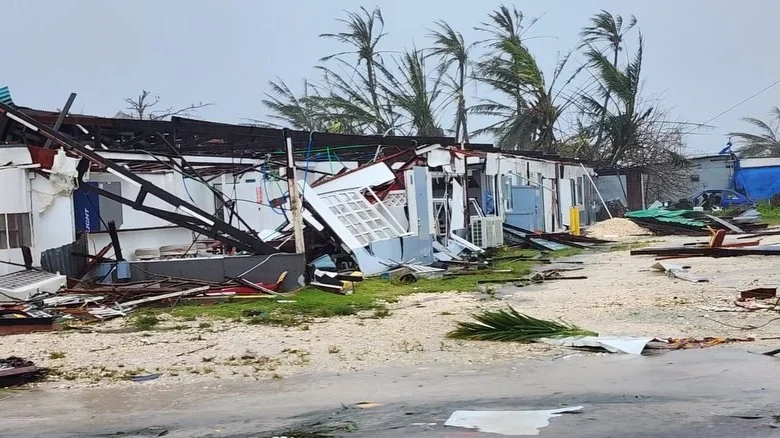
The Commonwealth of the Northern Mariana Islands (CNMI) is grappling with the catastrophic aftermath of Super Typhoon Sinlaku, the most powerful tropical cyclone of 2026, which tore through the archipelago this week with sustained winds of 185 mph. The Category 5 monster, characterized by its unusual longevity and rapid intensification, lingered over the islands of Saipan and Tinian for more than 48 hours, leaving a trail of demolished homes, flooded infrastructure, and a total collapse of essential utilities. As the storm finally recedes into the Philippine Sea, the 50,000 residents of this U.S. territory find themselves at the center of a complex humanitarian crisis, exacerbated by a partial federal government shutdown and a pre-existing economic depression that has left the islands’ resources bone-dry.
The Genesis and Path of a Pacific Monstrosity
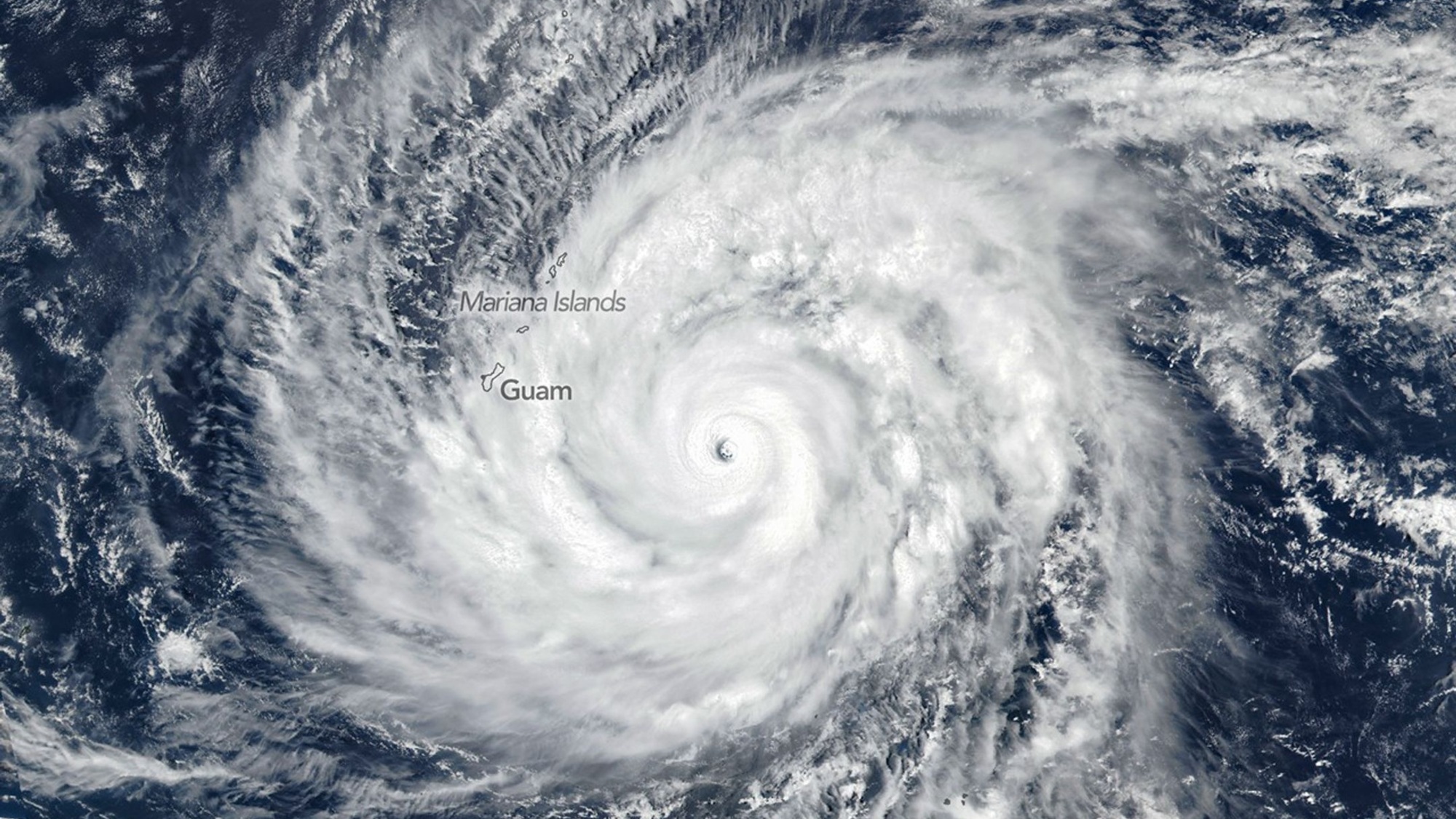
Super Typhoon Sinlaku began as a low-pressure disturbance southeast of the Mariana Islands archipelago. Benefiting from exceptionally high sea surface temperatures, the system underwent what meteorologists term "rapid intensification," jumping from a tropical storm to a Category 5 super typhoon in less than 36 hours. This phenomenon, increasingly common in the warming waters of the Western Pacific, turned a predictable weather event into a historic catastrophe.
The storm’s first victim was the state of Chuuk in the Federated States of Micronesia. As Sinlaku churned westward, it lashed the islands with hurricane-force winds, resulting in at least one confirmed death and leaving one fisherman missing at sea. Local officials in Chuuk reported widespread damage to subsistence crops and coastal dwellings before the storm set its sights on the Mariana chain.
By Tuesday, Sinlaku passed just north of Guam. While the larger territory avoided a direct hit from the eyewall, it was not spared. Tropical storm-force winds and torrential rain triggered flash flooding across Guam’s low-lying villages, toppling trees and knocking out power to thousands of residents. However, the true brunt of the storm was reserved for the islands of Saipan and Tinian. Following a trajectory hauntingly similar to 2018’s Super Typhoon Yutu, Sinlaku’s eyewall raked across the CNMI, bringing a storm surge that inundated coastal roads and wind speeds that shredded tin roofs like paper.
A Lingering Nightmare: The 48-Hour Siege
What distinguished Sinlaku from previous disasters was its agonizingly slow movement. While most typhoons pass over the narrow islands of the CNMI in a matter of hours, Sinlaku stalled. For two full days, residents sheltered in concrete bunkers or makeshift safe rooms as the storm’s "whistling" winds—described by survivors as a constant, deafening roar—battered the islands.
Ed Propst, a Saipan resident and former legislator, provided a harrowing account of the conditions during the peak of the storm. Speaking from his home while the winds were still raging on Thursday morning, Propst noted that the duration of the event was unprecedented in his lifetime. "I’ve never seen anything like this, where a typhoon just doesn’t seem to leave," he said. The psychological toll of the prolonged whistling and the sound of debris striking homes has left the community in a state of collective trauma, particularly for those who had only recently finished rebuilding from the devastation of Typhoon Yutu eight years ago.
The timing of the storm has also raised alarms among meteorologists and residents alike. April is considered the "off-season" for major typhoons in the Western Pacific, with the peak season typically beginning in June or July. The arrival of a Category 5 storm this early in the year is a statistical anomaly that many locals see as a harbinger of a changing climate.
The Role of Climate Change and Warming Oceans
Scientific analysis of Super Typhoon Sinlaku points toward a clear correlation between rising ocean temperatures and storm intensity. Daniel Swain, a climate scientist at the California Institute for Water Resources, noted that in the days preceding the storm’s formation, ocean surface temperatures in the region were 3 to 5 degrees Fahrenheit above the historical average.
"Because warm tropical oceans act as ‘hurricane fuel,’ the current super typhoon has rapidly intensified in a favorable environment that is at least partly linked to climate change via warming oceans," Swain explained. This thermal energy allowed Sinlaku to maintain its Category 5 status far longer than expected. The increased heat content of the ocean not only fuels higher wind speeds but also allows the atmosphere to hold more moisture, leading to the catastrophic rainfall totals recorded on Saipan, which preliminary data suggests may exceed 20 inches in certain mountainous areas.
A Territory on the Brink: Economic and Political Context
The arrival of Sinlaku could not have come at a worse time for the CNMI. The territory is currently enduring a severe economic downturn. Since the COVID-19 pandemic, the islands’ primary industry—tourism—has failed to recover. Arrivals are down by more than 50 percent compared to 2019 levels, a decline driven by geopolitical tensions and restricted flight paths from key markets in East Asia.
Before the storm, the CNMI’s lone representative in Congress, Kimberlyn King-Hinds, had been aggressively lobbying the Trump administration for a federal bailout and policy shifts, such as loosening visa restrictions for Chinese and Filipino travelers to stimulate the economy. These pleas had largely gone unanswered. Now, with the islands’ infrastructure in ruins, the economic crisis has transformed into a survival crisis.
Sheila Babauta, a climate justice advocate and fellow with the nonprofit Right to Democracy, highlighted the intersection of these issues. Sheltering with her two-month-old infant as the storm raged, Babauta emphasized that the CNMI was already fighting "ecological threats from the federal government, like deep-sea mining and militarization," while trying to manage coastal erosion and an economic collapse. "Our community is strong," she said, "but even warriors need rest."
The DHS Shutdown and the Federal Response
The recovery effort is further complicated by a political stalemate in Washington, D.C. A partial shutdown of the Department of Homeland Security (DHS)—the parent agency of the Federal Emergency Management Agency (FEMA)—has created uncertainty regarding the long-term availability of disaster relief funds. The shutdown, rooted in a congressional dispute over immigration policy and border enforcement, has left FEMA operating on a "life and safety" basis.
While President Donald J. Trump approved an emergency declaration for the CNMI ahead of the storm, allowing FEMA to pre-stage supplies, the agency’s ability to sustain a multi-year rebuilding effort is in question. FEMA officials confirmed they have roughly 90 personnel on the ground in Guam and the CNMI, with a distribution center in Guam stocked with 1.1 million liters of water and over 700,000 meals. However, a FEMA spokesperson warned that the "stalemate in Congress" could harm the replenishment of the Disaster Relief Fund.
"We urge Democrats in Congress to stop playing games and restore DHS’s funding before American communities suffer the next disaster alone," the spokesperson stated, reflecting the highly partisan atmosphere surrounding the federal response.
Colonial Status and the Lack of Political Agency
The struggle to secure federal attention and consistent funding highlights a perennial issue for U.S. territories: their lack of political power in the federal system. Adi Martínez-Román, co-director of Right to Democracy, noted that the CNMI’s status as a territory—effectively a modern-day colony—deprives its residents of the agency needed to influence federal policy.
Residents of the CNMI cannot vote for the President of the United States, and they have no voting representation in the U.S. Senate. Even their House delegate, King-Hinds, lacks a vote on the floor of the House of Representatives. "Programs are built responding to constituencies, and we are not considered a constituency," Martínez-Román said. This lack of a "political voice" often results in territories being an afterthought in federal budgeting, a reality that becomes life-threatening when a Category 5 typhoon levels the region.
The Road to Recovery
As the sun rises over Saipan and Tinian, the scale of the task ahead is becoming clear. The islands are currently without a functional power grid, and the water distribution system has been compromised by pump failures and line breaks. Communication remains spotty, with most residents relying on satellite phones or high-end emergency beacons to check in with family members abroad.
The historical precedent of Super Typhoon Yutu looms large. Seven years after that storm, some students in the CNMI were still attending classes in temporary tents because federal rebuilding funds were delayed or tied up in bureaucratic red tape. The fear among local leaders is that Sinlaku will reset the clock, undoing years of progress and triggering a new wave of outmigration as residents seek stability on the U.S. mainland.
Despite the daunting challenges, the spirit of "Inafa’ Maolek"—a Chamorro concept of restoring harmony and helping one’s neighbor—remains the bedrock of the community. Ed Propst noted that while federal aid is vital, the immediate survival of the islands will depend on the residents themselves. From sharing generators to distributing baby formula to trapped families, the grassroots response has already begun.
"We’ve been through this before," Propst said, "and we know what it takes to get through it again." However, as climate change increases the frequency of these "once-in-a-generation" storms, the question remains how much more the people of the Northern Mariana Islands can endure without systemic changes to how the federal government views and supports its Pacific territories.