The $1.15 billion effort to prevent invasive Asian carp from entering the Great Lakes has transitioned from a critical environmental infrastructure project into a high-stakes political battleground between the Trump administration and Illinois Governor JB Pritzker. The conflict escalated significantly this week as the U.S. Army Corps of Engineers announced a drastic shift in the management of the Brandon Road Interbasin Project, moving oversight from Illinois to Michigan. This decision has sparked allegations of political maneuvering, threats of legal action, and deep concerns over the future of the Great Lakes’ multi-billion-dollar ecosystem.
The Brandon Road Interbasin Project is a massive engineering undertaking designed to create a "fortress" in the Des Plaines River near Joliet, Illinois. Its primary goal is to block the migration of invasive carp—specifically silver and bighead carp—from the Mississippi River basin into Lake Michigan. The project involves a sophisticated suite of deterrent technologies, including an electric barrier, acoustic blast zones, a bubble curtain, and a specialized flushing lock intended to purge fish from vessels moving through the canal. However, the technical complexities of the project have recently been overshadowed by a breakdown in federal-state relations.
On Thursday, the Trump administration signaled a sharp departure from previous collaborative efforts. In a statement released on X (formerly Twitter), Adam Telle, the Assistant Secretary of the Army for Civil Works, announced that the federal government was "aggressively moving out on this project and moving its management out of Illinois." Telle characterized Illinois as an "unreliable partner," accusing the state of being "delinquent on its payments and real estate commitments." He further asserted that the Great Lakes states could not allow one state to exert "undue influence" or use the project to "play more games."
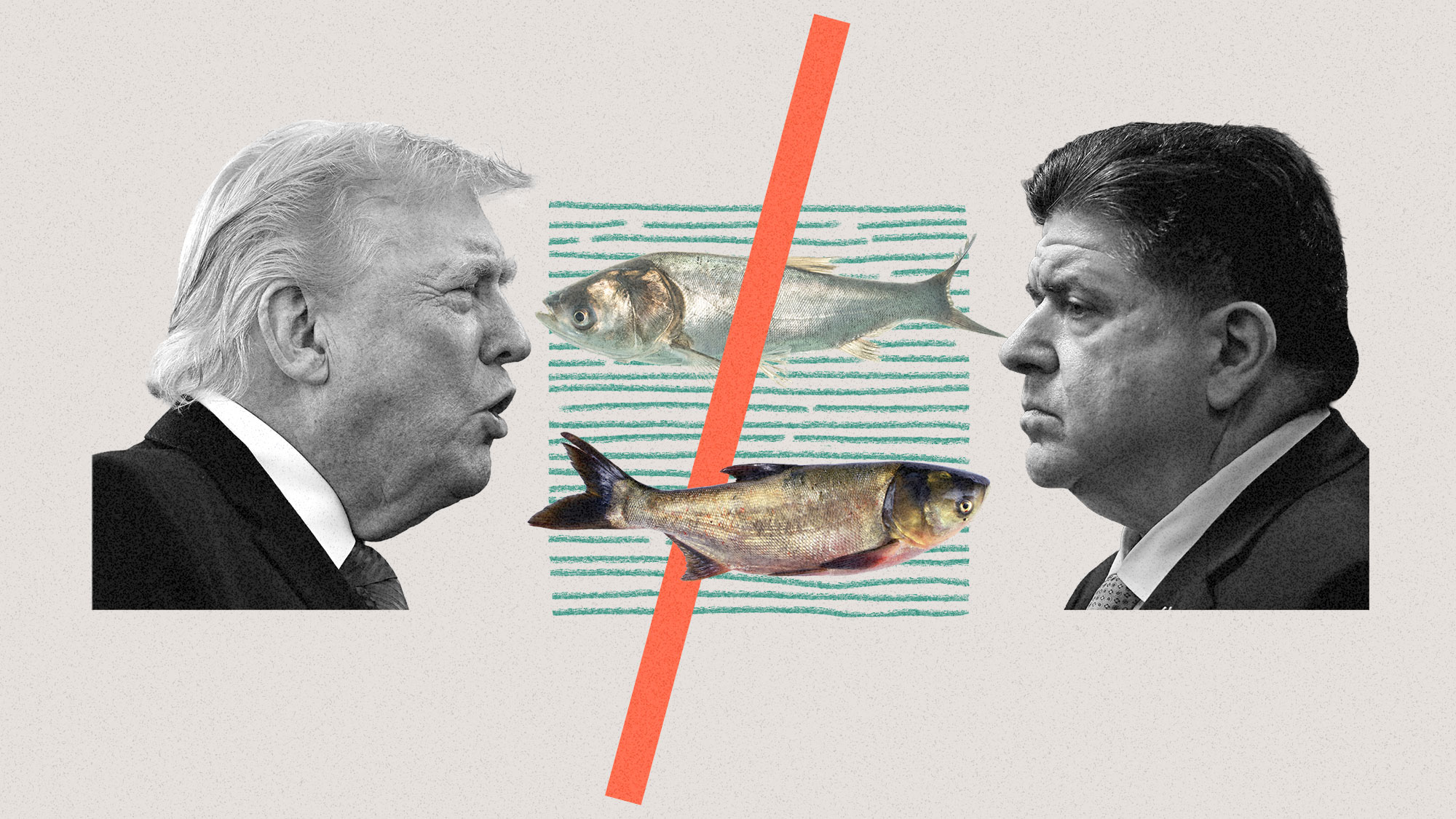
Governor Pritzker immediately rejected these accusations, labeling the move a "political stunt" orchestrated by the White House. Pritzker maintained that Illinois has upheld all its commitments, including the allocation of approximately $50 million for design and early construction. He argued that the federal government is the party responsible for the current delays, citing the withholding of funds previously promised under the bipartisan infrastructure law. "Trump must stop this political stunt and start releasing the funds," Pritzker stated, adding that Illinois is prepared to defend its jurisdiction in court. "Illinois owns the land the Brandon Road Project will be built on—Trump cannot just decide to give it away."
A Half-Century of Ecological Migration
The threat posed by Asian carp is not a new phenomenon, but rather the culmination of a biological migration that began five decades ago. In the 1970s, silver and bighead carp were imported to the United States to control algae and weed growth in aquaculture ponds and wastewater treatment facilities in the South. During major flooding events in the Mississippi River basin, the fish escaped into open waters.
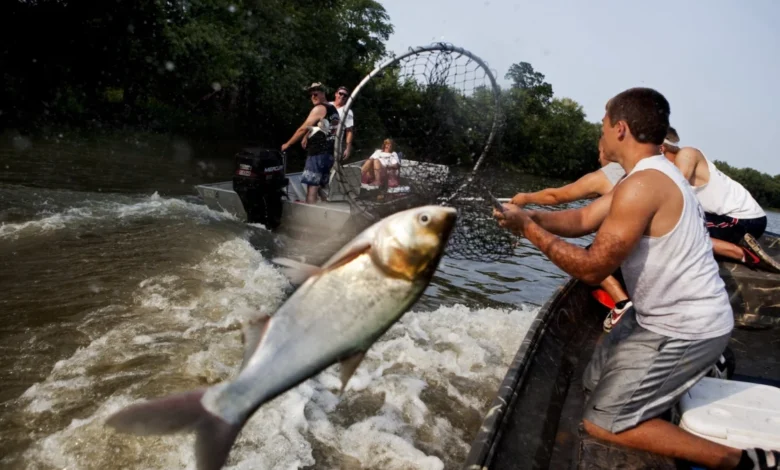
Lacking natural predators and possessing voracious appetites, the carp rapidly moved northward. Silver carp are known for their tendency to leap out of the water when startled by boat engines, posing a physical danger to boaters. More significantly, bighead carp can grow to over 100 pounds and consume up to 40 percent of their body weight in plankton daily. By stripping the water of the foundational food source for native species, they have effectively decimated local fish populations in stretches of the Illinois and Mississippi Rivers.
The Chicago area serves as the primary "chokepoint" because of the Chicago Sanitary and Ship Canal, a man-made link completed in 1900 that reversed the flow of the Chicago River and connected the Great Lakes basin to the Mississippi River basin. This artificial connection created a permanent pathway for invasive species to move between two of the world’s largest freshwater systems.
The Economic Stakes of the Great Lakes
The urgency surrounding the Brandon Road Project is driven by the immense economic value of the Great Lakes. The region supports a commercial, tribal, and recreational fishery valued at more than $7 billion annually. Beyond fishing, the lakes fuel a $15 billion tourism and outdoor recreation industry.
Experts warn that if Asian carp establish a self-sustaining population in Lake Michigan, the impact on native species like whitefish, lake trout, and walleye would be catastrophic. The Great Lakes ecosystem is already under stress from other invasive species, such as zebra mussels and sea lampreys. The addition of a dominant competitor like the Asian carp could lead to a total collapse of the existing food web, threatening the livelihoods of tens of thousands of people in Michigan, Wisconsin, Ohio, New York, and Ontario.
A Turbulent Project Timeline
The Brandon Road Interbasin Project has faced a series of administrative and financial hurdles over the last year. The current standoff is the latest in a timeline marked by sudden shifts in federal policy:
- July 1, 2024: Illinois, Michigan, and the Army Corps of Engineers signed a formal agreement to execute the project. Illinois committed $50 million and began acquiring the necessary real estate, including a 50-acre stretch of riverbed and nearly 3 acres of adjacent land.
- February 2024: Governor Pritzker placed the project on a temporary hold, expressing concern that the Trump administration was withholding federal funds earmarked for the project under the bipartisan infrastructure law.
- Spring 2024: President Trump issued a memorandum expressing support for the project, leading to the Army Corps confirming $100 million for the first phase of construction.
- July 2024: The first phase of construction was reportedly completed.
- December 2024: The Trump administration issued a comprehensive review of the project, effectively freezing further progress and construction.
- January 2025: President Trump signaled a closer alliance with Michigan Governor Gretchen Whitmer on the issue, posting on social media that he was working with her to "save the Great Lakes" and claiming "only Trump can do it."
- February 2025: The Army Corps officially announces the transfer of project management to its Detroit office, bypassing Illinois authorities.
The Michigan Connection and Land Ownership Disputes
The decision to move management to Michigan places Governor Gretchen Whitmer in a complex position. While Whitmer has been a vocal advocate for the barrier, her administration must now navigate the legal and logistical fallout of the federal government’s rift with Illinois. Stacey LaRouche, Whitmer’s press secretary, stated that the governor is focused on "moving forward with urgency" to protect the lakes and power economic growth.
However, the logistics of the move remain unclear. The Brandon Road Lock and Dam is physically located in Illinois. Under the previous agreement, Illinois was responsible for acquiring the land and managing the remediation of legacy coal ash pollution on the site—a costly and complicated environmental cleanup.
Pritzker’s threat of litigation hinges on the fact that Illinois holds the titles to the property required for the expansion. If the state refuses to grant access or transfer ownership to federal or Michigan authorities, the project could be tied up in the court system for years. Legal experts suggest that the federal government might attempt to use eminent domain to seize the land, but such a move against a sovereign state would be a rare and aggressive legal maneuver.
Implications for Regional Cooperation
The breakdown in communication between the federal government and Illinois marks a significant departure from the historical "Great Lakes Compact" model of regional cooperation. For decades, the eight states bordering the lakes have worked in relative harmony to manage water levels and combat invasive species.
The current dispute suggests a "divide and conquer" strategy, where the federal government aligns with one state (Michigan) to isolate another (Illinois). While this may expedite certain administrative processes in the short term, it risks alienating a key partner whose geography is essential to the project’s success.
Furthermore, the freezing of funds and the management reshuffle have left the actual construction schedule in limbo. The Army Corps of Engineers has not yet clarified whether the move to the Detroit office will result in the immediate unfreezing of the $1.15 billion in project funds. Without active construction, the "window of opportunity" to stop the carp before they reach the Chicago Area Waterway System continues to close.
As the political rhetoric intensifies, the biological reality remains unchanged. The Asian carp continue to move, spawn, and compete for resources. For the residents and industries that rely on the Great Lakes, the concern is that by the time the political and legal battles are settled, the fish may have already won the race to the lakes.