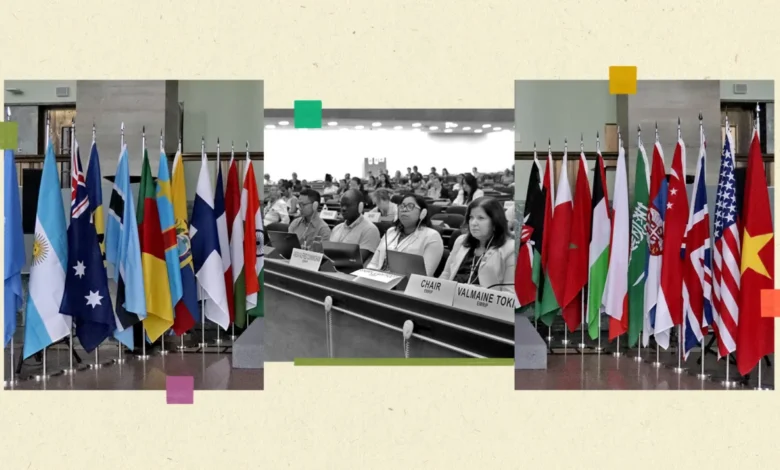
Indigenous leaders and representatives from across the globe have converged at the United Nations to deliver a comprehensive 12-point strategic plan, demanding that the international community transition from symbolic gestures to substantive action in the protection of Indigenous lands, cultures, and lives. The proposal, finalized by the seven Indigenous members of the United Nations Expert Mechanism on the Rights of Indigenous Peoples (EMRIP), serves as a direct response to a "colliding" set of global crises, including the accelerating impacts of climate change, systemic violence, and the emerging ethical threats posed by artificial intelligence. While the plan offers a roadmap for the future of Indigenous rights, the proceedings have been overshadowed by a deepening financial crisis within the United Nations that threatens the very existence of the platforms through which these voices are heard.
The urgency of the moment was underscored by Cora McGuire-Cyrette, a member of the Bingwi Neyaashi Anishinaabek and a representative of the Ontario Native Women’s Association. Speaking on behalf of her community, McGuire-Cyrette emphasized that the time for rhetorical support has passed. "Our communities—our women, our children, our families—they have a right to action and that’s what we’re not seeing globally," she stated. Her call for "sweeping and rapid action" reflects a growing frustration among Indigenous delegates who argue that international legal frameworks are being ignored or actively dismantled by member states.
The 12-Point Plan: A Strategic Framework for Survival
The recommendations finalized by EMRIP are designed to be presented to the United Nations Human Rights Council. These points address a broad spectrum of vulnerabilities that Indigenous populations face in the 21st century. Central to the proposal is the demand for stronger legal protections for Indigenous cultures and a significant expansion of their influence in global governance.
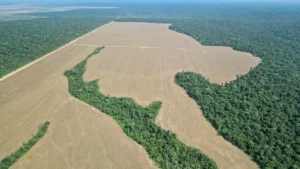
A critical component of the plan involves the protection of Indigenous peoples living in voluntary isolation or initial contact. These groups, often located in the deep recesses of the Amazon basin or remote regions of Southeast Asia, are among the most vulnerable humans on Earth. As industrial expansion, illegal logging, and mining encroach on their ancestral territories, the EMRIP proposal calls for international mandates to ensure their right to remain isolated and protected from external pathogens and violence.
Furthermore, the 12-point plan emphasizes "data sovereignty"—the right of Indigenous peoples to control the collection, ownership, and application of data regarding their peoples, lands, and resources. In an era where artificial intelligence and big data are increasingly used for resource extraction and surveillance, Indigenous leaders argue that their traditional knowledge must be shielded from exploitation. The proposal also stresses the revitalization and preservation of Indigenous languages, many of which are at risk of extinction due to the lingering effects of colonial education systems and modern globalization.
Historical Context and the Regression of Rights
The current push for action comes nearly two decades after the adoption of the United Nations Declaration on the Rights of Indigenous Peoples (UNDRIP) in 2007. While UNDRIP was initially hailed as a landmark achievement in international law, many delegates at the recent EMRIP session pointed to a disturbing trend of "stagnation and regression" regarding its implementation.
Albert Barume, the U.N. Special Rapporteur on the rights of Indigenous peoples and former chairperson of EMRIP, provided a grim assessment of the current geopolitical landscape. According to Barume, the global momentum for human rights has stalled. He noted that in recent years, almost no member states have introduced new measures to protect Indigenous rights. More alarmingly, he observed that states that previously possessed robust legal and policy frameworks are now actively dismantling those protections.
This regression is visible in various regions. In Aotearoa New Zealand, Macy Duxfield, representing the Ngaa Rauru, Te Ātihaunui-a-Pāpārangi, and Ngāi Tahu nations, described the current domestic policy environment as increasingly regressive. Despite these setbacks, Duxfield highlighted the intergenerational resilience of Indigenous struggle. "We exist in this moment," she said. "We’ve inherited the work from our ancestors, and we pass it on to our descendants." Her comments reflect a sentiment shared by many at the forum: that the fight for rights is a perpetual obligation that transcends specific political administrations.
The Institutional Crisis: Funding and the "Liquidity" Problem
While the 12-point plan offers a vision for progress, the mechanisms required to implement it are facing an existential threat. EMRIP is one of three primary U.N. bodies dedicated to Indigenous issues, alongside the Permanent Forum on Indigenous Issues and the Special Rapporteur. All three are currently grappling with severe financial constraints.
The U.N. Voluntary Fund for Indigenous Peoples, which provides financial assistance to help Indigenous representatives travel to Geneva and New York to participate in international sessions, is in a precarious state. Marjolaine Étienne, an Innu from the Pekuakamiulnuatsh community in Quebec, warned that the fund is dangerously under-supported. Currently, only eight countries contribute to the fund, which operates on a budget of less than $2 million annually. The U.N. Trust Fund for Indigenous Peoples is in even worse condition, with only three contributing countries. Notably, the United States does not contribute to either fund.
The lack of financial support has a direct impact on representation. Without the Voluntary Fund, many Indigenous leaders from the Global South or impoverished communities are effectively silenced, as they cannot afford the high costs of international travel and lodging. McGuire-Cyrette warned that the U.N.’s broader "liquidity crisis" must not be used as a pretext to scale back EMRIP’s mandate or reduce the frequency of country-specific engagements.
Analyzing the Impact of UN80 and Global Reforms
The financial instability arrives at a time when the United Nations is undergoing a significant internal reform process known as "UN80," aimed at streamlining the organization ahead of its 80th anniversary in 2025. Sheryl Lightfoot, an Anishinaabe expert and the North America region representative for EMRIP, acknowledged the uncertainty surrounding these reforms.
"There are a lot of unanswered questions right now about the reforms and what the impacts of that might be for Indigenous-specific mechanisms," Lightfoot said. While the goal of the reforms is to find "efficiencies," there is widespread concern among Indigenous advocates that "efficiency" may become a euphemism for the consolidation or elimination of specialized human rights bodies. Lightfoot emphasized that EMRIP is attempting to be proactive, preparing for various scenarios to ensure that the Indigenous voice remains a permanent fixture in the international arena.
Implications for Climate Change and Global Security
The failure to protect Indigenous rights has implications that extend far beyond Indigenous communities themselves. Indigenous peoples represent approximately 5% of the global population but protect an estimated 80% of the world’s remaining biodiversity. As the 12-point plan highlights, the protection of Indigenous land rights is a fundamental prerequisite for meeting global climate targets.
When Indigenous land rights are regressed—as seen in the dismantling of environmental protections in various resource-rich nations—the global community loses its most effective stewards of carbon-sequestering forests and vital ecosystems. The EMRIP proposal argues that empowering Indigenous women and girls is particularly crucial in this regard, as they often serve as the primary keepers of traditional ecological knowledge.
The rise of artificial intelligence also presents a new frontier of risk. Indigenous leaders are concerned that AI technologies, often developed without Indigenous input, could be used to misappropriate traditional medicines or map Indigenous lands for extraction without consent. The demand for data sovereignty is, therefore, not just a matter of privacy, but a matter of economic and cultural survival.
Conclusion: A Call for State Accountability
The 12-point plan presented to the U.N. Human Rights Council is more than a list of requests; it is an indictment of the current state of international diplomacy. The contrast between the ambitious goals of the proposal and the dwindling financial resources of the U.N. Indigenous bodies illustrates a significant gap between the international community’s stated values and its actual priorities.
As the session concluded, the message from the delegates was clear: the survival of Indigenous peoples is inextricably linked to the integrity of international human rights institutions. If these platforms are allowed to wither due to financial neglect or political regression, the world risks losing the unique perspectives and knowledge systems that are essential for navigating the complex crises of the modern era.
The success of the 12-point plan now rests with the U.N. member states. The Indigenous leaders have provided the roadmap; the question remains whether the world’s governments have the political will to follow it, or if the "stagnation and regression" identified by Albert Barume will become the defining legacy of the 21st-century human rights movement. For now, Indigenous leaders like McGuire-Cyrette and Lightfoot remain committed to the process, waiting to see if the U.N. will rise to meet the urgency of the moment or allow its most essential voices to be sidelined by a lack of funding and political courage.