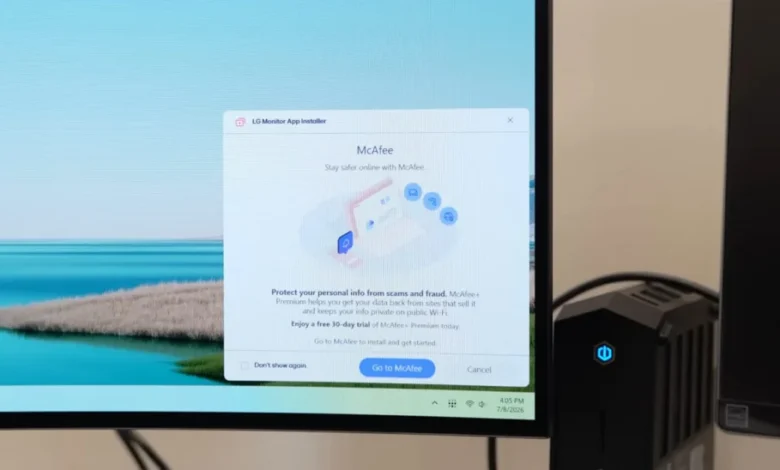
The integrity of premium hardware purchases has been called into question following widespread reports that LG monitors are covertly installing an application, "LG Monitor App Installer," onto users’ systems without explicit consent, subsequently pushing advertisements and raising significant privacy alarms due to its expansive data collection permissions. This practice, initially highlighted by technology news outlets and prominent tech reviewers, reveals a concerning trend where high-value consumer electronics become vectors for unwanted software, eroding consumer trust and challenging established norms of digital privacy.
The Unwanted Intrusion: A Breach of Trust and Privacy
Users who have invested, in some cases, over $1,000 in LG’s supposedly premium computer monitors are discovering the "LG Monitor App Installer" and associated advertisements appearing on their Windows systems without any prior notification or request for permission. This unbidden installation is not merely a nuisance; it represents a profound breach of user autonomy and privacy. The gravity of the situation is underscored by the extensive permissions granted to the application upon installation. According to cybersecurity expert Burke, the app "technically possesses permission to use ‘all system resources’," a broad mandate that raises immediate red flags. More alarmingly, Burke further detailed that the application is capable of collecting "geolocation, device data, online activity, contacts, user credentials, transactions, and more." Such a comprehensive scope of data collection, especially without explicit, informed user consent, transforms a seemingly benign utility into a powerful surveillance tool.
The implications of an application with such permissions are far-reaching. In an era increasingly sensitive to data privacy, the potential for a monitor companion app to access user credentials, transaction history, and even contact lists on a personal computer is deeply unsettling. It suggests a blurring of lines between necessary device functionality and aggressive data harvesting strategies, pushing the boundaries of acceptable software practices. For consumers who purchase high-end monitors expecting a clean, professional, and private computing experience, the discovery of such an intrusive application is disruptive, frustrating, and a significant betrayal of trust. The concern is amplified by the fact that these monitors are not entry-level products but often represent a substantial investment, where users anticipate a superior experience, not unsolicited advertising and data extraction.
A Pattern of Covert Deployment and Escalation
Evidence suggests that this problematic practice is not a recent phenomenon but rather one that has been ongoing for several years, with a noticeable expansion in its prevalence more recently. Burke, for instance, reported beginning to observe pop-up advertisements on LG monitors he had purchased three years prior, indicating either a delayed activation of this functionality or a retroactive deployment of the installer. This chronology implies a deliberate strategy rather than an accidental oversight, leading to questions about LG’s long-term intentions regarding its hardware ecosystem.
The issue gained significant public traction following an in-depth investigation by Gamers Nexus, a respected tech hardware review channel. Gamers Nexus shared compelling visual evidence, including a screenshot depicting LG’s app being installed via Windows Update, further validating user complaints and bringing the issue to a wider audience. This public exposé served as a critical turning point, transforming isolated user frustrations into a collective industry-wide concern. The fact that the installation appears to leverage standard Windows Update mechanisms lends a veneer of legitimacy to the process, making it even more insidious for unsuspecting users who trust their operating system’s update procedures.
Microsoft’s Enabling Role: The Universal Windows Platform Device Apps
Central to understanding how such an unconsented installation can occur is Microsoft’s policy regarding Universal Windows Platform (UWP) device apps. The "LG Monitor App Installer" is listed on the Microsoft Store with a description stating its purpose is to allow users to "easily install and use apps supported by your monitor." Notably, the description explicitly lists McAfee, a third-party security software, as one of these "supported apps," hinting at potential revenue streams beyond direct hardware sales through bundled software installations.
Microsoft’s own documentation for Windows developers, specifically a support page concerning "auto-install for UWP device apps," provides critical insight into the mechanism. It states that UWP device apps are permitted to "automatically install when the user connects their device to the PC" under certain conditions. These conditions include the user not having opted out of "Recommended Settings" during Windows installation, being connected to the Internet, and being signed into the Microsoft Store. Crucially, Microsoft’s page also contains a stark warning: "The automatic installation feature does not provide a notification to the user when the app is installed. Some users may find this experience confusing and frustrating and give your app a bad rating."
This policy, while technically outlined by Microsoft, effectively creates a loophole that allows hardware manufacturers to bypass explicit user consent for software installations. By bundling their companion apps as UWP device apps and leveraging default Windows settings, manufacturers can introduce software onto a user’s system without any prompt or notification. While Microsoft acknowledges the potential for a negative user experience, the framework itself facilitates practices that many consumers would consider deceptive or intrusive. This raises significant questions about Microsoft’s responsibility in maintaining a transparent and user-consented software environment on its platform.
A Broader Industry Issue: The Persistence of Bloatware
The controversy surrounding LG is not an isolated incident but rather a symptom of a pervasive problem within the hardware industry: the bundling of "bloatware" or "crapware." Many other prominent hardware vendors have faced similar criticisms for their devices automatically installing unwanted software when connected to a computer. Examples cited include gaming peripheral manufacturers like Razer and Logitech, as well as motherboard manufacturers such as Asus and Gigabyte. These companies have historically been called out by user communities for practices ranging from installing proprietary control software without clear prompts to bundling trialware or unnecessary utilities.
The motivations behind these practices are varied but often converge on generating additional revenue. This can come from direct payments by third-party software vendors (like McAfee, as indicated in LG’s app description) for pre-installation, or from monetizing user data collected through these companion applications. While some peripherals, particularly complex gaming devices, might genuinely benefit from dedicated control software for customization, monitors generally do not require extensive companion apps for their core functionality. The primary purpose of a monitor is to display images, and most adjustments can be made via on-screen display (OSD) menus or standard operating system settings. Therefore, the forcible installation of the "LG Monitor App Installer" is perceived as particularly egregious, lacking clear functional justification and instead pointing towards ulterior motives related to advertising and data collection. This trend underscores a broader commercialization of hardware ecosystems, where the sale of the physical product is increasingly just the beginning of a potential revenue stream derived from software and data.
LG’s Silence and the Call for Accountability
In the wake of these revelations, Ars Technica, a respected technology publication, reached out to LG for comment, seeking clarification on the purpose of the "LG Monitor App Installer," the specific monitors affected, and the pressing privacy concerns raised by its data collection permissions. A company representative acknowledged receipt of the questions but, as of the time of publication, failed to provide a substantive response. This silence from LG further exacerbates user frustration and fuels speculation about the company’s internal policies and commitment to customer privacy.
In such situations, consumers and industry observers typically expect transparency, an explanation of the underlying rationale, an apology for the unconsented installations, and a commitment to rectify the situation. LG’s lack of immediate public response leaves a void, allowing concerns to fester and potentially damaging its brand reputation, particularly among its most loyal and premium-segment customers.
Gamers Nexus, citing numerous user complaints, has identified several LG monitor models as being implicated in the auto-installation of the "LG Monitor App Installer" onto PCs. While a specific list was provided by Gamers Nexus, the broader context of Microsoft’s UWP device app policy suggests that the problem may extend to a wider array of LG monitors, potentially encompassing any model for which LG has developed a UWP companion app. Users are therefore advised to review their installed applications and system settings proactively.
Broader Implications and the Future of Consumer Hardware
This incident carries significant implications for consumer trust, regulatory oversight, and the future landscape of hardware manufacturing.
Firstly, it represents a substantial erosion of consumer trust. When users invest in premium hardware, they expect a product that respects their privacy and autonomy, not one that covertly installs bloatware and tracks their online activities. This could lead to a significant backlash against LG and potentially influence purchasing decisions, with consumers increasingly scrutinizing the software practices of hardware vendors.
Secondly, the incident highlights a potential regulatory blind spot. In an era where data privacy regulations like GDPR and CCPA are becoming increasingly stringent, the unconsented collection of extensive user data through a device companion app could attract scrutiny from data protection authorities. The lack of explicit consent for such broad data harvesting raises serious questions about compliance with global privacy standards. Regulators may need to consider stricter guidelines for how hardware manufacturers can install and operate software on user systems, particularly when it involves sensitive personal data.
Finally, this situation underscores the evolving nature of consumer hardware in the age of the Internet of Things (IoT). As more devices become "smart" and interconnected, the line between hardware and software blurs, introducing new vectors for privacy intrusions and security vulnerabilities. This incident serves as a stark reminder that even seemingly innocuous peripherals like monitors can become conduits for intrusive software. It prompts a call for clearer industry standards and greater accountability from both hardware manufacturers and platform providers like Microsoft. Consumers are likely to demand "cleaner" devices, free from unwanted pre-installed software and aggressive data collection, pushing manufacturers to prioritize user experience and privacy over potentially lucrative but ethically questionable practices.
In conclusion, the unconsented installation of LG’s Monitor App Installer, with its extensive data collection permissions and disruptive advertisements, represents a significant challenge to consumer trust and digital privacy norms. While Microsoft’s UWP device app policy provides a technical framework for such installations, the ethical implications for LG and the broader hardware industry are profound. The silence from LG only deepens the concern, underscoring an urgent need for transparency, accountability, and a renewed commitment to user privacy in the design and deployment of consumer electronics.