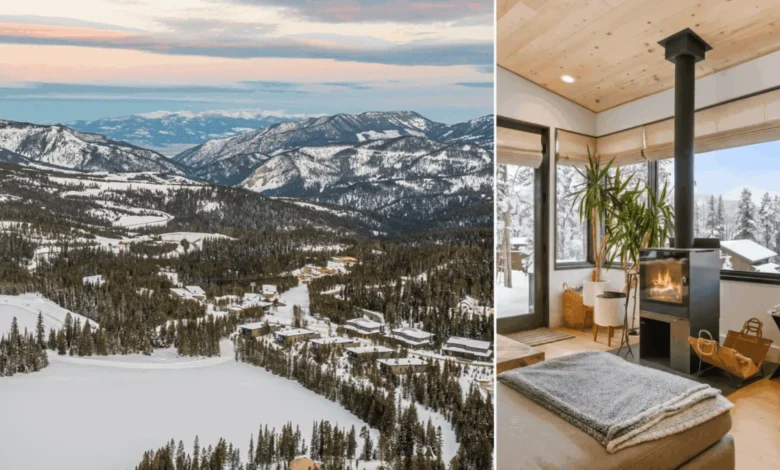
Nestled in the heart of the rugged Rocky Mountains, approximately 45 miles south of Bozeman, Montana, Big Sky has steadily transformed from a localized secret into one of North America’s premier year-round alpine destinations. Over the past six years, the region has captured the attention of travelers seeking an immersive wilderness experience paired with an increasingly sophisticated hospitality sector. Dominated by the hulking silhouette of Lone Peak—which towers at 11,166 feet above sea level—Big Sky operates as a versatile hub for outdoor recreation. Its geographic positioning offers visitors a dynamic, multi-season playground: winter brings world-class skiing across thousands of acres of powdery terrain, while summer ushers in high-alpine hiking, white-water rafting, and elite fly-fishing along the pristine waters of the Gallatin River. Furthermore, the region’s proximity to Yellowstone National Park—situated roughly an hour to the south—cements its status as a strategic basecamp for millions of tourists annually looking to explore America’s first national park.
Chronology and Evolution: From Lumber and Ranching to Modern Tourism
The history of the Big Sky area reflects the broader arc of the American West, transitioning from indigenous hunting grounds and 19th-century homesteads to timber operations and cattle ranches. The modern era of Big Sky took root in the late 1960s and early 1970s. Inspired by the vision of broadcast journalist Chet Huntley, a native of Montana, a coalition of investors including Chrysler Corporation and the Montana Power Company broke ground on the Big Sky resort development in 1970. The resort officially opened for the 1973–1974 ski season, initially centered around the Mountain Village and the slopes of Lone Mountain.
Over the subsequent decades, the destination experienced measured growth. However, the most explosive phase of development occurred in the 21st century. The acquisition of Big Sky Resort by Boyne Resorts in 1986 catalyzed decades of infrastructure improvements, culminating in massive investments in high-speed lift networks, snowmaking capabilities, and summer amenities such as mountain biking trails and zip lines. Simultaneously, the adjacent community of Meadow Village and the newer Town Center evolved into vibrant commercial and residential hubs. Today, Big Sky functions as a dual-core community—comprising the Mountain Village at the base of the slopes and the lower-elevation Town Center—blending historic ranch lands with cutting-edge architectural design and commercial enterprise.
Geographic and Environmental Landscape
The allure of Big Sky is inextricably linked to its unique geography and ecological diversity. Situated within the Greater Yellowstone Ecosystem, the region serves as a crucial wildlife corridor for grizzly bears, elk, moose, bald eagles, and wandering bison. Conservationists and wildlife management agencies closely monitor human-wildlife interactions in the area, balancing the influx of tourism with the preservation of natural habitats.
The Gallatin River, which flows directly alongside U.S. Route 191 on its way to the Missouri River, is internationally renowned for its catch-and-release fly-fishing. Designated as a Blue Ribbon trout stream, the river attracts anglers from across the globe to test their skills against native cutthroat, rainbow, and brown trout. Meanwhile, the surrounding Gallatin National Forest offers millions of acres of public lands for backcountry exploration, translating to an estimated economic and recreational value that anchors the region’s appeal.
Economic Shifts and the Hospitality Boom
In recent years, Big Sky has experienced a profound economic and structural evolution, frequently discussed by tourism analysts in the context of mountain town maturation. The destination has seen a significant influx of capital, giving rise to what hospitality experts term a luxury renaissance. Where modest motels and rustic cabins once defined the lodging landscape, a new wave of design-forward hotels, boutique mountain retreats, and ultra-luxury developments has emerged.
This hospitality boom reflects shifting consumer demands toward experiential travel that combines rugged outdoor adventure with high-end amenities. Properties ranging from historic dude ranches—such as the iconic Lone Mountain Ranch, established in 1915—to contemporary boutique hotels in the Town Center demonstrate a deliberate effort to honor the region’s Western heritage while catering to affluent travelers. Industry data indicates that average daily room rates (ADR) and RevPAR (revenue per available room) in mountain resort markets like Big Sky have seen sustained upward trajectories, driven by both winter ski tourism and an expanding summer shoulder season.
Infrastructure and Community Impact
As Big Sky continues to attract record numbers of visitors and permanent residents—spurred in part by remote work trends and lifestyle migrations—local officials and community stakeholders face complex challenges regarding infrastructure, housing, and sustainable growth. The Gallatin County government, alongside local advocacy groups such as the Big Sky Chamber of Commerce and the Big Sky Resort Area District (BSRAD), actively manages issues related to workforce housing, water resources, and transportation.
Funding generated through the resort tax—a local option sales tax approved by voters—has been instrumental in financing critical public infrastructure, including fire safety, open-space conservation, and community health services. Officials note that balancing the economic benefits of tourism with the preservation of small-town character remains a top priority for local governance.
Broader Implications for Western Mountain Tourism
The trajectory of Big Sky offers a compelling case study in the broader evolution of mountain destination economies across the United States. As traditional ski towns transition into year-round economic powerhouses, destinations must navigate the delicate equilibrium between commercial expansion and environmental stewardship. The integration of luxury hospitality with accessible wilderness recreation in Big Sky sets a benchmark for other regional hubs attempting to diversify their tourism portfolios.
Ultimately, Big Sky remains a dynamic intersection of raw wilderness and refined hospitality. Whether visitors arrive for the legendary powder snow of winter, the sun-drenched alpine meadows of spring, the roaring rivers of summer, or the golden hues of autumn ranch lands, the destination continues to redefine the modern Western escape.