The prospect of a Democratic-led House of Representatives in the coming term has ignited a fierce debate over the limits of congressional oversight and the potential weaponization of the investigative process. As Democratic lawmakers signal an intent to conduct a sweeping series of inquiries into the actions of President Donald Trump and his administration, conservative organizations and legal experts are sounding an alarm. At the heart of this controversy is the fear that the "investigative blitz" could transition from legitimate legislative oversight into a punitive mechanism designed to intimidate, bankrupt, and irreparably damage the reputations of young professionals serving in the executive branch.
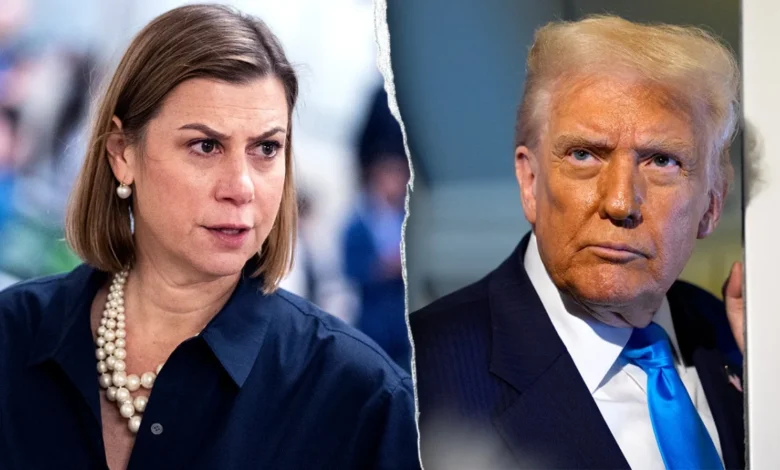
This tension reached a boiling point following recent remarks by Senator Elissa Slotkin, D-Mich., who suggested during a forum at the University of Chicago’s Institute of Politics that Democrats should prioritize sending a "deterrence message" to those considering employment within a future Trump administration. Senator Slotkin’s rhetoric, which emphasized focusing not just on the president but on the "people who enabled him," has been interpreted by critics as an invitation to utilize the power of the subpoena as a tool of political warfare.
The Precedent of the Jack Smith Investigations
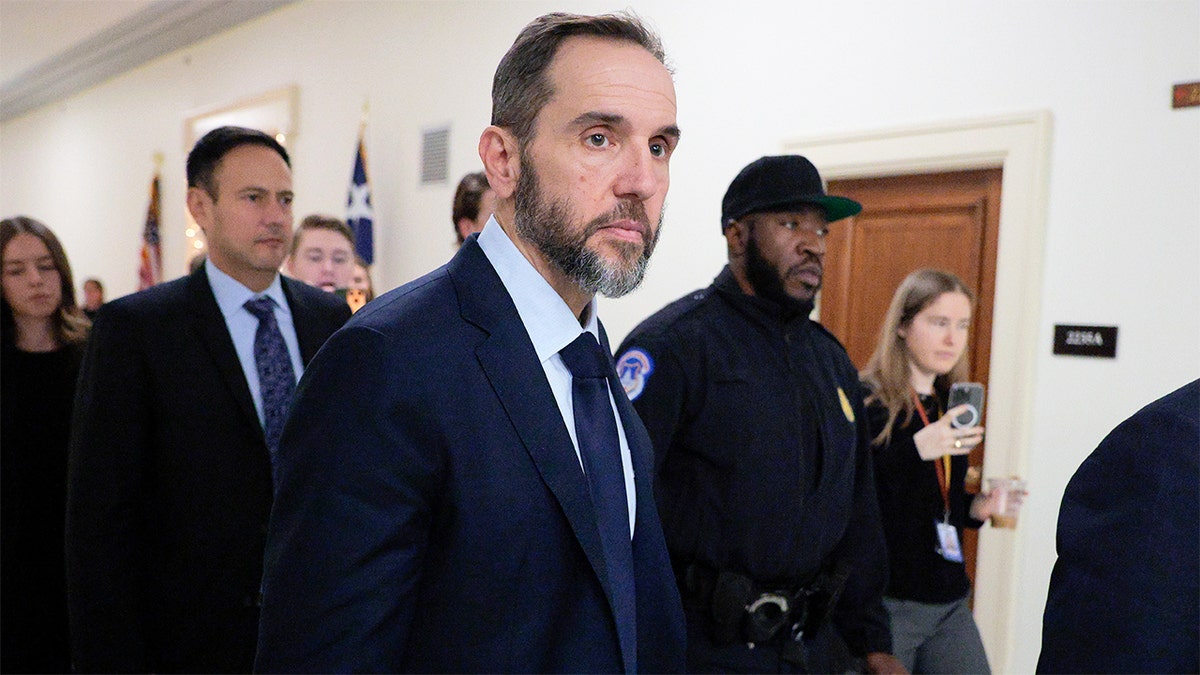
For many within the conservative movement, the primary blueprint for these concerns is the tenure of former special counsel Jack Smith. During his investigation into the 2020 election and related matters, the Justice Department issued a series of broad subpoenas that swept through numerous conservative organizations, including the Conservative Partnership Institute (CPI).
Rachel Bovard, vice president of programs at CPI, argues that the Smith investigation served as a "test run" for how executive and investigative power can be deployed to map the ideological landscape of the political right. According to Bovard, the compliance costs alone—totaling millions of dollars—placed an immense, and arguably unnecessary, financial burden on her organization. She contends that the information harvested during this period remains on file within the FBI and the Department of Justice, creating a repository of data that could be leveraged by a future administration.

The concern is not merely financial but structural. Bovard asserts that these investigative tactics were effectively used to gain access to internal organizational data, such as employee benefits and health coverage, which critics argue bore no logical nexus to the stated purpose of the special counsel’s investigation. This has led to a growing consensus among Trump’s allies that the process of being investigated is increasingly becoming the punishment itself.
Legislative Oversight Versus Political Weaponization
The constitutional authority of Congress to conduct investigations is rooted in its role as a co-equal branch of government with the power to draft legislation and oversee the administration of federal agencies. However, legal experts warn that there is a fine, yet critical, line between oversight and harassment.
Abhishek Kambli, a former federal prosecutor and current partner at the law firm Holtzman Vogel, highlights that congressional subpoenas must be anchored in a valid legislative purpose. "Congress cannot issue subpoenas for law enforcement purposes," Kambli noted. He suggests that the public comments made by legislators like Senator Slotkin could serve as a "smoking gun" for legal counsel representing those targeted by future investigations. If a subpoena is challenged in federal court, the stated intent of members of Congress to use the process for "accountability" or "deterrence" could be used to demonstrate that the underlying motive is political retribution rather than legislative inquiry.
Michael Morley, a professor at the Florida State University College of Law, offers a more nuanced perspective on the constitutional implications. While he concedes that the rhetoric surrounding these potential investigations is contrary to traditional political norms, he notes that the courts have historically granted Congress broad latitude. "I don’t think that necessarily means it rises to the level of a constitutional issue," Morley said, pointing out that Congress maintains the authority to investigate the agencies it creates and funds. Nevertheless, he acknowledged that the normalization of such discourse represents a significant shift in the tone of American governance.
The Financial and Professional Toll
The "deterrence" strategy described by some Democrats carries tangible risks for the civil service and political appointees. For a young professional, the prospect of being named in a congressional investigation involves more than just a subpoena; it involves the retention of expensive legal counsel, the potential for public shaming, and the long-term impact on one’s career trajectory.

Legal analysts point to the "Fast and Furious" investigation during the Obama administration as a historical touchstone for the limits of congressional contempt. When the House held then-Attorney General Eric Holder in contempt for refusing to comply with a subpoena, the Justice Department—under the same administration—declined to prosecute him. This established a precedent that the executive branch may resist congressional demands if it views them as overreaching.
However, for private citizens or junior staffers, the lack of institutional protection makes the threat of "lawfare" much more acute. The fear is that the investigative process will be used to bankrupt those who lack the resources to fight back, effectively chilling the pipeline of individuals willing to work in conservative administrations.
The Strategy of Preemptive Pardons
In response to the growing threat of retaliatory investigations, President Trump has signaled a willingness to utilize the presidential pardon power as a protective shield. In a recent interview with Time magazine, Trump indicated that he would consider issuing preemptive pardons for members of his administration before leaving office. He cited the precedent set by President Joe Biden’s pardon of Dr. Anthony Fauci as a justification for this approach.
Bovard and other conservative leaders view this as a necessary, if regrettable, defensive measure. "This is how we’re going to have to live: mass pardons of your political parties on either side," she remarked. While acknowledging that such an outcome is a "terrible" sign for the health of the republic, she argues that if the "Slotkin theory"—that government power should be used to deter political opponents—is fully implemented, mass pardons may be the only mechanism left to protect individuals from targeted prosecution.
Looking Ahead: The 2028 Horizon
The debate over the scope of congressional oversight is unlikely to dissipate. Instead, it is expected to intensify as the political landscape shifts toward the 2028 election cycle. If a Democratic administration takes office with a unified Congress, the potential for a coordinated effort to investigate the actions of the preceding Republican administration becomes significantly more plausible.
For now, the standoff remains primarily rhetorical. Senator Slotkin has pushed back against the criticism, labeling the backlash to her comments as "manufactured outrage." Her office has not provided further clarification on how a "deterrence message" would be implemented in a legislative setting.
As the nation navigates this period of heightened political polarization, the core of the issue remains the preservation of the rule of law. If the standard for congressional investigation shifts from uncovering policy failures to personal and professional retribution, the risk of permanent damage to the legislative process is high. Whether these threats of an "investigative blitz" materialize into formal actions or remain a feature of the current partisan rhetoric will likely depend on the electoral outcomes of the coming years and the willingness of the judicial branch to intervene in the power struggle between the House and the Executive.
In the final analysis, the situation underscores a broader decay in political norms. As both sides of the aisle increasingly look to the justice system and the subpoena power as primary tools for political competition, the line between governance and combat continues to blur, leaving the machinery of government caught in the middle of an escalating partisan cycle.