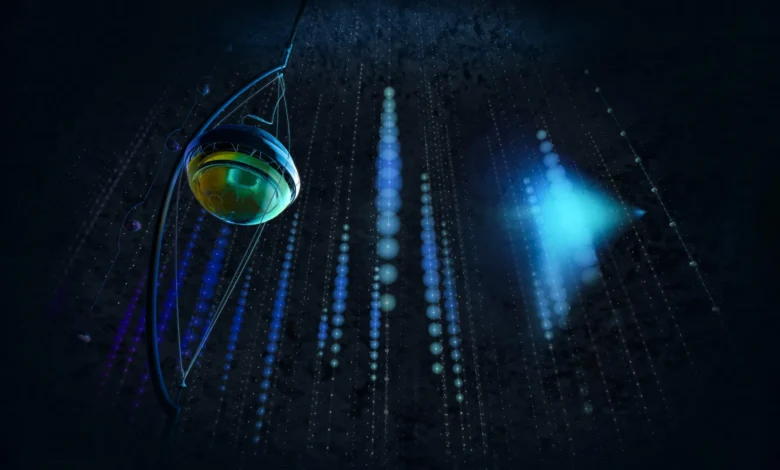
Deep beneath the frozen crust of the South Pole, an invisible universe is constantly colliding with our own. Every second, roughly one hundred billion ghostly, nearly massless particles stream through every square centimeter of the human body, leaving no physical trace as they journey through the Earth and back out into space. For decades, these elusive entities—known as neutrinos—defied measurement, earning a reputation among physicists as the ultimate "ghost particles" of the cosmos.
Today, however, a revolution in experimental physics is transforming how humanity perceives these mysterious travelers. Culminating in major international accolades, neutrino research has moved from abstract theoretical speculation to the forefront of observational astronomy. This evolution is giving scientists an unprecedented window into the most violent environments in the universe, ranging from the cores of collapsing stars to the ancient echoes of the Big Bang.
The Nature of the Elusive Neutrino
To understand why neutrinos have captured the imagination of generations of physicists, one must examine their bizarre physical properties. Categorized as elementary particles, neutrinos possess no internal structure that modern science can discern. They belong to three distinct flavors—electron, muon, and tau neutrinos—and are completely devoid of electric charge. While they do possess mass, it is extraordinarily minuscule, estimated to be roughly ten million times lighter than an electron.
Because they lack electric charge and interact only through gravity and the notoriously weak nuclear force, neutrinos traverse matter with near-absolute impunity. The weak interaction is approximately twenty orders of magnitude weaker than electromagnetism, meaning neutrinos can pass through light-years of dense lead without experiencing a single collision. This unique capability makes them peerless messengers. Unlike photons of light or charged cosmic rays, which can be scattered, absorbed, or deflected by magnetic fields en route to Earth, high-energy neutrinos travel in straight lines directly from their sources, carrying pristine data from regions of space otherwise completely veiled from observation.
The sheer abundance of these particles is staggering. Cosmological estimates suggest that the universe contains roughly 10 to the 89th power neutrinos, equating to approximately one billion for every atom in existence. They are generated by a multitude of astrophysical engines, including nuclear fusion within our Sun, stellar explosions, active galactic nuclei, and primordial processes born in the immediate aftermath of the creation of the universe.
From Theoretical Postulation to Laboratory Reality
The scientific quest to uncover neutrinos reads like a detective story spanning nearly a century. The journey began in the 1930s when theoretical physicist Wolfgang Pauli confronted a perplexing problem in nuclear physics: during certain types of radioactive decay, energy appeared to vanish. Rather than abandoning the foundational law of conservation of energy, Pauli hypothesized in 1930 that an undetected, electrically neutral particle was quietly carrying away the missing energy.
Pauli, however, was acutely aware of the daunting challenge his hypothesis presented. He famously lamented, "I have done a terrible thing, I have postulated a particle that cannot be detected." He initially referred to his hypothetical particle as a "neutron," a term later repurposed after James Chadwick discovered the actual neutron in 1932. Italian physicist Enrico Fermi subsequently coined the term "neutrino"—meaning "little neutral one" in Italian—to describe Pauli’s elusive entity.
For more than two decades, the neutrino remained strictly a mathematical construct, widely believed to be permanently invisible to experimental science. That paradigm shifted dramatically in 1956. Working at the Savannah River Nuclear Plant in South Carolina, physicists Clyde Cowan and Frederick Reines designed an experiment utilizing a nuclear reactor as an intense source of antineutrinos. Through their landmark project—affectionately dubbed "Project Poltergeist"—Cowan and Reines captured the first definitive experimental evidence of neutrino interactions.
The breakthrough established that neutrinos were physically real, opening a new chapter in subatomic physics. Over the subsequent decades, neutrino research expanded rapidly, ultimately contributing directly to five Nobel Prizes in Physics. The latest milestone in this prestigious legacy unfolded when physicist Francis Halzen was honored with the Nobel Prize for his decisive contributions to the IceCube Neutrino Observatory and the landmark discovery of high-energy neutrinos of astrophysical origin.
Chronology of Neutrino Physics Breakthroughs
- 1930: Physicist Wolfgang Pauli proposes the existence of an undetectable, neutral particle to explain missing energy in radioactive decay.
- 1934: Enrico Fermi formulates a comprehensive theory of beta decay, naming the particle the "neutrino."
- 1956: Clyde Cowan and Frederick Reines successfully detect neutrinos for the first time at the Savannah River Plant in South Carolina.
- 1968: Raymond Davis Jr. and his team detect solar neutrinos for the first time using a massive tank of cleaning fluid in the Homestake Mine, discovering the solar neutrino problem (fewer neutrinos detected than predicted).
- 1998: The Super-Kamiokande collaboration in Japan provides definitive evidence of neutrino oscillation, proving that neutrinos possess mass.
- 2010s: The IceCube Neutrino Observatory at the South Pole begins capturing ultra-high-energy astrophysical neutrinos originating from deep space.
- Present: Next-generation instruments, including the Simons Observatory in Chile, integrate cosmic microwave background data with neutrino astrophysics to probe the early universe.
Constructing an Observatory at the Edge of the World
Capturing particles that routinely pass through planetary bodies requires visionary engineering on an unprecedented scale. By the 1990s, Francis Halzen recognized that the geographic South Pole offered an ideal natural laboratory for high-energy neutrino astronomy. Deep beneath the Antarctic surface, the polar ice sheet is remarkably pure, dense, and optically transparent, free from the bubbles and chemical contaminants that plague surface ice.
This insight culminated in the construction of the IceCube Neutrino Observatory, a massive scientific instrument embedded directly within one cubic kilometer of Antarctic ice. Building IceCube required a specialized hot-water drill to melt holes up to 2.5 kilometers deep into the ice sheet. Researchers then lowered long strings of sensitive light sensors, known as digital optical modules or photomultiplier tubes, into the liquid water before it refroze.
The observatory is designed to detect a rare phenomenon known as Cherenkov radiation. When an ultra-high-energy cosmic neutrino occasionally collides with an atomic nucleus within the ice, it generates secondary charged particles, such as muons, traveling faster than the speed of light through that medium. This superluminal motion produces a faint cone of blue Cherenkov light, which the embedded photomultiplier tubes capture. By recording the arrival times and intensities of these light flashes across thousands of sensors, scientists can reconstruct the trajectory and energy of the parent neutrino with remarkable precision.
Unlocking Astrophysical Frontiers
IceCube has fundamentally shifted humanity’s relationship with the cosmos by opening the field of neutrino astronomy. While the Sun floods the inner solar system with vast quantities of low-energy neutrinos, IceCube specializes in detecting extremely rare, ultra-high-energy cosmic visitors originating far beyond our solar system. The facility records only a few dozen of these high-energy events annually, but each detection represents a pristine data point from extreme cosmic accelerators.
Dr. George Fuller, a Distinguished Professor of Physics at the University of California San Diego, has spent decades studying nuclear physics, particle astrophysics, and cosmology. Having collaborated with Halzen on early theoretical papers concerning IceCube, Fuller emphasizes the profound implications of these extreme detections.
"Some ultra-high-energy neutrinos detected at IceCube have roughly 10 billion times the energy of a typical neutrino from the Sun," Fuller notes. "We don’t really know where that neutrino came from. The fact that it got here at all may be saying something profound about the universe. In that sense, Halzen really is at the frontier of experimental fundamental particle physics."
The origins of these hyper-energetic particles remain one of modern astrophysics’ most compelling mysteries. Potential sources include supermassive black holes at the centers of active galaxies, gamma-ray bursts, and colliding neutron stars—environments where magnetic fields and gravitational forces accelerate particles to near-light speeds. By tracing these neutrinos back to their points of origin, researchers hope to map the most violent engines in the cosmos.
Expanding Horizons: From Antarctica to the Atacama Desert
The scientific pursuit of neutrino physics is not confined to the polar ice sheets. Researchers at institutions like UC San Diego are actively expanding their investigative toolkit by pairing neutrino observations with cosmology.
High in Chile’s hyper-arid Atacama Desert, the Simons Observatory is currently mapping the cosmic microwave background (CMB)—the ancient thermal radiation left over from the formation of the universe. Often described as the oldest light in the cosmos, the CMB serves as a pristine fossil record of conditions during the first few hundred thousand years after the Big Bang. Dr. Brian Keating, a Distinguished Professor of Physics at UC San Diego and principal investigator for the project, oversees operations designed to extract deep insights from this ancient radiation.
Although the Simons Observatory primarily measures primordial light, its data also carries imprints of early universe neutrinos. Because neutrinos interacted freely during the earliest moments of cosmic history, precise measurements of the CMB allow physicists to constrain the properties, masses, and numbers of cosmological neutrinos. This synergistic approach—combining direct underground detection of high-energy cosmic neutrinos with space-based and high-altitude measurements of primordial radiation—promises to resolve longstanding questions regarding the evolution and expansion rate of the universe.
Broader Implications for Fundamental Science
The ongoing maturation of neutrino astronomy represents a fundamental paradigm shift. For centuries, astronomy was restricted exclusively to the electromagnetic spectrum—visible light, radio waves, X-rays, and infrared radiation. The advent of gravitational-wave astronomy added a new dimension, and neutrino astronomy has now established a third independent messenger channel.
Multi-messenger astronomy, which combines data from light, gravitational waves, and neutrinos, allows scientists to observe single cosmic events through multiple independent lenses. When a cataclysmic event occurs in the distant universe, observing it via neutrinos provides immediate timing and energetic data that can precede or complement electromagnetic observations.
As observatories become more sensitive and theoretical models grow more refined, researchers anticipate uncovering answers to some of physics’ deepest conundrums. These include the asymmetry of matter and antimatter in the universe, the precise mass hierarchy of the three neutrino flavors, and the nature of dark matter and dark energy.
From Wolfgang Pauli’s hesitant pencil calculations in the 1930s to the vast optical arrays frozen deep within the Antarctic ice, humanity’s journey to understand the ghost particle has redefined the boundaries of exploration. By learning to capture the whispers of particles that pass through entire planets as if they were empty space, science has unlocked a revolutionary new way to listen to the universe.