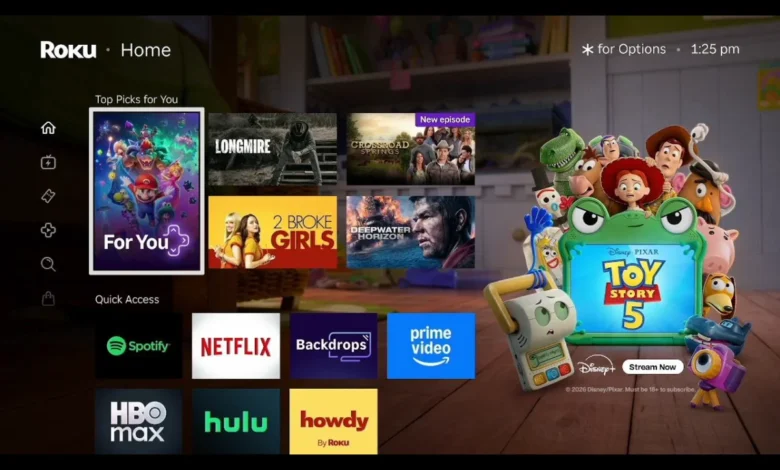
Roku’s financial engines are operating at peak performance, delivering a stellar third-quarter earnings report that highlights robust top-line growth and a dramatic surge in net income. As the prominent streaming platform company marches toward its anticipated acquisition by Fox Corp. next year, its latest financial disclosures signal a business scaling efficiently across both its platform and device segments. For the third quarter, Roku handily surpassed Wall Street expectations, registering a 24% year-over-year increase in total revenue to reach $1.50 billion. Total gross profit similarly expanded by 24% to hit $649 million, while net income skyrocketed to $183 million—representing more than a seven-fold increase compared to the same period in the previous fiscal year.
This financial momentum arrives against the backdrop of a monumental corporate realignment. Fox Corp. announced a definitive agreement on June 15 to acquire Roku for $22 billion, a transaction that is projected to close in the first half of calendar year 2027 pending regulatory approvals. In light of the pending transaction, Roku has maintained the protocol it established during the second quarter, omitting a traditional earnings conference call and declining to issue forward-looking financial guidance. Instead, the company’s leadership detailed their performance and strategic outlook in a comprehensive letter to shareholders, painting a picture of an open platform capturing unprecedented advertiser demand and deepening viewer engagement.
Platform Dominance and Advertising Tailwinds
The core driver of Roku’s financial success in the third quarter was its Platform segment, which generated $1.3 billion in revenue, marking a 23% increase compared to the prior-year period. Within this segment, both advertising and subscription sales grew in tandem at the 23% clip, underscoring the balanced monetization of Roku’s expansive digital ecosystem.
A significant catalyst for this advertising growth was the political landscape. Mirroring trends observed in the second quarter, political advertising expenditures on the Roku platform during Q3 outpaced the comparable quarter from the 2024 U.S. presidential election cycle. This reflects the growing prioritization of connected TV (CTV) environments by political campaigns seeking targeted, measurable reach in an increasingly fragmented media consumption environment.
Furthermore, Roku experienced exceptional performance within its media and entertainment (M&E) advertising category. The company reported that the most recent quarter marked its highest year-over-year revenue growth for M&E in four years. This resurgence was propelled by media companies aggressively investing on the Roku platform to promote their proprietary content libraries, streaming applications, and subscription services, recognizing that user interfaces on connected TV home screens have become prime digital real estate for audience acquisition.
Streaming Engagement and Hardware Economics
Beyond monetization metrics, user engagement on the Roku platform continued its steady upward trajectory. Total streaming hours consumed across the Roku ecosystem reached 39.9 billion in the third quarter, representing a 9% increase year over year. This sustained growth in viewership validates the stickiness of the Roku Experience and the enduring appeal of the platform’s user interface.
In the hardware division, Roku’s Devices segment experienced a notable 33% jump in revenue, bringing in $194 million for the quarter. However, Roku continues to operate its hardware business as a strategic loss-leader designed to expand its active household footprint rather than generate immediate hardware margins. In Q3, the operating loss for the Devices segment widened to $48.6 million, translating to a -25% gross margin. Company executives noted that this margin compression was primarily driven by higher memory component costs affecting hardware manufacturing across the consumer electronics sector. Despite these hardware losses, the expanded device footprint directly fuels the high-margin Platform segment, creating a symbiotic business model that continues to appeal to corporate suitors.
The Chronology and Strategic Vision of the Fox Corp. Deal
The trajectory of Roku over the past year has been defined by strategic positioning and consolidation within the media and technology sectors. The definitive $22 billion acquisition agreement announced by Fox Corp. on June 15 represents one of the most substantial convergence plays between traditional broadcasting giants and connected TV platforms in recent history.
With the transaction targeted for completion in the first half of calendar year 2027, the impending merger is designed to fuse Fox’s extensive portfolio of news, sports, and entertainment assets with Roku’s massive distribution network and advanced advertising technology stack. Following the successful close of the acquisition, Roku founder and CEO Anthony Wood is slated to maintain an ongoing leadership role within the combined enterprise, alongside taking a seat on the Fox board of directors. This continuity ensures that the technological innovation and foundational vision established by Wood will remain central to the company’s next chapter.
In their joint letter to shareholders, Anthony Wood and Chief Financial Officer and Chief Operating Officer Dan Jedda articulated the strategic rationale behind the combination, characterizing it as a transformative milestone. "The pending acquisition by Fox is an extraordinary opportunity to accelerate our vision, allowing us to scale faster and innovate more aggressively for viewers, partners, and advertisers," Wood and Jedda wrote.
The executives further elaborated on the foundational pillars driving their daily operations and long-term value creation. "We are building a diversified and durable business by focusing on monetization initiatives: deepening integrations with third-party advertising platforms, growing Roku-billed subscriptions, and enhancing the Roku Experience," the letter stated. "With our open platform, we help our content partners attract and attract and retain audiences, and we offer advertisers the ability to reach viewers at scale, all while providing viewers with an outstanding streaming experience."
Broader Industry Implications and Market Analysis
Roku’s phenomenal third-quarter financial results, coupled with its impending integration into Fox Corp., underscore several critical trends reshaping the modern media and advertising landscape. First, the remarkable acceleration in net income—surging past seven times the previous year’s figure to reach $183 million—demonstrates that the connected TV business model has matured past the hyper-growth, cash-burning phase into a phase of highly profitable, scaled operations.
Second, the resilience of Roku’s advertising business, buoyed by robust political spending and a multi-year high in M&E promotional investments, highlights a structural shift in marketing budgets. Traditional linear television advertising continues to cede ground to addressable, data-driven connected TV environments. Platforms that command the initial screen interface, such as Roku, hold immense leverage in directing consumer attention toward specific subscription services and video-on-demand offerings.
Finally, the $22 billion Fox acquisition reflects a broader consolidation trend within the entertainment and technology sectors. As traditional media conglomerates face the pressures of cord-cutting, shifting consumer habits, and the high costs of content production and streaming infrastructure, owning a premier distribution pipeline has become an existential imperative. By integrating Roku, Fox Corp. secures a direct-to-consumer digital highway that bypasses traditional cable intermediaries, positioning the combined entity to capture a larger share of both viewer engagement and digital advertising dollars in the years to come.
As Roku moves toward the finalization of the Fox transaction in 2027, the company’s Q3 performance provides empirical proof of operational strength. By balancing hardware distribution with high-margin platform monetization, Roku has established a formidable economic foundation that promises to alter the competitive dynamics of the global streaming ecosystem.