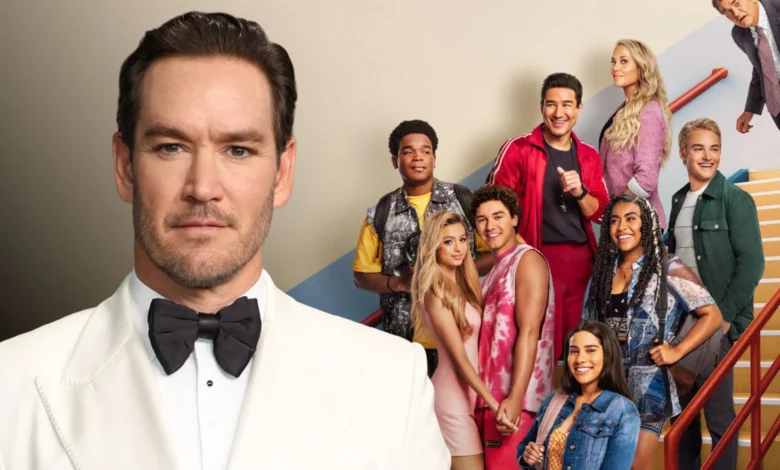
Mark-Paul Gosselaar, the actor synonymous with the iconic character Zack Morris, has officially voiced his dissatisfaction regarding the abrupt conclusion of the Peacock revival of Saved by the Bell. The series, which attempted to bridge the gap between the nostalgia of the 1990s and the sensibilities of a modern audience, was shelved by the streaming service after only two seasons. For Gosselaar, who served as both a recurring cast member and a producer on the project, the cancellation felt like a missed opportunity for a platform still searching for its definitive identity.
The revival, developed by 30 Rock veteran Tracey Wigfield, debuted in 2020 and was met with a degree of critical acclaim rarely afforded to nostalgic reboots. By blending the core DNA of the original Bayside High narrative with a sharper, more satirical wit, the series managed to retain the charm of the original while grounding itself in contemporary social commentary. Despite this creative success, the decision to discontinue the show in 2022 left both the cast and a dedicated fanbase surprised.
A History of Cancellations and Resurgence
For Gosselaar, the cancellation of the Peacock reboot carries a sense of professional déjà vu. His history with the franchise is storied, beginning in 1989 when Saved by the Bell first aired on NBC as a Saturday morning staple. The show became a cultural phenomenon, defining a generation of television consumption. However, even the original run faced hurdles. Following the conclusion of the high school years, Gosselaar starred in Saved by the Bell: The College Years, a primetime spin-off that attempted to transition the characters into adulthood. Much like the Peacock revival, that series was short-lived, failing to survive beyond its first season in 1993.
The cyclical nature of these production decisions has not been lost on the actor. During a recent interview with Entertainment Weekly, Gosselaar reflected on the Peacock iteration, noting that the timing of the cancellation felt "premature." He argued that the show was not merely a nostalgic exercise but a strategic asset for a burgeoning streaming platform. "I was upset with NBC for canceling that," Gosselaar stated. "I thought it was premature, especially on Peacock."
The Strategic Value of the Revival
When Peacock launched in 2020, it faced the monumental task of competing with established giants like Netflix, Hulu, and Amazon Prime Video. The Saved by the Bell reboot was positioned as a cornerstone of the service’s initial programming strategy—a "tentpole" show designed to draw in subscribers familiar with the brand.
Gosselaar’s argument centers on the idea that the show served as a catalyst for growth. "I think we really helped expose that network and bring people to it," he remarked. His assertion is supported by industry metrics regarding streaming acquisition strategies; legacy brands are frequently used as "hook" content to lure users into a new ecosystem. By canceling a show that had established a loyal, vocal audience, the network may have sacrificed long-term brand equity for short-term cost-cutting measures.
The cast of the revival was a carefully curated mix of returning stars and new talent. Alongside Gosselaar, the series featured original cast members Elizabeth Berkley Lauren (Jessie Spano) and Mario Lopez (A.C. Slater), both of whom played pivotal roles as adults. Tiffani Thiessen (Kelly Kapowski) and Lark Voorhies (Lisa Turtle) provided crucial guest appearances, maintaining the connective tissue to the original series. The inclusion of new talent—such as Haskiri Velazquez, Mitchell Hoog, Josie Totah, Alycia Pascual-Peña, Belmont Cameli, and Dexter Darden—helped modernize the narrative, addressing issues of socioeconomic disparity and inclusivity that were largely absent from the original 1990s iteration.
Chronology of the Reboot’s Production and Demise
The production cycle of the Peacock revival provides insight into the challenges of modern television distribution. The series was greenlit during a period of intense investment in original content for streaming services.
- September 2019: Peacock officially announces the development of the Saved by the Bell revival, with Tracey Wigfield attached as showrunner.
- November 2020: The series premieres to positive critical reception, with many critics praising the show’s self-aware humor.
- February 2021: Peacock renews the series for a second season, citing strong viewership numbers among the platform’s core demographics.
- November 2021: Season two premieres, further expanding the world of Bayside High.
- May 2022: Peacock announces the cancellation of the series, citing a shift in the platform’s content strategy.
- 2023–2024: Post-cancellation, the cast members pivot to various other projects, highlighting the transient nature of modern television employment.
Industry Implications and the "Streaming Bubble"
The cancellation of Saved by the Bell is symptomatic of a broader trend in the entertainment industry: the correction of the "streaming bubble." Following years of aggressive, high-budget content spending, many media conglomerates—including NBCUniversal, the parent company of Peacock—have begun reevaluating the profitability of their streaming libraries.
Analysts suggest that streaming platforms are increasingly prioritizing "evergreen" content or massive-scale hits over mid-tier, critically acclaimed series. While the Saved by the Bell revival had a dedicated following, it may not have reached the massive, multi-million-subscriber threshold required to justify its production costs under the current fiscal landscape.
Furthermore, the cancellation reflects a broader trend of "tax write-offs" and library consolidation. In several instances over the past two years, platforms have removed entire series from their catalogs to mitigate financial overhead. While the Saved by the Bell revival remains available on Peacock for now, its removal from the active development pipeline signals that the studio no longer views the franchise as a primary driver of new subscription growth.
Gosselaar’s Career Trajectory Post-Bayside
Despite the disappointment of the cancellation, Gosselaar’s career has remained active and varied. His role as a producer on the reboot provided him with a deeper understanding of the business side of television, which has served him well in his subsequent projects.
Following his work on the Peacock series, Gosselaar appeared in the critically acclaimed HBO series Barry, showcasing his versatility as a performer. In 2023, he secured a lead role in the NBC drama Found, portraying the complex character of Hugh "Sir" Evans. The series focused on a kidnapping recovery specialist, offering a darker, more dramatic tone than the lighthearted comedy of his youth. However, the industry’s volatility struck again when Found was canceled after two seasons, further demonstrating the precarious nature of broadcast television in the streaming era.
Currently, Gosselaar maintains a recurring role on the ABC procedural Will Trent, where he portrays Paul Campano. This steady work, paired with his podcasting ventures—where he frequently revisits the episodes of the original Saved by the Bell—demonstrates his enduring connection to his past, even as he navigates the changing demands of the modern television landscape.
Final Reflections
The frustration voiced by Mark-Paul Gosselaar serves as a reminder of the human element behind corporate decisions. While networks view cancellations through the lens of balance sheets, viewership data, and churn rates, the creators and actors view these projects as years of collaborative effort.
The Saved by the Bell reboot stood out as a rare example of a legacy sequel that managed to honor its source material while simultaneously evolving into something new and relevant. Its cancellation, while perhaps inevitable in a market focused on bottom-line optimization, remains a point of contention for those who believed the series had more stories to tell. As the industry continues to evolve, the case of the Bayside High revival will likely be cited as a prime example of the tension between creative legacy and the cold realities of the streaming business model.