This strategy, while framed by supporters as a necessary mechanism for accountability, has drawn sharp criticism from legal experts who argue that such public declarations could inadvertently weaken the legal standing of future congressional subpoenas. The core of the concern lies in whether these statements transform what are ostensibly legislative inquiries into tools of political retribution, potentially violating the precedents set by the Supreme Court regarding the limits of congressional power.
The Origin and Context of the Deterrence Strategy
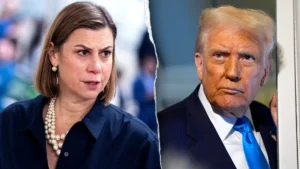
The remarks in question were made by Senator Slotkin during an event at the University of Chicago on October 13. During the discussion, Slotkin articulated a vision for how a Democratic-controlled Congress might approach oversight in a potential second Trump term. She suggested that by focusing investigative resources on high-profile cases involving administration officials, the party could send a clear message to recent graduates and prospective government employees that working for the administration could result in significant legal and professional risks.
"I want that deterrence message sent," Slotkin stated, reflecting on the potential for young graduates to fear that joining the administration could involve "buying myself a ton of problems."
For critics, this comment is not merely a political opinion but a tactical error. Abhishek Kambli, a former deputy associate attorney general in the Trump administration and current partner at the law firm Holtzman Vogel, argues that such rhetoric provides a road map for legal teams looking to quash subpoenas. According to Kambli, if Democrats regain control of either the House or the Senate and initiate a wave of investigations, the defense teams for subpoenaed officials will likely cite these public comments to argue that the investigations lack a legitimate legislative purpose and are instead designed for punitive or partisan ends.
Legal Precedents and the Mazars Framework
The constitutional authority of Congress to conduct investigations is broad but not absolute. The Supreme Court has consistently held that while oversight is an essential component of the legislative process, it cannot be utilized solely to harass, punish, or expose individuals for the sake of exposure.
A critical turning point in this legal landscape was the 2020 Supreme Court decision in Trump v. Mazars. The case arose from House Democrats’ efforts to obtain the former president’s personal financial records. In its ruling, the Court established a four-factor balancing test to determine the validity of congressional subpoenas directed at the president:
- Whether the asserted legislative purpose warrants the significant step of involving the president and his papers.
- Whether the subpoena is as narrow as possible to meet the legislative need.
- Whether the evidence offered by Congress establishes that the subpoena advances a legitimate legislative purpose.
- Whether the burden imposed on the president is balanced against the legislative interest.
While the Court did not finalize a ruling on whether the specific subpoenas in Mazars met these criteria, the framework created a higher bar for congressional committees. Legal scholars note that by explicitly stating an intent to "deter" employment or punish officials, lawmakers may be providing evidence that their subpoenas fail the third prong of the Mazars test. If a court determines that the primary motivation is political deterrence rather than the gathering of information for potential legislation, the subpoena could be deemed unenforceable.
The Potential for "Process as Punishment"
Beyond the immediate legal hurdles, the strategy of aggressive oversight carries significant implications for the functioning of the federal government. Kambli and other legal analysts argue that the process itself can act as a punitive measure. Even if a congressional investigation does not result in criminal charges or formal sanctions, the financial burden of legal representation and the reputational damage associated with being a target of a congressional probe can be substantial.
This phenomenon, often described as "process as punishment," has historically been a point of contention between the legislative and executive branches. If a future Congress utilizes its subpoena power to target low-level or mid-level officials as a deterrent, it could create a chilling effect on the civil service, potentially hindering the government’s ability to recruit qualified professionals who fear becoming embroiled in partisan warfare.
Divergent Legal Perspectives
Not all legal experts agree that the rhetoric of individual lawmakers will be the deciding factor in court. Michael Morley, a professor at the Florida State University College of Law, argues that courts are traditionally hesitant to delve into the subjective motivations of legislators.
"I don’t think that the fact that there might be partisan motivations for a congressional investigation would ultimately be a valid basis for refusing to comply with a subpoena," Morley observed. He noted that courts typically recognize that political actors will have political motivations and are unlikely to strike down an otherwise valid oversight action based solely on public statements made by a member of Congress.
However, Morley acknowledged that while such statements may not be dispositive, they do create "bad atmospherics." In instances where the legal justification for a subpoena is already tenuous or contested, a judge may be more inclined to scrutinize the request more rigorously if there is a public record suggesting that the motive is punitive. The judiciary, according to this view, is a reluctant arbiter of political intent, but it is not blind to the context in which these investigations are launched.
Chronology of Legislative Oversight Efforts
The debate over congressional oversight of the Trump administration is not new. Since 2017, the relationship between the executive branch and congressional committees has been characterized by frequent litigation and disputes over the scope of executive privilege.
- 2017–2019: The House Judiciary and Intelligence Committees engaged in extensive oversight, leading to the first impeachment of Donald Trump.
- 2020: The Supreme Court decided Trump v. Mazars, setting the current standard for legislative subpoenas.
- 2021–2022: The House Select Committee on the January 6 attack conducted a comprehensive investigation, issuing numerous subpoenas that were challenged in court.
- 2025–Present: As Democrats plan for a potential return to the majority, senior party members have indicated a renewed interest in investigating potential conflicts of interest, the family business dealings of the Trump family, and the funding of transition and inauguration activities.
These upcoming efforts, as signaled by Senators like Richard Blumenthal and others, appear to be more focused on institutional corruption and ethics. However, the discourse surrounding these efforts has become increasingly intertwined with the broader ideological conflict between the parties.

Implications for Future Governance
The strategy proposed by Senator Slotkin highlights a fundamental tension in modern American governance: the use of investigative power as a tool of political warfare. When oversight is perceived as an extension of partisan campaigning, the institutional legitimacy of the investigative process itself is called into question.
If the Democratic caucus proceeds with a "blitz" of investigations, the effectiveness of these efforts will depend heavily on their adherence to the procedural standards set by the courts. The success of the oversight will hinge on whether the committees can demonstrate that their requests for information are narrowly tailored to achieve specific legislative outcomes, such as the drafting of new ethics laws or the reform of administrative procedures.
Conversely, if these investigations are perceived to be driven by the goal of discouraging individuals from public service, the result could be a long-term erosion of trust in congressional oversight. The long-term consequence could be a cycle of retaliatory investigations, where each party uses its time in the majority to target the personnel and operations of the previous administration, further deepening the polarization within the federal bureaucracy.
Ultimately, the warnings from legal experts like Kambli serve as a reminder that the tools of democracy—including the power of subpoena—are subject to legal and political constraints. While politicians may find value in aggressive rhetoric to mobilize their base, the success of their policy goals in the courtroom remains dependent on the objective justification of their actions. As the political climate remains volatile, the intersection of legislative ambition and judicial restraint will continue to be a defining feature of the relationship between Congress and the executive branch.