The global commercial space sector is currently navigating an unprecedented structural bottleneck, characterized by an acute shortage of reliable orbital delivery options for payloads outside the heavy-lift ecosystem dominated by SpaceX’s Falcon 9. While the past several years have seen a staggering increase in launch frequency driven largely by the proliferation of megaconstellations, the market is finding that sheer launch cadence does not equate to operational flexibility. Satellite operators—particularly those requiring bespoke trajectories, unique inclinations, or dedicated delivery—are increasingly vocal about a looming launch crunch. This capacity constraint has been further exacerbated by reports of SpaceX dialing back aspects of its traditional Falcon 9 program while its next-generation heavy-lift vehicle, Starship, remains predominantly focused on internal deployment of Starlink assets.
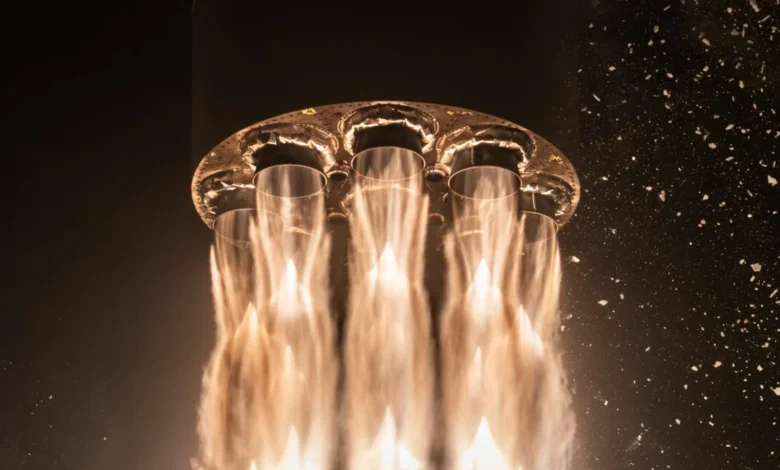
Amid this broader industry anxiety, specialized satellite servicing firms and boutique payload operators are desperately seeking alternative pathways to orbit. A critical turning point in this quest occurred recently when German launch provider Isar Aerospace successfully achieved orbit for the first time with its propane-fueled Spectrum rocket. Lifting off from a spaceport in northern Norway and powered by nine advanced engines, the Spectrum vehicle successfully delivered a batch of CubeSats into low-Earth orbit (LEO). This milestone triumph marked a definitive redemption for Isar Aerospace, following the failure of its initial test flight roughly a year prior, and instantly positioned the company as a credible new contender in the European commercial space ecosystem.
The ripple effects of Isar’s success extend far beyond Germany and Norway, offering a much-needed morale and operational boost to a European space industry that has historically lagged behind American commercial counterparts. Alongside legacy providers like Arianespace and Avio, a new wave of European entrepreneurial ventures—including Germany’s Rocket Factory Augsburg, Spain’s PLD Space, and the trans-European heavy-lift engine developer The Exploration Company—are aggressively working to secure independent access to space. For international customers seeking non-traditional launch partners, Isar’s arrival on the operational scene represents a vital injection of competitive market dynamics.

Strategic Alignment and Early Bets on Unproven Hardware
Halfway around the world in Japan, executives at Astroscale Holdings were monitoring the Norwegian launch webcast live at 5:00 a.m. local time on a Sunday morning. The early wake-up call was far from casual curiosity; just days prior, Astroscale had officially finalized a contract with Isar Aerospace to secure a dedicated launch for an upcoming mission as early as next year. This agreement represents the second launch contract Astroscale has signed with the German startup, following an initial commitment made in March. Crucially, both contracts were penned before Isar had officially proven its capability to reach orbit, demonstrating a high degree of calculated risk tolerance by the satellite servicing pioneer.
Astroscale, an established global leader in orbital debris mitigation and on-orbit satellite servicing, requires precise, dedicated orbital insertions to execute its complex proximity operations. Unlike communications constellations that can tolerate the broad constraints of shared rideshare missions, servicing vehicles must rendezvous with specific, often uncooperative targets. While Astroscale is not part of Isar’s captive or government-backed market—which includes substantial institutional backings from the European Space Agency (ESA), the European Union, and the national governments of Norway and Germany—its decision to entrust an unproven vehicle with critical missions underscores the desperate industry-wide hunt for dedicated 1-ton-class launch capacity.
Examining the Launch Deficit in the 1-Ton Class

The acute lack of operational alternatives in the 500-kilogram to 1-ton payload category has created a severe strategic vacuum for mid-sized aerospace companies. In an in-depth interview with Ars Technica, Chris Blackerby, Group Chief Operating Officer of Astroscale, detailed the rigorous vetting process and the complex macroeconomic realities shaping modern space logistics.
According to Blackerby, while industry rhetoric frequently highlights plummeting launch costs and ubiquitous capacity, the day-to-day reality for specialized operators tells a different story. "When we look around at other options… for all of the talk about the ubiquity of launch and the dropping prices and the capacity that’s everywhere, I don’t know. I don’t see it yet," Blackerby noted, pointing to a stark scarcity of consistently reliable options in the sub-ton sector.
Historically, companies like Relativity Space and Astra pursued vehicles tailored to this exact market segment, but shifting commercial priorities have largely pushed the launch industry toward either ultra-small launchers (such as Rocket Lab’s Electron) or massive heavy-lift architectures. While Firefly Aerospace remains a notable provider in the 1-ton class with its Alpha rocket, ongoing developmental and operational hurdles have limited consistent availability. Consequently, when mapping out requirements for payload mass, budgetary constraints, and the absolute necessity of dedicated orbital placement, Isar Aerospace emerged as a rare convergence point on Astroscale’s strategic Venn diagram.
Milestone Missions: ELSA-M and ADRAS-J2

Astroscale’s upcoming missions slated for Isar Aerospace represent monumental leaps forward for the commercial debris removal sector. The first of these, the ELSA-M (End-of-Life Services by Astroscale-Multiple) mission led by the company’s UK division, is designed to rendezvous with, capture, and safely deorbit a defunct broadband satellite within Eutelsat’s OneWeb constellation. This mission serves as a critical commercial demonstration of end-of-life risk management for mega-constellation operators.
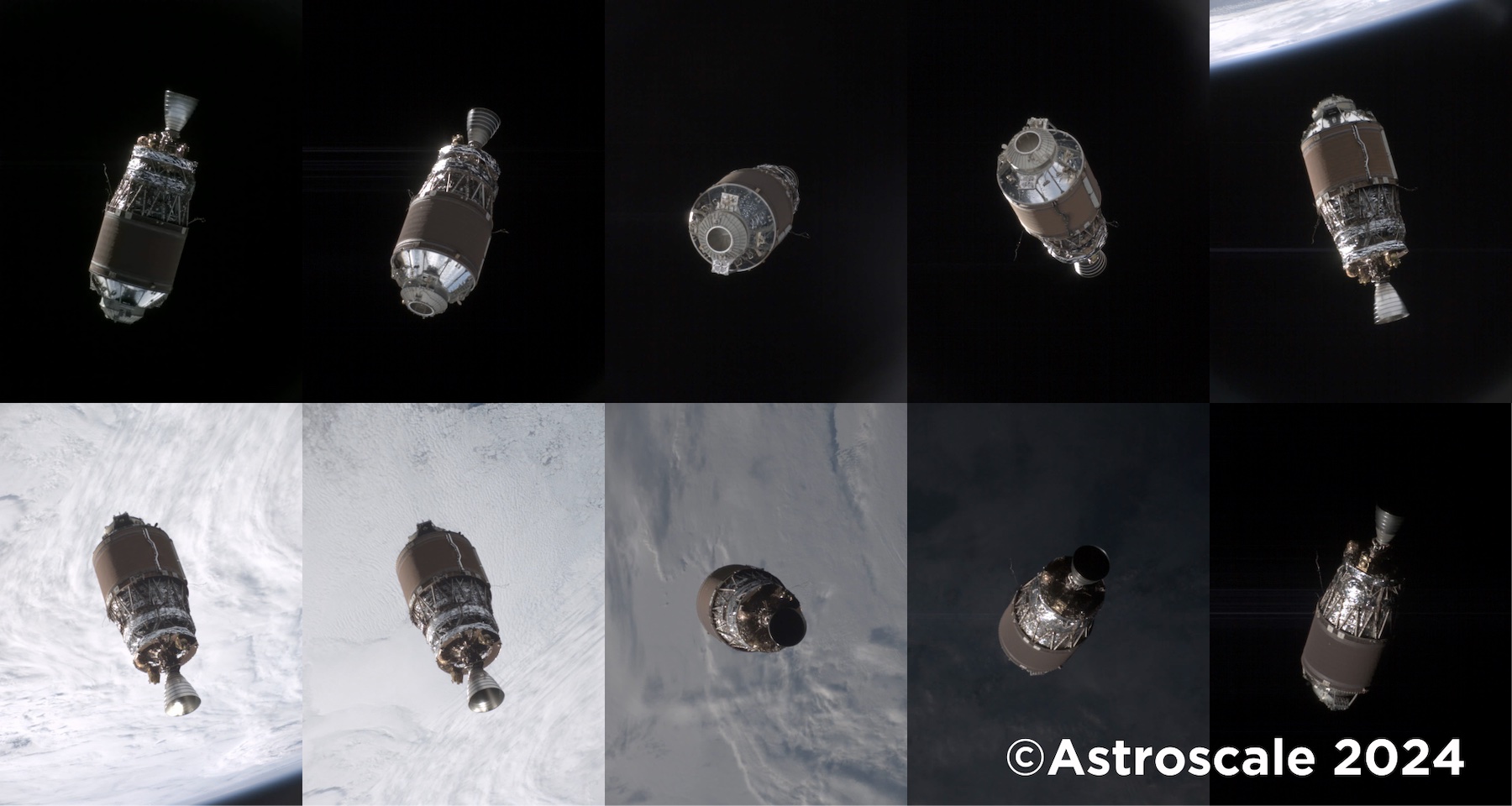
The second manifested mission is ADRAS-J2 (Active Debris Removal by Astroscale-Japan), a continuation of a groundbreaking public-private partnership with the Japan Aerospace Exploration Agency (JAXA). ADRAS-J2 aims to approach, characterize, and ultimately grapple a massive, non-functional Japanese rocket upper stage that has been derelict in Earth orbit for years. This follows the historic success of the original ADRAS-J mission in 2024, which successfully completed a complex flyaround and close-range inspection of the exact same rocket body without the aid of cooperative docking markers.
Reflecting on the technical takeaways from ADRAS-J, Blackerby emphasized the unprecedented nature of approaching an uncommunicative, tumbling-free object in the harsh vacuum of space. The mission provided invaluable datasets regarding guidance, navigation, and control (GNC), as well as automated fault detection and autonomous proximity maneuvers. Crucially, imagery from ADRAS-J confirmed that the targeted rocket body was stable, non-degraded, and oriented predictably toward Earth, paving a clear engineering pathway toward physical capture during the ADRAS-J2 mission.
Expanding Horizons: From Space Junk Removal to On-Orbit Refueling
Astroscale’s technological roadmap extends well beyond debris removal into the broader realms of space logistics, asset life extension, and national security infrastructure. In addition to its debris-focused portfolio, the company is advancing the Provisioner mission under contract with the United States Space Force. Designed to demonstrate on-orbit refueling capabilities, Provisioner targets an emerging market demand driven by military and commercial imperatives alike.
As geopolitical tensions and orbital congestion escalate, defense agencies in the United States and allied nations are placing a premium on close-in Rendezvous and Proximity Operations (RPO). Military stakeholders increasingly require the capability to inspect, maintain, and protect vital space assets in real time. Blackerby noted that demand signals for deorbit-as-a-service, life extension, and close-in threat identification are surging across multiple government and commercial sectors globally.
Strategic Outlook for the Early 2030s
Despite the rapid technological maturation of on-orbit servicing, Astroscale remains measured regarding the timeline for achieving a fully repeatable, high-margin commercial ecosystem. The company has methodically scaled its operations through incremental phases—beginning with the internally funded ELSA-D demonstration, moving to co-funded institutional projects with JAXA, ESA, and the UK Space Agency, and steadily approaching broader revenue-positive operations.

Company leadership projects that a truly viable, commercially repeatable servicing ecosystem will solidify by the early part of the next decade, around the 2030s. However, realizing this vision remains inextricably linked to the broader health and stability of the global launch market. As emerging launch providers like Isar Aerospace successfully bridge the gap to orbit, and as established heavy-lift providers recalibrate their schedules, the delicate balance between payload demand and rocket availability will ultimately dictate the pace at which humanity can sustainably manage its increasingly crowded orbital environment.