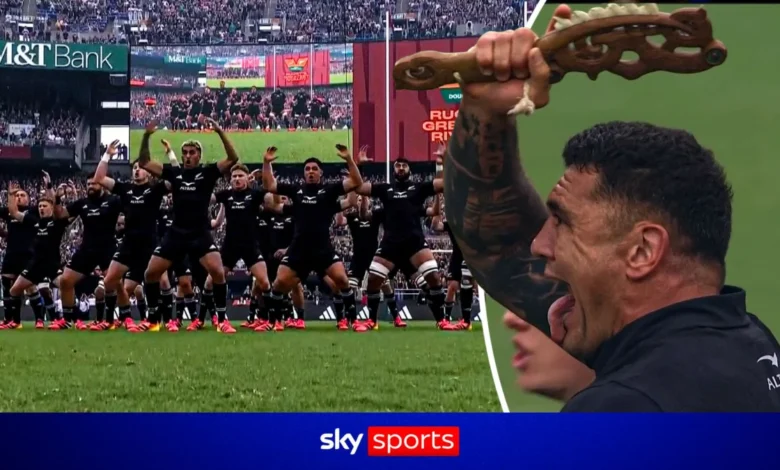
Saturday, September 12, 2026, marked a momentous occasion in international rugby union history as New Zealand captain Codie Taylor stepped forward to lead the iconic Haka for the very first time against traditional arch-rivals South Africa. The fixture, eagerly anticipated by rugby supporters across the globe, added yet another dramatic chapter to one of the sport’s most compelling and historic rivalries. Performing the ceremonial challenge before a packed stadium, Taylor demonstrated the immense weight of leadership that rests upon the shoulders of an All Blacks captain, setting an intense psychological tone for the titanic struggle that unfolded on the pitch.
The significance of Taylor’s debut leading the challenge cannot be overstated. As the successor to a long line of legendary New Zealand leaders who have performed the ritual against the Springboks, Taylor’s inclusion in this elite lineage represents a major milestone in his international career. The moment captivated millions of television viewers and sent shockwaves through the stadium, reinforcing the cultural and psychological importance of the pre-match challenge in modern test rugby.
Main Facts of the Historic Encounter
The clash between New Zealand and South Africa stands as the pinnacle of global rugby competition. When the two rugby powerhouses meet, the stakes invariably extend far beyond the immediate league points or tournament standing; national pride, historical dominance, and psychological ascendancy are continually on the line. On this particular Saturday evening, the atmosphere was thick with anticipation as the teams lined up for the anthems and the subsequent cultural challenge.
Codie Taylor, renowned for his tenacity, exceptional work rate, and veteran presence within the All Blacks squad, commanded the front line with absolute authority. Leading the Haka requires precise synchronization, fierce vocal projection, and unyielding emotional control. For Taylor, executing this responsibility against the Springboks—a team famed for their physical resilience and uncompromising forward pack—demanded a rare blend of composure and ferocity.
The ritual itself serves a dual purpose: it acts as a unifying war dance for the New Zealand players to steel themselves for the physical onslaught ahead, and it serves as a direct, respectful challenge to the opposing side. South Africa, standing sternly on their side of the halfway line, absorbed the challenge with their trademark stoicism, maintaining eye contact and demonstrating that they would not be intimidated by the psychological theatre.
Chronological Context and Build-Up
The journey toward this landmark moment began months in advance, woven into the rigorous selection processes and tactical preparations of the All Blacks coaching staff.
Pre-Match Preparations
In the weeks leading up to the test match, speculation mounted regarding who would be entrusted with leading the pre-match ritual. With squad rotations and leadership responsibilities evolving within the New Zealand camp, Taylor was handed the ultimate mantle of authority. Behind closed doors, the team focused heavily on cultural authenticity, ensuring that every movement, stamp, and chant carried the historical weight and reverence demanded by the tradition.
Matchday Sequence
- Hours Before Kick-off: Tactical meetings concluded, and the team engaged in final physical and mental warm-ups. The weight of the impending encounter hung heavily over both squads.
- Tunnel Line-up: As the players gathered in the stadium tunnel, the tension reached a boiling point. Captains and senior players exchanged professional yet steely glances.
- The Pitch Entrance: Emerging from the tunnel to a deafening roar from the capacity crowd, both teams lined up on the turf.
- The Haka Execution: Stepping to the fore, Codie Taylor raised his arm, let out the initial piercing call, and launched into the challenge. The squad moved in terrifying unison, their voices echoing through the arena.
- The Response: The Springboks stood shoulder-to-shoulder, unwavering, before retreating to their positions to prepare for the opening whistle.
Historical Significance of the Haka in New Zealand-South Africa Tests
The rivalry between the All Blacks and the Springboks dates back over a century, encompassing some of the most brutal, politically charged, and memorable matches in sporting history. Historically, the cultural challenge has served as the ultimate psychological preamble to these battles.
When New Zealand faces South Africa, the traditional challenge takes on an added layer of intensity because the Springboks possess a physical culture and rugby ethos that matches, and at times surpasses, that of the All Blacks. Over the decades, various captains have led the team through this ritual, each leaving their distinct imprint on the performance. For Codie Taylor to join this exclusive club adds his name to a permanent fixture of rugby folklore.
Moreover, the evolution of the pre-match ritual over recent decades reflects a broader global appreciation for indigenous Maori culture. What was once viewed by foreign audiences as a mere curiosity is now universally recognized as a profound cultural expression, executed with deep respect and pride by players of diverse backgrounds within the New Zealand jersey.
Supporting Data and Team Dynamics
Analyzing the context of this match requires examining the statistical and structural realities facing both squads during the 2026 international calendar:
- Squad Experience: Codie Taylor entered the fixture boasting over a hundred international caps, making him one of the most experienced hookers in world rugby. This wealth of experience proved invaluable in calming younger squad members during the high-pressure build-up.
- Rivalry Statistics: Historically, fixtures between New Zealand and South Africa remain among the tightest in international sport, with margins often decided by fewer than five points or a single score.
- Physical Demands: Modern test rugby requires unprecedented levels of fitness. Taylor’s role as both captain and starting hooker meant he had to transition immediately from the emotionally charged atmosphere of the Haka into an 80-minute battle against a relentless South African forward pack renowned for its scrummaging power and defensive line speed.
Official Responses and Stakeholder Reactions
Following the conclusion of the match, pundits, former players, and coaching staff shared their thoughts on the historic event. While tactical analyses dominated the post-match press conferences, the emotional resonance of the opening moments remained a central talking point.
Coaching staff from the New Zealand camp praised Taylor’s composure. Observers noted that leadership in modern rugby extends far beyond tactical decision-making on the field; it requires an ability to embody the cultural values of the jersey and inspire confidence in teammates during high-stakes moments. Taylor’s execution of the challenge was widely commended for its precision, power, and authenticity.
From the South African perspective, veteran players and coaches expressed mutual respect. The Springboks have long maintained that facing the Haka is a privilege that heightens the competitive spirit of the test match. Rather than serving as a distraction, the pre-match ritual functions as a focal point that concentrates the minds of the South African players, steeling them for the physical contest to come.
Broader Impact and Implications for World Rugby
The reverberations of this match extend far beyond the immediate result on the scoreboard. Encounters between New Zealand and South Africa traditionally set the tactical and physical bar for the rest of the international rugby community.
Psychological Edge in International Competition
In elite sport, psychological markers matter profoundly. By successfully leading the Haka for the first time against their fiercest rivals, Codie Taylor cemented his authority as a leader capable of managing the immense psychological demands of test-match rugby. This moment serves to unify the All Blacks squad, reinforcing their identity and cultural roots on the global stage.
Preservation of Tradition in a Commercialized Era
As rugby union continues to professionalize and expand into new global markets, the preservation of indigenous cultural traditions like the Haka remains a vital anchor to the sport’s heritage. Moments such as Taylor’s debut performance remind fans and players alike of the deep historical and cultural roots that underpin international fixtures. It bridges the gap between modern athletic performance and ancient tradition, ensuring that the human element of sport remains paramount.
As the 2026 international season progresses, the image of Codie Taylor leading his men against the Springboks will undoubtedly be replayed as one of the defining visual memories of the rugby year. It stands as a testament to leadership, tradition, and the enduring magic of international sport’s greatest rivalry.