Washington found itself at the epicenter of a multi-front political and economic storm on Wednesday, September 16, 2026, as high-stakes policy decisions, legal showdowns, and legislative maneuvers converged. The day’s events highlighted deepening institutional friction between the White House, federal regulatory bodies, and Capitol Hill, creating ripple effects across domestic financial markets and international foreign policy arenas. From a unanimous Federal Reserve rate hike that immediately triggered presidential backlash to sudden legislative schedule changes and escalating legal battles over Washington landmarks, the American political landscape experienced a day of intense volatility.
The most immediate economic friction erupted following the Federal Open Market Committee’s (FOMC) unanimous decision on Wednesday to raise its benchmark interest rate by a quarter-percentage point, bringing the target range to 3.75% to 4%. The central bank’s action—its first rate hike since July 2023—was justified by policymakers as a necessary measure to combat stubborn inflationary pressures. However, the decision instantly thrust Kevin Warsh, Donald Trump’s handpicked nominee for Federal Reserve chair, onto a direct collision course with the Oval Office.
Speaking to reporters following the announcement, Warsh stood firm on the central bank’s independent mandate. "The plain fact is that inflation is too high and has been for too long," Warsh stated, emphasizing that recent summer inflation readings failed to show meaningful improvement in underlying economic trends. When pressed on the administration’s persistent demands for monetary easing, Warsh maintained a guarded posture, stating simply, "I’ve got nothing for you on a discussion with the president."
President Trump wasted no time registering his profound displeasure. Taking to his social media platform, Truth Social, the president issued a scathing rebuke of the central bank’s policy path, demanding an aggressive reversal.
"Interest Rates in the United States should be 1%, or less, because we are the Best Credit in the World—BY FAR," Trump wrote. He coupled his monetary grievances with a controversial protectionist argument regarding international trade deficits, asserting that the economy would thrive "if we stopped Trading with every country that we have a Deficit with, which is most of them." Trump added that the term deficit is "nothing more than a fancy word for LOSS," concluding his statement with an urgent demand: "LOWER THE INTEREST RATES FOR THE UNITED STATES OF AMERICA, AND FAST!"
The administration’s stance received immediate backing from key legislative allies. House Ways and Means Committee Chairman Jason Smith voiced strong opposition to the Fed’s action, arguing that high borrowing costs continue to penalize American families and small businesses despite a growing economy and relatively moderate inflation compared to previous years.
Chronology of the Day: Key Policy and Legislative Shifts

The economic clash unfolded alongside a rapid sequence of events across Washington D.C., marking a chaotic prelude to the upcoming midterm elections:
- Morning (10:00 AM ET): Dr. Nicole Saphier, Donald Trump’s nominee for US Surgeon General, faced the Senate Health, Education, Labor, and Pensions Committee for a contentious confirmation hearing, where she navigated sharp questioning regarding vaccine policies and public health messaging.
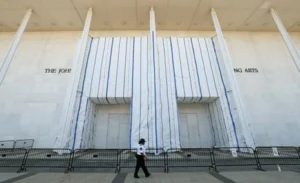
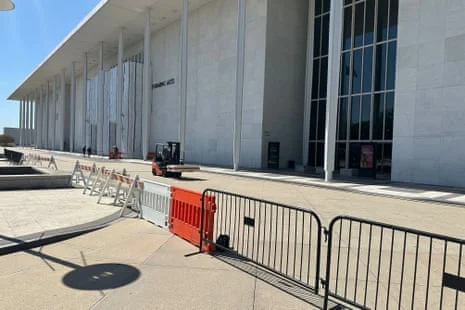
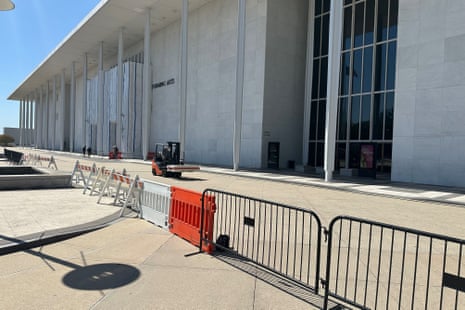
- Midday (12:00 PM ET): Legal filings revealed that the John F. Kennedy Center for the Performing Arts had been closed to the public and surrounded by construction barriers, sparking an immediate legal challenge and a motion for an emergency hearing.
- Early Afternoon: House Speaker Mike Johnson announced the cancellation of scheduled Thursday votes, sending lawmakers home early for the pre-election recess and effectively dodging a contentious impeachment vote against Defense Secretary Pete Hegseth.
- Late Afternoon: The Federal Open Market Committee officially announced its unanimous decision to raise benchmark interest rates to the 3.75%–4% range, prompting immediate public rebukes from congressional Republicans and the president.
- Evening: Representative Gregory Meeks, the ranking Democrat on the House Foreign Affairs Committee, formally announced his intention to block a proposed $2.8 billion arms sale to Israel, citing grave humanitarian concerns.
The Battle Over the Kennedy Center and Judicial Defiance
Parallel to the economic standoff, a constitutional and legal confrontation escalated over the status of the John F. Kennedy Center for the Performing Arts. Despite a clear federal court order prohibiting the closure of the landmark institution or the alteration of its facade without congressional approval, the venue was abruptly shut down on Wednesday.
According to a sworn statement submitted to the District of Columbia federal court by Bridget Kennedy-Bailey of the Washington Litigation Group, visitors and legal representatives found the building’s doors locked by Wednesday morning. Witnesses observed work crews installing heavy black metal gates and construction barriers designed to completely sever public access. Security personnel and public relations representatives on site cited internal "repairs" and mandated hard-hat zones as justification for locking out the public.
Congresswoman Joyce Beatty, a Democratic trustee of the Kennedy Center who spearheaded the initial lawsuit alongside legal counsel, promptly filed a motion for an emergency hearing before U.S. District Judge Christopher Cooper. Beatty’s filing warned that the sudden and unexplained closure suggested the administration was attempting to implement a fait accompli—rapidly altering the property to render public access impossible and evading judicial oversight. The brazen move followed a turbulent week in which the Trump-appointed board voted repeatedly to shutter the performing arts building, linking the closure to financial and safety concerns while leveraging the venue’s future against federal resistance to renaming the facility after the president.
Legislative Maneuvering on Capitol Hill: The House Early Recess
On Capitol Hill, procedural friction erupted when House Speaker Mike Johnson announced the abrupt cancellation of Thursday’s voting schedule. The decision cut the legislative workweek short, sending lawmakers back to their respective home districts ahead of the midterm recess a day earlier than planned.
The schedule change effectively short-circuited a high-profile legislative showdown: a privileged resolution introduced by Republican Representative Thomas Massie seeking to impeach Defense Secretary Pete Hegseth over ongoing military engagements in the Middle East.
Democratic lawmakers reacted with fury, accusing leadership of collusion to shield the executive branch from accountability. Representative Melanie Stansbury posted a direct-to-camera video on social media asserting that avoiding the Hegseth impeachment vote was the "only one explanation" for the early adjournment. She criticized the administration’s foreign policy and its domestic economic fallout.
Even within Republican ranks, the decision drew sharp internal criticism. Representative Ralph Norman of South Carolina expressed frustration with the leadership’s handling of the legislative calendar, noting that the House had canceled dozens of voting days during the current session. Representative Massie took to the House floor to voice his dissent directly, declaring, "When other people want to go home, I’m here to work."
Foreign Policy and Institutional Appointments
Tensions also flared within foreign affairs and executive nominations. Representative Gregory Meeks, the top Democrat on the House Foreign Affairs Committee, announced that he would block the Trump administration’s proposed $2.8 billion military aid package to Israel. The package includes thousands of one-ton bombs previously withheld due to humanitarian concerns in densely populated zones like Gaza and Lebanon. Meeks emphasized that while congressional support for Israel’s defense remains solid, oversight responsibilities dictate strict adherence to international and domestic legal frameworks governing US-funded munitions.
Meanwhile, the Senate continued vetting contentious executive nominations. Dr. Nicole Saphier appeared before the Senate health committee for her confirmation hearing to become US Surgeon General. During her opening remarks, Saphier focused broadly on preventative care and chronic disease reduction while steering clear of explicit vaccine commentary. However, under direct questioning from Republican Senator Bill Cassidy—who voiced frustration over shifting public health narratives under the current administration—Saphier affirmed her belief in the safety and efficacy of the MMR vaccine, describing it as an indispensable public health tool for achieving herd immunity.
Implications and Broader Economic Outlook
As the dust settled on Wednesday’s multifaceted political battles, analysts noted that the growing rift between the White House and the Federal Reserve poses significant questions for market stability and monetary policy independence heading into the final stretch of the midterm election cycle.
With inflation proving more resilient than anticipated and the central bank signaling a willingness to tighten monetary conditions despite executive pressure, the stage is set for prolonged institutional conflict. Whether Kevin Warsh and the Federal Open Market Committee can maintain their insulated policy stance in the face of escalating White House demands for aggressive rate cuts will remain a defining storyline for the American economy in the months ahead.