
The Trifecta of Transformation: 3 Trends Fueling Data Observability’s Ascendancy
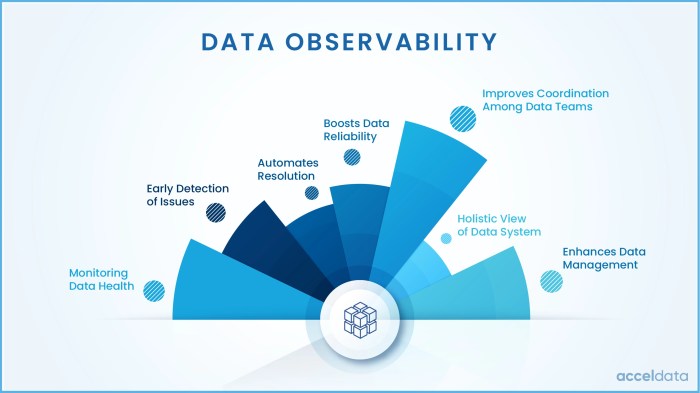
The burgeoning field of data observability is not a fleeting technological fad, but a critical evolution driven by a confluence of powerful, interconnected trends. Organizations are no longer content with reactive data issue resolution; they demand proactive, deep-seated understanding of their data ecosystems. This shift is fueled by three primary forces: the escalating complexity of modern data architectures, the increasing reliance on data for business-critical decisions, and the relentless pursuit of efficient, scalable data operations. Understanding these drivers is paramount for any organization aiming to harness the full potential of its data and maintain competitive advantage in a data-saturated world. Without a robust framework for data observability, businesses risk operational paralysis, inaccurate insights, and ultimately, missed opportunities.
The first and perhaps most significant trend is the ever-increasing complexity of data architectures. Gone are the days of monolithic, on-premises databases. Today’s data landscapes are a vibrant, often chaotic, tapestry woven from a multitude of sources and technologies. Cloud-native data warehouses like Snowflake, BigQuery, and Redshift exist alongside data lakes built on object storage like S3 and ADLS Gen2. Streaming data platforms such as Kafka and Kinesis process real-time information, while various ETL/ELT tools like Fivetran, dbt, and Talend orchestrate data movement and transformation. Furthermore, the rise of microservices architectures means data is generated and consumed across numerous distributed applications, each with its own data lineage and dependencies. This distributed nature creates a labyrinth of interconnected components, making it incredibly challenging to trace the journey of data from source to consumption. When issues arise – a missing record, an unexpected null value, a data drift – pinpointing the root cause within this intricate web becomes a Herculean task. Traditional monitoring tools, designed for simpler systems, fall woefully short. They might flag a server as down, but they cannot tell you why the data flowing through it is suddenly malformed. Data observability, by its very nature, embraces this complexity. It moves beyond simply monitoring infrastructure to observing the data itself. This means tracking data quality metrics at every stage of the pipeline, understanding data lineage across disparate systems, and detecting anomalies in data volume, freshness, and schema. Without observability, navigating this complexity leads to extended downtime, costly rework, and a loss of confidence in the data itself. The sheer number of data pipelines, the diversity of data formats, and the dynamic nature of cloud environments all contribute to a growing "black box" problem. Data observability acts as the X-ray, illuminating the internal workings of these complex systems and providing the visibility needed to manage and maintain them effectively. This trend is not static; it’s accelerating. As organizations adopt more specialized data tools and embrace multi-cloud or hybrid cloud strategies, the complexity will only continue to grow, further solidifying the need for comprehensive data observability.
The second dominant trend is the escalating reliance on data for critical business decisions and operations. Data is no longer confined to the BI team; it underpins every facet of modern business. Sales forecasts, marketing campaign optimization, customer churn prediction, fraud detection, product development – all these critical functions are driven by data. Executives are making multi-million dollar decisions based on dashboards and reports that are, in turn, powered by underlying data pipelines. This elevates the stakes significantly. A data quality issue or an unexpected data outage can have immediate and severe repercussions. Imagine a retail company whose inventory management system receives incorrect stock level data from its e-commerce platform. This could lead to overselling popular items, disappointing customers, and damaging brand reputation. Or consider a financial institution that relies on real-time transaction data for fraud detection. If that data stream is delayed or corrupted, fraudulent activities could go unnoticed, leading to significant financial losses. The speed at which businesses operate today leaves little room for error. Decisions need to be made quickly and with a high degree of confidence in the underlying data. This is where data observability proves indispensable. It shifts the paradigm from "did the data arrive?" to "is the data correct, fresh, and meaningful?". By providing real-time insights into data health, observability empowers data consumers – from analysts and data scientists to business leaders – to trust the data they are using. It enables them to identify potential issues before they impact downstream applications or decision-making processes. This proactive approach mitigates risk, improves operational efficiency, and ultimately fosters a data-driven culture where decisions are made with certainty. The growth of AI and machine learning further intensifies this reliance. These technologies are inherently data-hungry, and their performance is directly proportional to the quality and availability of the data they are trained on. Biased, incomplete, or stale data can lead to flawed AI models, perpetuating errors and delivering unreliable outcomes. Therefore, the ability to ensure data integrity and reliability is no longer a nice-to-have; it’s a fundamental requirement for leveraging these transformative technologies.
The third critical trend driving data observability is the relentless pursuit of efficient and scalable data operations. As data volumes explode and the number of data pipelines proliferates, traditional manual approaches to data management and troubleshooting are becoming unsustainable. Data engineers and data platform administrators are increasingly bogged down by firefighting – responding to alerts, manually investigating data anomalies, and patching broken pipelines. This reactive posture not only leads to significant downtime but also diverts valuable engineering resources away from more strategic initiatives, such as building new features, optimizing existing pipelines, or developing innovative data products. Data observability offers a solution by automating much of this manual effort. Through intelligent anomaly detection, automated root cause analysis, and proactive alerting, it significantly reduces the Mean Time To Detect (MTTD) and Mean Time To Resolve (MTTR) for data issues. This allows data teams to operate more efficiently, scale their operations without a linear increase in headcount, and focus on higher-value activities. The concept of "data downtime" – periods when data is missing, incorrect, or otherwise unavailable – is a direct consequence of inefficient operations. This downtime can translate into significant financial losses and missed business opportunities. Data observability aims to minimize data downtime by providing the visibility and automation needed to prevent issues before they occur or to resolve them rapidly when they do. The adoption of DevOps principles in data engineering, often referred to as "DataOps," is intrinsically linked to the rise of data observability. DataOps emphasizes collaboration, automation, and continuous improvement in data pipelines. Observability is a foundational pillar of DataOps, providing the necessary telemetry and insights to enable these practices. Without robust data observability, achieving true DataOps maturity remains an aspiration rather than a reality. As organizations strive for greater agility and faster time-to-market for data-driven initiatives, the need for efficient and scalable data operations becomes paramount. Data observability provides the critical capabilities to achieve this efficiency, allowing teams to manage increasingly complex data environments with confidence and agility. This trend is further amplified by the economic imperative for cost optimization. In an era of constrained budgets, the ability to operate data platforms efficiently, minimize wasted resources due to data issues, and maximize the ROI from data investments is a key differentiator. Data observability directly contributes to these cost-saving efforts by reducing the burden of manual troubleshooting and preventing costly data-related errors.

