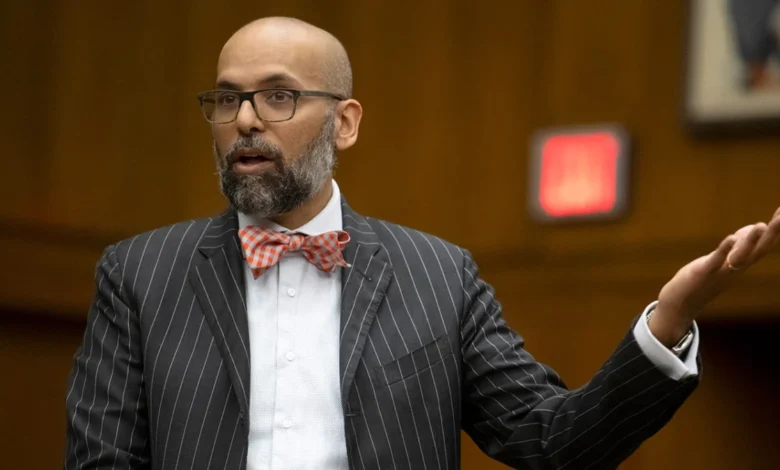
U.S. Magistrate Judge Zia M. Faruqui issued a stern rebuke to the Department of Justice (DOJ) on Tuesday, halting a move by federal prosecutors to introduce a superseding criminal complaint against two former FBI officials without prior judicial authorization. The officials, Nikki Floris and Bradley Benavides, are currently facing allegations regarding their testimony to Congress concerning the FBI’s investigations into Hunter Biden. The clash highlights a significant procedural disagreement within the District of Columbia’s federal courts regarding the government’s powers to unilaterally amend charges.
The confrontation occurred hours before a scheduled preliminary hearing, a proceeding designed to establish whether the government possesses sufficient probable cause to sustain its initial charges. Instead of adhering to standard judicial protocols, the DOJ filed a new, unsigned, and unsworn complaint late at night. This document sought to add felony obstruction charges while simultaneously softening the characterization of the defendants’ involvement in the Hunter Biden probes. Judge Faruqui, citing the lack of procedural compliance, rejected the attempt and expressed profound frustration with the government’s departure from established legal norms.
Chronology of the Legal Conflict
The case stems from the recent arrests of Floris and Benavides, who were charged by the DOJ for allegedly misrepresenting their roles in the FBI’s Foreign Influence Task Force (FITF) investigations. The timeline of the controversy is as follows:

- Initial Allegations: The DOJ filed its original criminal complaint, asserting that the two officials had been at the "center" of investigations involving Hunter Biden and had engaged in "scores of conversations" related to the matter during their tenure at the FBI.
- The Midnight Filing: Hours before a critical preliminary hearing, federal prosecutors submitted a superseding criminal complaint on the public record. This version significantly modified the descriptive language, shifting from claiming the officials were at the "center" of the investigation to merely being "involved in" the work of the task force.
- Judicial Rejection: Judge Faruqui blocked the filing, noting that the government had bypassed the mandatory process of obtaining judicial approval for the new charges. The judge noted that the filing of an unsworn, unsigned document on the public record was an inappropriate deviation from standard practice.
- Preliminary Hearing: The hearing proceeded under the original charges, with defense attorneys arguing that the government’s attempt to modify its own narrative suggests a lack of factual stability in the case.
Procedural Irregularities and Judicial Authority
During the hearing, Judge Faruqui questioned the motive behind the DOJ’s unorthodox move. "Why today on this one case have you changed the entire history of how you charge cases?" the judge asked, according to court reports. He characterized the government’s action as an attempt to circumvent the judicial role of assessing probable cause.
John Borchert, a prosecutor from the U.S. Attorney’s Office in Washington, D.C., acknowledged that this was the first instance in his experience where he had filed new charges against a defendant without seeking prior judicial review. The defense team for Nikki Floris seized upon this admission, arguing that the government’s behavior represents a "desperate attempt" to litigate the case in the media rather than within the confines of the courtroom. In a formal statement, the defense team noted, "In our combined decades of DOJ service, we have never seen or even heard of something like this being filed."
Contextualizing the Role of Magistrate Judges
Magistrate Judge Zia M. Faruqui occupies a unique position within the D.C. federal court system. Appointed to the bench after a career as a federal prosecutor, he has frequently been the subject of intense media and political scrutiny. His tenure has been marked by a focus on transparency and a willingness to challenge the government’s handling of both high-profile political defendants and administrative procedures.
Faruqui previously drew national attention for his handling of the case involving Cole Allen, a man accused of attempting to assassinate President Donald Trump at the 2026 White House Correspondents’ Association Dinner. During that proceeding, Faruqui apologized to the defendant, citing the government’s use of five-point restraints on an individual with no prior criminal history as "troubling." This incident, coupled with his previous critiques of Immigration and Customs Enforcement (ICE) and his support for diversity, equity, and inclusion initiatives, has made him a frequent point of contention in broader debates regarding the judiciary’s role in political cases.

The Broader Impact on DOJ Prosecution Practices
The DOJ’s decision to utilize a criminal complaint—rather than seeking an indictment from a grand jury—has invited further scrutiny. A grand jury indictment is the traditional route for major federal felony charges, whereas a criminal complaint is often reserved for situations where the government must act quickly to mitigate an imminent public safety threat.
Legal experts note that the use of complaints in cases involving former government officials is relatively rare and carries significant weight. By filing via complaint, the government avoids the secrecy of the grand jury process but exposes its evidence to earlier judicial scrutiny during preliminary hearings. The attempt to "supersede" a complaint without judicial review suggests a tension between the executive branch’s investigative goals and the judicial branch’s oversight function.
If the government’s new, softer language in the revised complaint—characterizing the defendants’ actions as mere "conversations" rather than a central role in the investigation—is indicative of their broader case, it may suggest that the prosecution’s initial narrative is undergoing a significant reassessment. This shift has led defense counsel to argue that the original charges were potentially meritless, serving primarily to create a public perception of misconduct.
Public and Political Implications
The timing of these arrests, occurring just days before a major electoral cycle, has led to accusations of politically motivated prosecution. Critics of the current administration have argued that the DOJ is using its power to target political opponents or former officials involved in sensitive investigations. While the DOJ maintains its independence and adherence to the rule of law, the procedural chaos in Judge Faruqui’s courtroom has provided fodder for those who believe the current justice system is being weaponized for political gain.
Conversely, supporters of the DOJ’s broader efforts argue that holding high-level officials accountable for misrepresentations to Congress is essential for institutional integrity. However, the judge’s focus on the process—rather than the politics—underscores a fundamental tenet of the American legal system: the government must follow established rules regardless of the perceived importance of the case.
Conclusion
The conflict between Judge Faruqui and the Department of Justice is a stark reminder of the essential role of the judiciary as a check on executive power. By insisting that the government adhere to the same procedural standards applied to all defendants, Faruqui has underscored the importance of judicial oversight in preventing the abuse of the criminal justice system.
As the case of Floris and Benavides moves forward, the scrutiny will likely intensify regarding both the substance of the allegations against them and the methods employed by the DOJ to secure their prosecution. Whether the government can effectively substantiate its claims in a formal court setting, and whether it can rectify the procedural errors noted by the judge, remain the core questions that will determine the outcome of this case. For now, the proceedings serve as a focal point for the ongoing national debate over the balance of power between federal investigators and the federal bench.