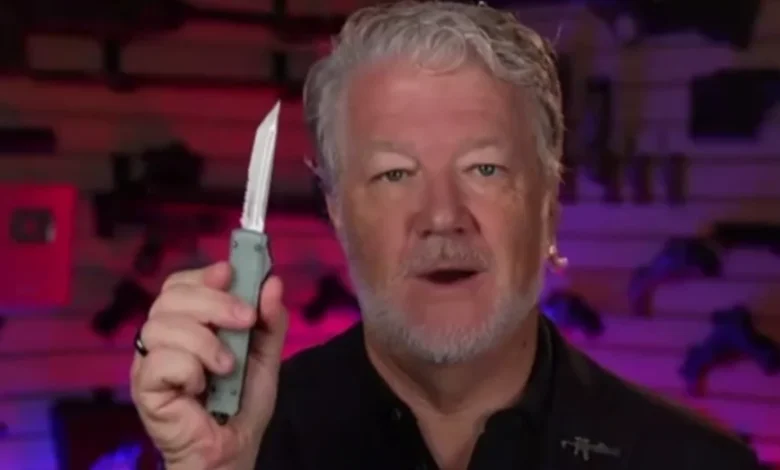
A series of significant judicial developments has recently rippled through the American legal landscape, signaling a potentially transformative era for Second Amendment jurisprudence. On Wednesday, two separate federal court rulings—one from the Fifth Circuit Court of Appeals and another from the Western District of New York—concluded that switchblade knives and personal body armor qualify as constitutionally protected "arms." These decisions have provided a potent shot of adrenaline to gun-rights advocates, who view these findings as essential precursors to an impending Supreme Court showdown regarding the constitutionality of bans on AR-15-style rifles.
The legal momentum behind these rulings is rooted in a fundamental reassessment of what constitutes a protected arm. As courts grapple with the implications of the Supreme Court’s landmark decisions in District of Columbia v. Heller (2008) and New York State Rifle & Pistol Association v. Bruen (2022), the definition of "arms" is increasingly being pushed beyond the traditional scope of firearms to encompass a broader array of defensive equipment.
The Fifth Circuit and the Federal Switchblade Act
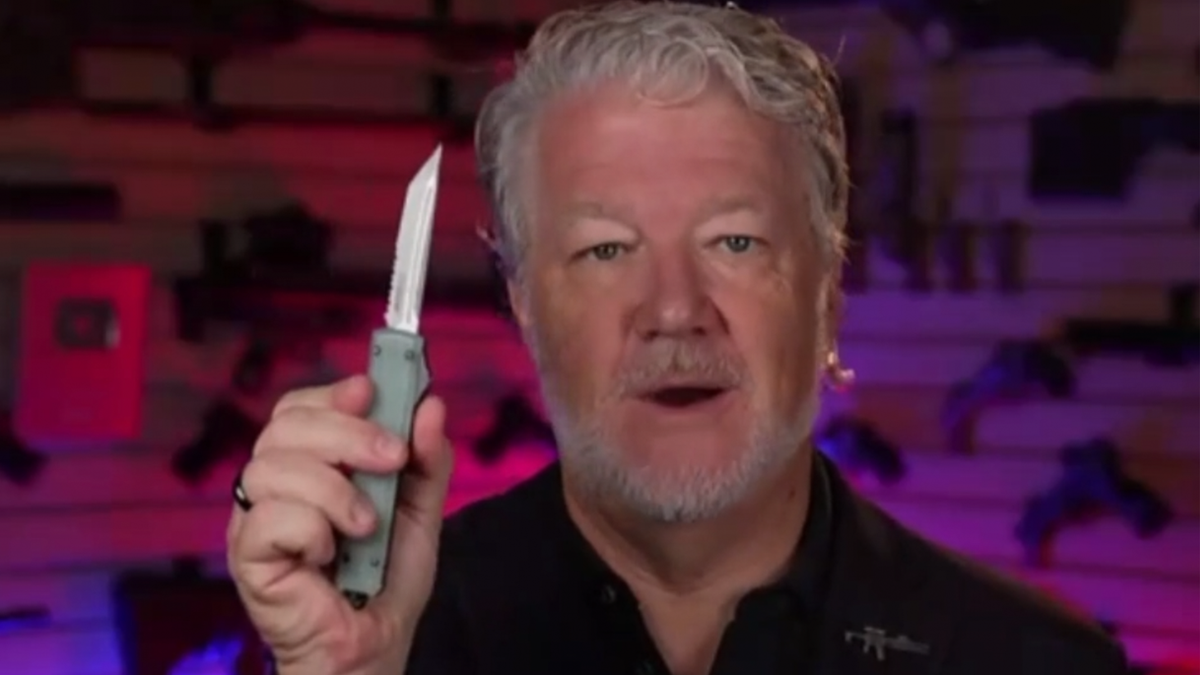
The Fifth Circuit Court of Appeals issued a ruling declaring that a federal law restricting the interstate commerce of switchblade knives stands in violation of the Second Amendment. The court’s logic centered on the understanding that switchblades, which have historically been utilized for both self-defense and common utility, fall under the umbrella of protected arms.
By applying the "text-and-history" test established in the Bruen decision, the appellate court determined that the government failed to present a sufficient historical tradition of regulation that would justify the restrictive nature of the Federal Switchblade Act. Under the Bruen framework, once it is established that the Second Amendment’s text covers the item in question—in this case, a knife—the burden of proof shifts to the state to demonstrate that the regulation is consistent with the nation’s historical tradition of arms regulation. The Fifth Circuit found that the government’s arguments did not meet this rigorous constitutional threshold.
New York’s Body Armor Restrictions Struck Down
Simultaneously, a federal judge in the Western District of New York invalidated state-level restrictions on the personal purchase of body armor. New York had argued that body armor functioned as a tactical accessory rather than a defensive arm. However, the presiding judge rejected this narrow interpretation, concluding that defensive equipment—such as armor designed to protect the wearer from projectile threats—fits squarely within the historical definition of arms as outlined in Heller.
This decision serves as a significant check on state efforts to regulate defensive civilian gear. The ruling suggests that legislatures may face an uphill battle in defending statutes that prohibit the private ownership of equipment that does not cause offense but serves to mitigate harm to the individual.
The Path to the Supreme Court: Viramontes v. Cook County
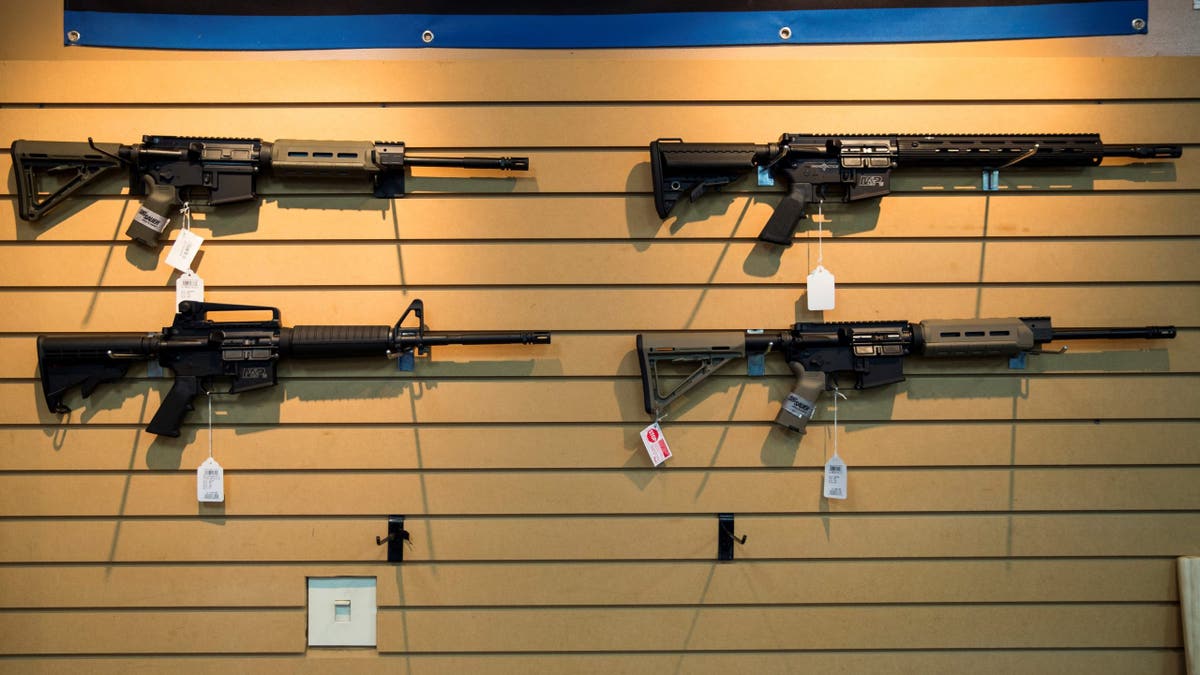
These regional rulings arrive at a critical juncture, as the U.S. Supreme Court prepares to hear oral arguments in the case of Viramontes v. Cook County. This case represents the next major battlefield in the debate over the Second Amendment, as it directly challenges the constitutionality of bans on semi-automatic rifles, such as the AR-15.
The core question presented to the Supreme Court is whether these rifles qualify as "arms" in common use, as defined by the Heller precedent. The Seventh Circuit had previously upheld Cook County’s ban, reasoning that AR-15-style rifles were analogous to machine guns and, therefore, outside the scope of protected weaponry.
Legal analysts, including Second Amendment attorney George Lyon, suggest that the Seventh Circuit’s classification of these rifles as "machine-gun-like" is a focal point of contention. "The current case at the Supreme Court, Viramontes, will address that because the Seventh Circuit had taken the position that because AR-15s are ‘like machine guns,’ they don’t constitute an arm as defined under Heller," Lyon noted. "That was just totally wrong in my view."
Historical Context and Legal Evolution
To understand the weight of these recent developments, one must look at the evolution of the Supreme Court’s stance over the last two decades. In 2008, the Heller decision established that the Second Amendment protects an individual’s right to keep and bear arms for lawful purposes, such as self-defense within the home. It explicitly acknowledged that the right is not unlimited and does not permit the carrying of any weapon whatsoever in any manner and for any purpose. However, it also established that the government cannot ban weapons that are in "common use" for lawful purposes.
The 2022 Bruen decision further refined this by discarding the "means-end scrutiny" that lower courts had historically used to uphold gun control laws. Instead, it mandated that any restriction must be consistent with the historical tradition of the American legal system. This has forced government entities to search historical archives for analogues to modern gun control, a task that has proven increasingly difficult as courts demand precise historical comparisons.
Implications for Defensive Equipment
The recent judicial wins for switchblades and body armor have created a roadmap for future litigation. Dudley Brown, president of the National Association for Gun Rights, has emphasized that a Supreme Court victory in the Viramontes case would not merely be about rifles; it would provide the legal precedent to challenge a wide array of existing restrictions.
"The interesting thing about both of these cases is that they’re both going to be really decided by the U.S. Supreme Court in the Viramontes decision," Brown stated. If the Court rules that the Seventh Circuit erred in its characterization of semi-automatic rifles, the implications for ammunition magazines, stun guns, and suppressors—which are currently subject to various state and federal regulations—could be profound.
The National Rifle Association (NRA) has echoed these sentiments. Justin Davis, the NRA’s director of public affairs, highlighted that the current legal battle is essentially a philosophical debate about the nature of technology and rights. "They talk about how the Second Amendment only applied to muskets because that’s what existed at the time of the Founders, but we don’t apply the First Amendment only to newspapers, books or speech in public forums," Davis argued. "Social media, texting and phones didn’t exist at that time, either. The world evolves, but the core fundamental rights never change."
Statistical and Practical Realities
The proliferation of the equipment currently under legal scrutiny is significant. According to various industry estimates, AR-15-style rifles are among the most popular firearms in the United States, with millions in circulation. Proponents of gun rights argue that this widespread ownership is, by definition, "common use," which should afford these firearms the highest level of constitutional protection.
Conversely, gun control advocates maintain that the presence of such weapons in the public sphere contributes to a higher incidence of mass casualty events. They argue that the Founders could not have envisioned the lethality of modern, high-capacity, semi-automatic weaponry. The judicial system is now forced to balance these competing interests: the individual’s right to self-defense and the government’s interest in public safety, all while operating under the strict, historical lens mandated by the current Supreme Court.
Future Outlook and Judicial Challenges
As the nation waits for the Viramontes ruling, the lower courts remain active. The recent rulings in the Fifth Circuit and the Western District of New York indicate that judges are increasingly comfortable applying the Bruen test to strike down regulations that they believe lack a clear historical parallel.
This creates a high-stakes environment for state legislatures. In states where strict gun laws are a hallmark of policy, the potential for federal intervention is growing. If the Supreme Court provides a robust affirmation of what constitutes an "arm," many state-level restrictions on accessories and semi-automatic platforms may be rendered unenforceable overnight.
Furthermore, the legal fight is expected to expand. Litigation regarding suppressors, which are often used to prevent hearing damage for shooters, and high-capacity magazines is currently winding through various state and federal courts. Should the Supreme Court align with the reasoning that any item commonly used for lawful self-defense is protected, the legal landscape of the United States will shift toward a standard where the government bears a heavy burden to justify any limitation on defensive technology.
In summary, the judiciary is currently engaged in a massive, systemic re-evaluation of the Second Amendment. Whether it is the blade of a switchblade or the plates of a bulletproof vest, the courts are signaling that the era of broad, modern-era regulation is encountering a significant constitutional firewall. The upcoming months will determine whether that firewall holds, or if the Supreme Court will refine the definition of "arms" in a way that fundamentally alters the relationship between the citizen, their defensive equipment, and the state.