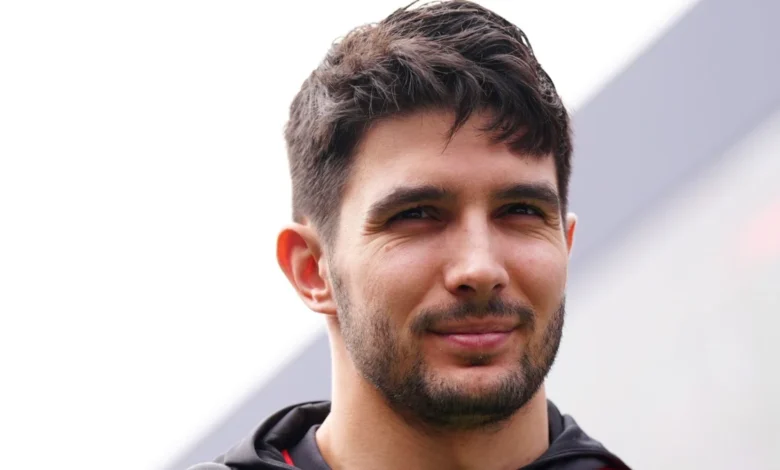
The Formula 1 paddock has been plunged into mid-season turbulence following confirmation from the Haas F1 Team that Esteban Ocon will not drive for the American-owned outfit for the remainder of the current campaign. The dramatic parting of ways paves the way for Formula 2 championship leader Rafael Camara to make a sensational and unexpected Formula 1 debut at this weekend’s Sao Paulo Grand Prix at Interlagos.
Camara, a rising star in the junior formulae, had already been officially announced by Haas to take over one of their race seats beginning in the 2027 season. However, circumstances have accelerated his promotion by over a year. The sudden nature of Ocon’s departure stems from a dramatic breakdown in relations between the French driver and the team hierarchy during last weekend’s Mexico City Grand Prix, forcing the squad to act swiftly to secure their driver lineup for the grueling final stretch of the 2026 world championship.
A Fractured Relationship in Mexico City
The friction between Ocon and Haas reportedly reached an irreparable boiling point behind closed doors at the Autodromo Hermanos Rodriguez. While the team has maintained a professional stance in public statements, internal sources indicate that tensions flared over strategy, team dynamics, and competitive performance during the Mexican race weekend.
The fallout was so severe that Ocon was pulled from the cockpit ahead of Saturday’s running. In his place, Haas called upon sportscar star and reserve driver Ryo Hirakawa to step in on short notice. Hirakawa delivered a commendable performance under immense pressure, navigating a chaotic race to finish 10th and secure a crucial championship point. His debut points-finish was later cemented following post-race time penalties handed down to McLaren’s Oscar Piastri and the Alpine pairing of Pierre Gasly and Franco Colapinto.
With Hirakawa unavailable for the upcoming Sao Paulo Grand Prix due to pre-existing commitments in the World Endurance Championship in Italy, Haas faced a vacant seat alongside regular driver configurations. Rather than searching for a temporary stopgap veteran, the team opted to thrust their 2027 prospect, Rafael Camara, directly into the deep end of elite motorsport.
The Accelerated Rise of Rafael Camara
Rafael Camara arrives in Formula 1 on the back of a stellar campaign in the FIA Formula 2 Championship, where he currently commands the driver standings. Widely regarded as one of the most promising talents of his generation, the Brazilian youngster has consistently demonstrated race-winning pace, tactical maturity, and the composure required to handle high-pressure environments.
Stepping into an F1 car for the first time during a Grand Prix weekend—let alone at the notoriously demanding and atmospheric Autodromo Jose Carlos Pace in Interlagos—presents an extraordinary challenge. Competing in front of his home crowd adds an extra layer of emotional intensity and media scrutiny for the rookie.
Haas team principal and senior management have expressed confidence in Camara’s underlying abilities, noting that his stellar form in junior categories proved he possesses the raw speed necessary to compete at the pinnacle of motorsport. However, transitioning from Formula 2 machinery to a contemporary ground-effect Formula 1 car without prior winter testing or extensive simulator mileage with the specific 2026 chassis will require a steep and rapid learning curve.
Uncertainty Looming Over the Final Triple-Header
While Camara’s immediate integration into the team for the Sao Paulo Grand Prix has been finalized, significant questions remain regarding the final three rounds of the 2026 season. Haas has yet to confirm who will pilot the second car at the high-profile Las Vegas Grand Prix, the subsequent round in Qatar, and the season-ending Abu Dhabi Grand Prix at the Yas Marina Circuit.
Industry analysts suggest that if Camara performs adequately during his debut weekend in Brazil, Haas may choose to keep him in the seat for the remainder of the year to accelerate his acclimatization ahead of his full-time debut in 2027. Alternatively, the team could weigh alternative reserve options or evaluate other development drivers as they balance short-term Constructors’ Championship objectives with long-term driver development.
The Chronology of Ocon’s Haas Tenure
Esteban Ocon’s departure marks a premature and sour end to what was initially envisioned as a multi-year partnership aimed at spearheading the American team’s midfield ambitions.
- Early 2025: Ocon joins Haas on a high-profile multi-year agreement, bringing extensive race-winning experience from his stints with Renault and Alpine.
- Throughout 2025 and 2026: Ocon serves as a primary benchmark for the team, though the Haas squad battles fluctuating aerodynamic competitiveness within an intensely tight midfield pack.
- October 2026: Haas announces that Ocon will depart the organization at the conclusion of the current season, simultaneously confirming Formula 2 standout Rafael Camara as his permanent successor for 2027.
- Late October 2026 (Mexico City Grand Prix): Relations deteriorate significantly over the race weekend. Ocon is substituted by Ryo Hirakawa from Saturday onward, with Hirakawa scoring a point on debut.
- Early November 2026: Haas officially confirms Ocon will not race for the team again, setting the stage for Camara’s sudden F1 introduction in Brazil.
Implications for the Constructors’ Championship
For Haas, the mid-season driver swap carries significant sporting and financial ramifications. The team is currently embroiled in a fierce, multi-team battle in the Constructors’ Championship, where every single point can translate into millions of dollars in prize money and substantial prestige at the end of the year.
Introducing an inexperienced rookie with zero prior F1 race experience during a triple-header weekend carries inherent risks. Interlagos is renowned for its unpredictable weather patterns, abrasive asphalt, and safety-car-heavy race dynamics—factors that traditionally punish mistakes while rewarding experience.
At the same time, the bold gamble underlines Haas’s willingness to pivot toward the future. By bringing Camara into the fold early, the team effectively writes off the remaining weeks of Ocon’s tenure while securing valuable data, feedback, and developmental mileage for their incoming star.
Weekend Schedule: Sao Paulo Grand Prix
As the Formula 1 circus arrives in Brazil for the final leg of the autumn triple-header, all eyes will be locked on the Haas garage to monitor Camara’s adaptation process. The official track action gets underway at Interlagos under the following schedule:
Thursday, November 5
- 5:00 PM: Drivers’ Press Conference
- 8:00 PM: Paddock Uncut
Friday, November 6
- 3:00 PM: Sao Paulo Grand Prix Practice One (Session starts at 3:30 PM)
- 5:30 PM: Team Bosses’ Press Conference
- 6:45 PM: Sao Paulo Grand Prix Practice Two (Session starts at 7:00 PM)
- 8:15 PM: The F1 Show
Saturday, November 7
- 2:15 PM: Sao Paulo Grand Prix Practice Three (Session starts at 2:30 PM)
- 5:00 PM: Sao Paulo Grand Prix Qualifying Build-up
- 6:00 PM: Sao Paulo Grand Prix Qualifying
- 8:00 PM: Ted’s Qualifying Notebook
Sunday, November 8
- 3:30 PM: Grand Prix Sunday: Sao Paulo GP Build-up
- 5:00 PM: The Sao Paulo Grand Prix
- 7:00 PM: Chequered Flag: Sao Paulo City GP Reaction
- 8:00 PM: Ted’s Notebook
With the stage set for an unpredictable weekend in South America, the motorsport world waits to see whether Rafael Camara can seize his unexpected opportunity and deliver a memorable chapter in his burgeoning racing career.