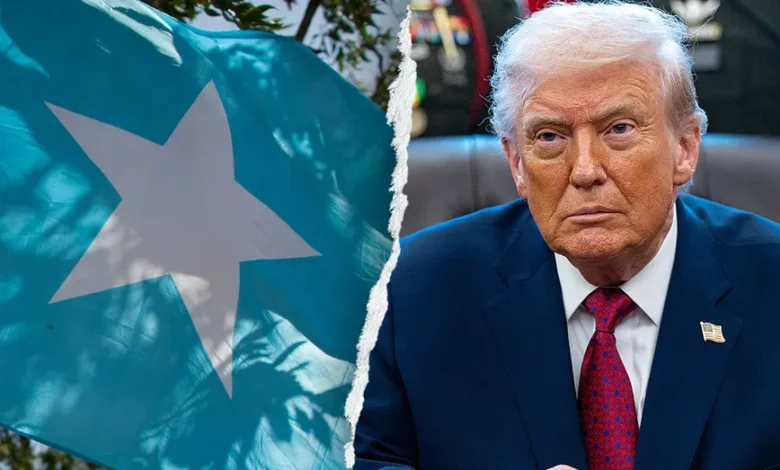
In a comprehensive Thanksgiving message posted to the Truth Social platform, President Donald Trump outlined a dual-track vision for American immigration policy, explicitly distinguishing between immigrants who are self-sufficient members of the workforce and those who rely on public assistance programs. The President’s remarks, which focused heavily on the Somali community in Minnesota, marked a significant escalation in the administration’s rhetoric regarding social safety net reform and domestic immigration enforcement.
The President stated that he wished to express gratitude to the approximately 2% of the Somali population in the United States whom he described as actively employed and contributing to the economy without government assistance. These individuals, according to the President, represent the ideal of American citizenship and should remain in the country. Conversely, he argued that those reliant on state or federal welfare should be subject to immediate removal, characterizing such a move as a necessary measure to preserve the integrity and financial stability of the state of Minnesota.
Contextualizing the Debate on Public Assistance
The President’s comments arrive amid a broader, intensifying debate within the Republican Party regarding the distribution of taxpayer-funded benefits and the oversight of social services. During a House Oversight Committee hearing conducted in January, Representative Brandon Gill (R-Texas) presented data suggesting that 54% of Somali-headed households in Minnesota utilize the Supplemental Nutrition Assistance Program (SNAP).
This data point has become a focal point for lawmakers advocating for stricter eligibility requirements and enhanced vetting processes for immigration programs. Supporters of these reforms argue that high rates of public assistance utilization place an undue burden on state budgets, while critics contend that such figures often overlook the complexities of refugee resettlement, language barriers, and the initial stages of economic integration.
The discussion surrounding SNAP benefits has also moved beyond fiscal concerns. Federal regulators, including officials from the U.S. Department of Agriculture (USDA), have recently testified before Congress regarding concerns that fraud within SNAP programs may have broader security implications. Law enforcement agencies have expressed apprehension that sophisticated, organized criminal networks may be exploiting these programs to siphon funds, with some investigations probing whether illicit proceeds have ties to international entities or broader criminal enterprises.
Chronology of Tensions in Minnesota
The relationship between federal authorities and the Somali community in Minnesota has been characterized by increasing friction over the past year. The state, which hosts the largest Somali diaspora in the United States, has been the epicenter of several high-profile legal and political developments:
- January 2026: Congressional hearings begin, highlighting the dependency statistics of Somali-headed households.
- Late 2025: A series of federal immigration operations, coordinated by Immigration and Customs Enforcement (ICE), target specific sectors of the immigrant community in Minneapolis, leading to widespread public demonstrations.
- December 2025: Protests erupt in the Twin Cities following reports of federal raids. Activists and local leaders argue that these operations disproportionately target vulnerable families and create a climate of fear.
- Thanksgiving 2026: President Trump’s Truth Social post formalizes his stance, explicitly linking the potential for continued residency to economic self-sufficiency.
These tensions have been further exacerbated by high-profile legal investigations, including federal actions involving the home of Representative Ilhan Omar in Washington, D.C. While the specifics of these investigations remain subject to ongoing legal proceedings, the proximity of these events has served to polarize public discourse, with community leaders frequently bristling at what they describe as a "broad brush" approach that paints an entire ethnic community with the actions of a few.
Deportation and Border Security
Beyond the specific focus on Minnesota, the President’s Thanksgiving message addressed his administration’s broader efforts to deport individuals he categorized as "murderers, drug dealers, and criminals." Trump claimed that his administration has successfully removed a significant number of individuals who entered the country illegally from foreign prisons and mental health institutions.
"They are mostly gone now, brought back to their point of origin," the President wrote. He maintained that this shift in policy was essential to national security and internal public safety. The administration has frequently pointed to the conclusion of these deportation efforts as a major victory, emphasizing that the focus is now on ensuring these individuals do not return to the United States.

Divergent Views on American Opportunity
In contrast to the President’s focus on enforcement and the filtering of the immigrant population, other members of the executive branch and the Republican Party have sought to articulate a message centered on the promise of the American dream.
Secretary of State Marco Rubio, in a holiday video address, emphasized the role of the United States as a sanctuary of opportunity and freedom. "Being an American is a gift unlike any ever afforded to any other peoples throughout human history," Rubio stated. His message focused on the historical narrative of the United States as a place where immigrants can provide a better future for their descendants. While this sentiment is a staple of traditional American political rhetoric, its appearance alongside the President’s more exclusionary message reflects a multifaceted approach within the current administration to managing the intersection of national identity and immigration policy.
Fact-Based Analysis of Implications
The implications of the President’s rhetoric are significant for both federal policy and the social fabric of states like Minnesota.
- Fiscal Policy: Should the administration move to tie residency status or legal standing to the utilization of government assistance, it would represent a fundamental shift in the social contract for non-citizens. Such a policy would likely face immediate legal challenges regarding the definition of "public charge" and the extent of federal authority over state-administered benefit programs.
- Community Relations: The explicit targeting of a specific demographic based on both employment status and ethnic background risks deepening social fragmentation. Local leaders in Minnesota have consistently warned that such language can fuel xenophobia and complicate efforts to integrate immigrant populations into the broader workforce.
- Administrative Oversight: The focus on SNAP fraud and the potential for federal intervention in state welfare distribution suggests that the coming legislative session may see a renewed push for "workfare" requirements. Lawmakers are expected to introduce measures that would require more stringent documentation of income and employment status for those receiving federal subsidies, potentially reducing the total number of beneficiaries.
As the administration continues to pursue its "America First" agenda, the balance between national security priorities—specifically the focus on deporting criminal elements—and the logistical realities of managing a large-scale diaspora will remain a core challenge. The President’s Thanksgiving message serves as a clear indication that the administration intends to maintain a high-pressure approach to both immigration enforcement and the reform of social safety nets as it enters the next phase of its policy rollout.
The debate, therefore, remains at the intersection of two competing philosophies: one that views the social safety net as a drain on national resources that must be strictly policed, and one that views the assimilation of immigrant communities as a long-term investment in the nation’s economic and cultural vitality. With federal oversight and local community tensions remaining high, the coming months will likely see continued legislative action aimed at codifying these preferences into federal law.