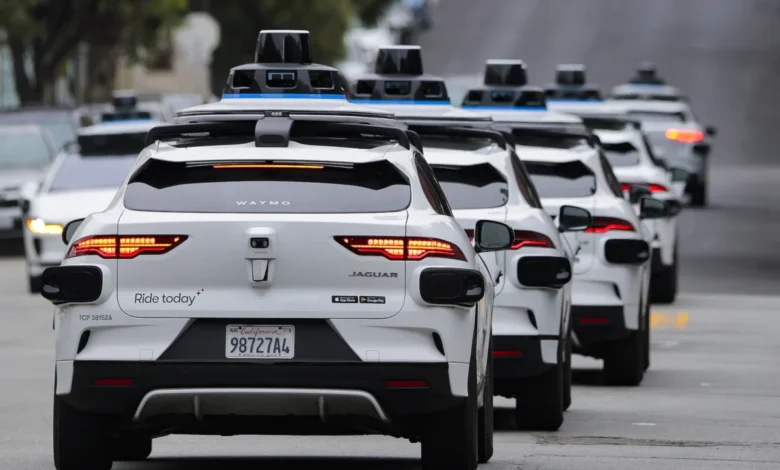
San Francisco’s nascent autonomous vehicle (AV) landscape experienced another moment of operational friction on Friday, July 18, 2026, when Waymo, the self-driving technology company owned by Alphabet, temporarily paused its robotaxi service across significant portions of the city. The disruption, which saw vehicles making "temporary adjustments" and freeway routes becoming unavailable, was a direct consequence of a widespread power outage that impacted approximately 7,000 Pacific Gas and Electric Company (PG&E) customers. This incident, occurring at 12:30 PM PDT, not only highlighted the intricate dependencies of advanced urban mobility systems on foundational infrastructure but also intensified ongoing discussions about the resilience of autonomous fleets in the face of unpredictable city challenges.
Immediate Response and Operational Adjustments
The initial signs of disruption emerged shortly after the power grid faltered. Customers attempting to hail a Waymo robotaxi received in-app notifications stating that service was "temporarily paused" and specifically, "freeway routes are unavailable." This immediate communication from Waymo indicated a proactive, albeit disruptive, response to the unfolding situation. The outage, which was concentrated in various San Francisco neighborhoods, plunged homes and businesses into darkness and likely affected traffic signals, streetlights, and critical communication infrastructure. Such a scenario presents a complex operational challenge for autonomous vehicles, which rely heavily on consistent sensor data, GPS accuracy, and real-time connectivity to navigate safely and efficiently.
When pressed for comment by TechCrunch, a spokesperson for the Alphabet-owned company initially confirmed the adjustments, stating, "We are making temporary adjustments to our service while we monitor local conditions. We know riders depend on us, and we will return to normal operations as soon as possible." This statement underscored Waymo’s commitment to safety and its recognition of its growing role in the city’s transportation ecosystem. Following the initial report, a subsequent update from Waymo clarified the duration and nature of the pause. The company spokesperson elaborated, "Waymo decided to pause service for approximately one hour to assess the scale of the power outage affecting a large portion of San Francisco and coordinate with local officials." This strategic pause allowed Waymo’s remote operations teams to evaluate the impact on their operational domain, assess potential hazards, and ensure that when service resumed, it could do so safely and reliably. By 1:30 PM PDT, approximately one hour after the initial disruption, Waymo confirmed that its robotaxi service had indeed resumed, signaling a return to normalcy for its San Francisco operations.
Chronology of a Disruption: The Outage and Waymo’s Response
The sequence of events on July 18, 2026, unfolded rapidly, illustrating the delicate balance required for seamless urban autonomous operations:
- 12:30 PM PDT: A power outage, later attributed to an issue within PG&E’s distribution network, begins to affect approximately 7,000 customers across San Francisco. The specific cause of this particular outage was under investigation by PG&E, though common causes in urban environments include equipment failure, underground cable faults, or external damage.
- Shortly After 12:30 PM PDT: Waymo’s internal monitoring systems detect significant anomalies within its operational design domain (ODD), likely including widespread traffic signal outages, reduced visibility due to non-functioning streetlights, and potential disruptions to cellular data networks crucial for vehicle-to-cloud communication.
- Around 12:40 PM PDT: Waymo initiates its emergency protocol, notifying customers via its app that service is "temporarily paused" and "freeway routes are unavailable." This decision reflects a cautious approach, prioritizing safety over continuous operation in compromised conditions.
- 12:45 PM PDT (Approx.): Waymo issues an initial statement to media outlets confirming "temporary adjustments" to its service, indicating active monitoring of the situation. This period involves Waymo’s remote assistance teams and engineers assessing the geographical spread and severity of the power disruption.
- 1:30 PM PDT (Approx.): After a comprehensive assessment and coordination, Waymo announces the resumption of its robotaxi service. The one-hour pause suggests a careful, systematic evaluation of safety parameters and operational readiness.
- Post-Resumption: Waymo vehicles gradually re-enter service, prioritizing routes and areas deemed safe, while PG&E continues its efforts to fully restore power to all affected customers, a process that can often extend for several hours depending on the complexity of the fault.
This swift response and subsequent resumption of service, while demonstrating Waymo’s operational agility, also underscored the inherent vulnerabilities of even the most advanced technological systems to fundamental infrastructure failures.
The Recurring Theme: Autonomous Vehicles and Infrastructure Vulnerability
This was not an isolated incident for Waymo or the broader autonomous vehicle industry in San Francisco. The city, a critical proving ground for AV technology, has seen its share of challenges involving driverless cars and urban infrastructure. Previous incidents serve as crucial precedents for the July 18th outage:
- December 2025 Blackout: A significant blackout in December 2025 led to a number of Waymo vehicles stalling on city streets. During that incident, the abrupt loss of power, which affected traffic signals and potentially communication networks, caused several robotaxis to enter a safe-stop mode, leading to temporary traffic impediments. While designed as a safety measure, a large number of vehicles performing this action simultaneously in a dense urban environment can exacerbate congestion and create hazards.
- Fourth of July Fireworks Incident (2025): Earlier in the same year, a similar incident paralyzed traffic during a Golden Gate Bridge fireworks show. The sheer volume of human-driven and autonomous vehicles, combined with potential network strain and a localized disruption, illustrated how planned large-scale events can also expose AV operational weaknesses. Vehicles reportedly struggled to navigate altered traffic patterns or communication issues, further highlighting the need for robust contingency planning.
These repeated occurrences have fueled growing concern among San Francisco city officials, who are grappling with how to integrate these futuristic transportation solutions into a complex, aging urban environment. The cumulative effect of these disruptions has shifted the conversation from the technological prowess of AVs to their practical resilience and integration into existing public safety frameworks.

Calls for Enhanced Regulation and Broader Implications
The ongoing challenges faced by autonomous vehicle operators in San Francisco have galvanized city leadership to advocate for more stringent oversight. San Francisco Mayor Daniel Lurie has been a vocal proponent for tougher state regulations, asserting that existing frameworks are insufficient to "adequately address how autonomous vehicles operate during major incidents, planned or not." Mayor Lurie’s stance reflects a broader sentiment among city departments, including the San Francisco Municipal Transportation Agency (SFMTA) and the Fire Department, who have frequently expressed concerns about AVs impeding emergency services or creating unforeseen traffic snarls during critical situations.
The regulatory landscape for autonomous vehicles in California is complex, primarily managed by the California Public Utilities Commission (CPUC) and the Department of Motor Vehicles (DMV). While the DMV oversees testing and deployment permits, the CPUC regulates AVs as passenger carriers, granting permits for commercial operations. City officials, however, often feel they lack sufficient local control to impose specific operational requirements or penalties when AVs cause disruptions within their jurisdictions. The mayor’s calls for tougher state regulations aim to empower local authorities with more tools to manage the deployment and performance of AVs, particularly concerning their behavior during emergencies, power outages, and large public events.
The implications of these incidents extend beyond mere inconvenience. They raise fundamental questions about:
- Public Safety: How can cities ensure that autonomous vehicles do not become obstacles during critical emergencies, such as fires or medical incidents, especially when traditional infrastructure fails?
- Infrastructure Resilience: The reliability of AV services is directly tied to the robustness of urban infrastructure, including power grids, cellular networks, and traffic management systems. These incidents highlight the need for smart city initiatives to concurrently upgrade foundational infrastructure alongside AV deployment.
- Trust and Adoption: Repeated service disruptions, even if temporary, can erode public trust in autonomous technology. For AVs to achieve widespread adoption, they must demonstrate not only safety but also unwavering reliability in diverse and challenging urban conditions.
- Regulatory Harmonization: There’s a clear need for better coordination between state regulators, AV companies, and local municipalities to develop comprehensive operational protocols for emergency situations and infrastructure failures.
PG&E’s Role and the Broader Context of Power Infrastructure
PG&E, as the primary electric utility in Northern California, plays a critical role in the operational environment for Waymo and all other electric-dependent systems. The company has faced significant scrutiny in recent years over its infrastructure’s reliability and its role in past wildfires. While the specific cause of the July 18th outage was under investigation, such incidents are not uncommon in large, densely populated cities with extensive underground and overhead utility networks. Factors contributing to outages can range from equipment failures (e.g., aging transformers, cable faults) to external factors (e.g., digging accidents, weather events, animal interference).
For AVs, a power outage is more than just a loss of electricity; it can signify a cascade of failures. Traffic signals, which are often connected to the power grid, cease to function, turning intersections into uncontrolled chaos. Streetlights go dark, reducing visibility, especially during evening hours. Furthermore, the cellular and wireless networks that AVs use for real-time mapping updates, remote assistance, and communication can also be affected if local cell towers lose power or have their back-up systems depleted. This intricate web of dependencies means that while an AV might have onboard power for operation, its ability to safely and effectively navigate relies on a functional external environment.
Technological Preparedness and Future Outlook
Autonomous vehicle companies like Waymo invest heavily in systems designed to handle unexpected events. These include:
- Redundant Sensor Suites: Multiple types of sensors (Lidar, radar, cameras) provide overlapping data, ensuring that if one sensor type is degraded, others can compensate.
- Onboard Computing Power: AVs have significant onboard processing capabilities, allowing them to make real-time decisions even with limited external connectivity.
- Fail-Operational and Fail-Safe Mechanisms: In critical situations, AVs are programmed to either continue operating safely (fail-operational) or to pull over to a safe stop (fail-safe) if conditions exceed their operational capabilities. This is what occurred during the San Francisco outage.
- Remote Assistance: Human operators can remotely monitor vehicles and provide guidance or intervention in complex scenarios.
Despite these advanced safeguards, the collective impact of a widespread infrastructure failure remains a significant hurdle. The July 18th incident underscores that while AVs are sophisticated machines, they are not immune to the vulnerabilities of the very cities they operate in. The path forward for autonomous mobility in urban centers like San Francisco will likely involve:
- Enhanced Data Sharing: Greater collaboration between AV operators and city emergency services, allowing for real-time sharing of information during incidents.
- Development of Robust Protocols: Standardized procedures for AV behavior during power outages, communication blackouts, and other infrastructure failures.
- Investment in Smart City Infrastructure: Upgrading traffic signals with uninterruptible power supplies (UPS), deploying more resilient communication networks, and integrating AV data into city traffic management systems.
- Adaptive Regulatory Frameworks: Evolving regulations that can keep pace with technological advancements while also addressing the practical challenges of urban deployment.
The temporary halt of Waymo’s robotaxi service in San Francisco due to a power outage serves as a stark reminder that the future of urban mobility is not just about groundbreaking technology but also about the foundational reliability of the cities themselves. As autonomous vehicles become more integral to daily life, ensuring their seamless and safe operation will require a collaborative effort from tech companies, utility providers, and city governments to build a truly resilient and intelligent urban ecosystem. The events of July 18, 2026, will undoubtedly contribute to the ongoing dialogue and development necessary to achieve that vision.