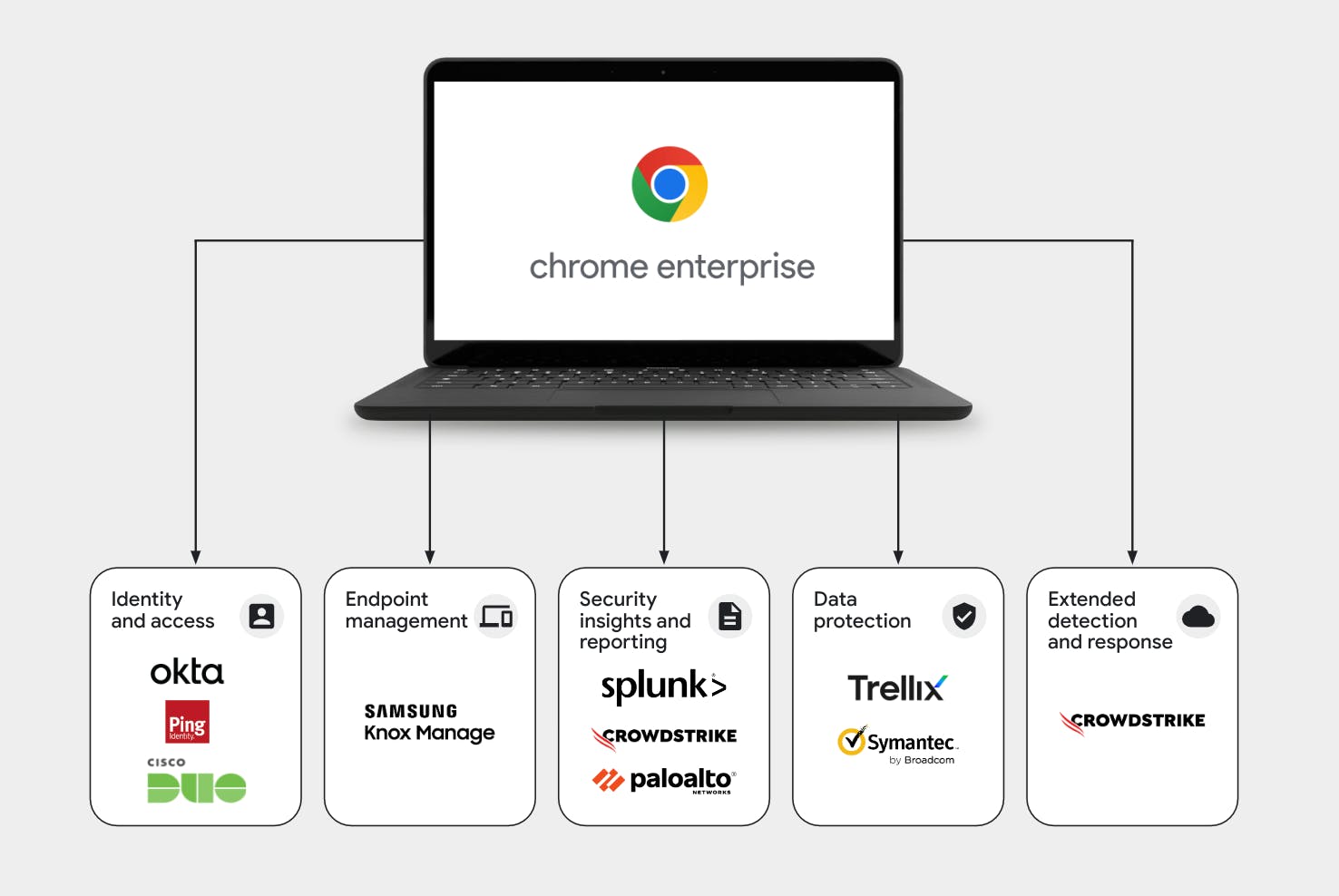

Google Chrome Enterprise Connectors Framework: Empowering Seamless Integration and Data Security
The Google Chrome Enterprise Connectors Framework (CECF) represents a significant advancement in enabling secure and streamlined integration of Chrome Enterprise browsers with critical business applications and data. Designed to overcome the inherent challenges of managing enterprise data accessed via web browsers, CECF provides a robust and flexible architecture for organizations to extend their existing security policies, compliance requirements, and data management workflows directly into the Chrome browser environment. This framework moves beyond simple browser management by allowing for deep interaction with data as it is accessed, processed, and shared within the browser, thereby offering enhanced control and visibility.
At its core, CECF operates by introducing a secure, sandboxed environment within the Chrome browser where custom connectors can be deployed and executed. These connectors act as intermediaries, enabling bidirectional communication between the Chrome browser and external enterprise systems. This architecture is crucial for organizations that rely on cloud-based applications, Software-as-a-Service (SaaS) platforms, and other web-based tools for their daily operations. Without a mechanism like CECF, sensitive enterprise data traversing these web applications remains largely outside the direct control of traditional on-premises security and data loss prevention (DLP) solutions. CECF bridges this gap, allowing IT administrators to extend their existing security perimeters into the user’s browsing session.
The primary benefit of CECF lies in its ability to enforce enterprise policies at the point of data interaction. This includes, but is not limited to, preventing the exfiltration of sensitive data, ensuring compliance with regulatory mandates (such as GDPR, HIPAA, CCPA), and maintaining data integrity. By leveraging connectors, organizations can inspect the content of web pages, monitor user actions within the browser, and trigger specific actions based on predefined rules. For instance, a connector could be configured to detect if a user attempts to copy confidential customer information from a CRM system and paste it into an unapproved cloud storage service. In such a scenario, the connector can be programmed to block the action, log the event, or even alert security personnel. This level of granular control is instrumental in mitigating the risks associated with insider threats and accidental data breaches.
SEO considerations for content related to CECF revolve around keywords such as "Chrome Enterprise security," "browser data protection," "enterprise web application integration," "DLP for Chrome," "cloud security for browsers," "data loss prevention browser," "managed browser security," "Chrome security policy enforcement," and "SaaS data governance." A comprehensive article on CECF should strategically incorporate these terms to improve its visibility in search engine results for IT professionals, security analysts, and decision-makers seeking solutions for browser-based data security and integration challenges. The framework’s ability to integrate with existing security stacks and its extensibility are also key selling points that should be highlighted.
The architecture of CECF is designed with scalability and modularity in mind. Organizations can develop custom connectors tailored to their specific needs or leverage pre-built connectors offered by Google or third-party vendors. This extensibility means that CECF is not limited to a predefined set of integrations. Instead, it provides a platform upon which a diverse range of solutions can be built. This includes connectors for enterprise resource planning (ERP) systems, customer relationship management (CRM) platforms, identity and access management (IAM) solutions, and any other web-accessible application where data security and integration are paramount. The development of these connectors often involves leveraging web technologies and APIs, making it accessible to organizations with established development capabilities.
One of the most compelling use cases for CECF is its role in enhancing data loss prevention (DLP) strategies. Traditional DLP solutions often struggle to effectively monitor and control data within web browsers, as much of the data processing occurs within the browser’s sandboxed environment. CECF allows organizations to deploy DLP policies directly into the Chrome browser, enabling real-time inspection and control of data in transit and at rest within the browser context. This means that sensitive information, such as personally identifiable information (PII), financial data, or intellectual property, can be identified and protected as users interact with web applications. By integrating DLP directly into the browser, CECF provides a more comprehensive and effective approach to preventing accidental or malicious data leakage.
Furthermore, CECF significantly bolsters compliance efforts. Many industries are subject to stringent regulatory requirements that dictate how sensitive data must be handled and protected. For example, healthcare organizations must comply with HIPAA, while financial institutions must adhere to various regulations like PCI DSS. CECF enables organizations to enforce the specific policies and controls required by these regulations directly within the Chrome browser. This can include restricting access to certain types of data, logging all data-related activities, and auditing user behavior. By ensuring that the browser environment is compliant with these mandates, organizations can reduce the risk of regulatory penalties and maintain the trust of their customers and stakeholders.
The deployment and management of CECF connectors are typically handled through Google Chrome Enterprise policies, leveraging tools like the Google Admin console. This centralized management approach ensures consistency across the organization and simplifies the process of rolling out new security policies or integrations. IT administrators can define which connectors are enabled for specific user groups or organizational units, ensuring that policies are applied appropriately. This granular control is essential for organizations with diverse user needs and varying levels of access to sensitive data. The ability to manage connectors remotely and at scale is a key advantage for enterprise IT departments.
From an SEO perspective, emphasizing the practical applications and benefits of CECF is crucial. Articles should delve into specific scenarios where CECF provides tangible value, such as:
- Securing SaaS Applications: As organizations increasingly adopt cloud-based SaaS applications, securing the data accessed through these platforms becomes a significant challenge. CECF allows for the application of enterprise security policies to these web-based environments.
- Protecting Intellectual Property: Companies that rely on proprietary information accessed through web applications can use CECF to prevent unauthorized access, copying, or sharing of this sensitive data.
- Enhancing Endpoint Security: CECF contributes to a broader endpoint security strategy by extending protection beyond traditional security software and into the user’s browsing activity.
- Streamlining Compliance Audits: By providing detailed logs and activity data, CECF can simplify the process of conducting compliance audits and demonstrating adherence to regulatory requirements.
The technical underpinnings of CECF are also relevant for SEO, particularly for IT professionals seeking detailed information. Discussions about the connector API, sandboxing mechanisms, security protocols, and integration points with existing enterprise systems can attract a technically oriented audience. Keywords like "Chrome browser API," "web connector SDK," "enterprise browser security architecture," and "Chrome security extension development" would be beneficial in this context. The framework’s ability to integrate with security information and event management (SIEM) systems for enhanced threat detection and response is another important aspect to highlight.
Moreover, CECF plays a vital role in Zero Trust security models. In a Zero Trust environment, no user or device is implicitly trusted, and all access requests must be verified. CECF contributes to this by enabling granular policy enforcement at the application and data level within the browser, acting as a vital component in verifying and controlling access to sensitive resources. By continuously monitoring and validating user activity within the browser, CECF aligns with the principles of least privilege and continuous verification inherent in Zero Trust architectures. This makes it a valuable tool for organizations adopting modern security paradigms.
The development of custom connectors for CECF can be facilitated by Google’s developer resources and documentation. This includes APIs, SDKs, and best practices for building secure and efficient connectors. This information is crucial for organizations looking to build bespoke solutions for their unique integration needs. The ability to integrate with various enterprise identity providers, such as Okta or Azure Active Directory, further enhances the security and manageability of CECF, allowing for seamless single sign-on and access control.
In conclusion, the Google Chrome Enterprise Connectors Framework is a powerful and versatile solution for organizations seeking to enhance data security, improve compliance, and streamline integration with web-based applications. By extending enterprise policies directly into the Chrome browser, CECF empowers IT administrators with unprecedented control and visibility over sensitive data, mitigating risks and ensuring adherence to regulatory mandates. Its modular architecture, extensibility, and integration capabilities make it an indispensable tool for modern enterprises operating in an increasingly cloud-centric and web-dependent world. Optimizing content around CECF with relevant SEO keywords will ensure that organizations seeking these critical solutions can easily discover and implement this transformative technology. The framework’s ongoing evolution and potential for further integration with emerging web technologies suggest that its importance in enterprise security and data governance will only continue to grow.

