Christopher Nolan’s ambitious cinematic adaptation of Homer’s epic poem, The Odyssey, has not only captured the imagination of audiences worldwide but has also achieved remarkable success at the global box office. The film, a monumental undertaking for the acclaimed director, is projected to achieve an opening weekend of over $257 million worldwide, marking Nolan’s strongest global debut since The Dark Knight Rises in 2012, which garnered $249 million. However, as audiences revel in this latest masterpiece, Nolan has revealed a deliberate creative pause, stating that his next cinematic endeavor will not grace the silver screen for "at least" three years. This revelation, shared in a recent interview with Today, underscores the immense creative and physical demands of bringing such an enduring and complex narrative to life.
A Blockbuster Performance and a Deliberate Pause
The immediate success of The Odyssey is a testament to Nolan’s directorial prowess and his ability to translate grand narratives into compelling cinematic experiences. The film’s staggering box office performance, particularly its robust international appeal, signals a strong audience appetite for epic storytelling crafted with Nolan’s signature technical mastery and thematic depth. Early projections place the worldwide gross well beyond initial expectations, a feat achieved despite the film’s ambitious runtime and complex narrative structure, which often presents challenges for mainstream commercial appeal. This financial triumph solidifies Nolan’s position as one of Hollywood’s most bankable and influential filmmakers, capable of drawing massive crowds to theaters for auteur-driven projects.
Despite this overwhelming success, the prospect of a new Nolan film arriving soon is decidedly tempered. The director himself has indicated a significant period of gestation for his future projects. "At least three years," he stated, in reference to the timeline for his next directorial outing. This deliberate pace is not uncommon for Nolan, whose filmography demonstrates a consistent release schedule of approximately three years between major projects. His recent track record includes Oppenheimer (2023), Tenet (2020), Dunkirk (2017), and Interstellar (2014), all spaced out with this approximate three-year interval. This pattern suggests a deeply considered approach to filmmaking, allowing ample time for script development, pre-production, principal photography, and extensive post-production, especially given Nolan’s commitment to practical effects and innovative filmmaking techniques.
The Herculean Task of Adapting Homer
Nolan’s decision to tackle The Odyssey was not merely an artistic whim; it was a project that pushed the boundaries of his creative and personal endurance. Speaking to Today, he candidly admitted the immense toll the production took on himself and his team. "I definitely hit the limits of my own stamina and everybody’s stamina, I think," Nolan confessed. He further elaborated on the inherent difficulty of adapting such a foundational work of Western literature, stating, "It’s The Odyssey, of course it should be difficult. We’re not doing the job right making a film of The Odyssey if it doesn’t seem difficult."
This sentiment highlights the profound respect Nolan holds for the source material and his commitment to honoring its epic scope and challenging themes. The Odyssey is a sprawling narrative of Odysseus’s ten-year journey home after the Trojan War, fraught with mythical beasts, divine interventions, and profound human trials. Translating this into a visually arresting and emotionally resonant cinematic experience, while maintaining the integrity of its ancient narrative, is a formidable undertaking. The film’s critical reception and audience enthusiasm suggest that Nolan and his collaborators have succeeded in this monumental task, offering a fresh interpretation that resonates with contemporary viewers.
A Groundbreaking Cinematic Vision: Filming on IMAX 70mm
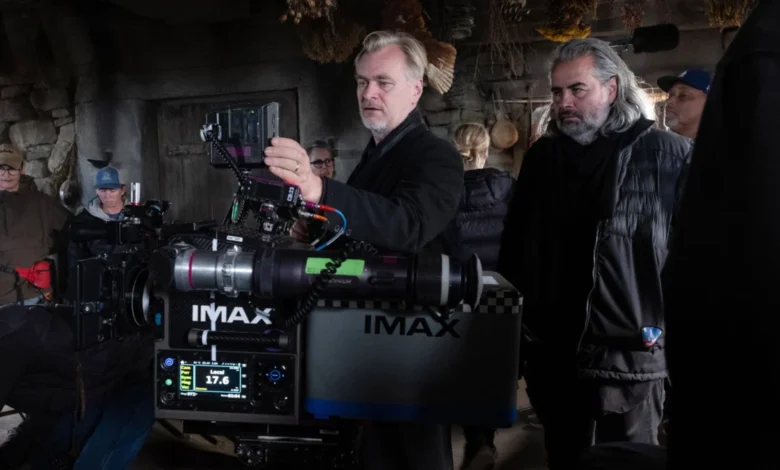
A significant aspect of The Odyssey‘s production that contributed to its epic scale and immersive quality was Nolan’s pioneering decision to shoot the entire film on IMAX 70 millimeter film. This commitment to a specific, high-fidelity format is characteristic of Nolan’s dedication to pushing the boundaries of cinematic technology. He approached the IMAX corporation with a clear vision: to leverage the unparalleled clarity, color depth, and immersive aspect ratio of the format for this particular story.
"I went to IMAX, and I said, ‘Look, if ever we are going to fulfill this dream of shooting the entire movie that way, this is the one. This is The Odyssey,’" Nolan explained. This statement underscores his belief that the grandeur and scope of Homer’s epic were perfectly suited for the unique capabilities of IMAX 70mm. The format allows for a significantly larger image area compared to standard film formats, delivering a level of detail and immersion that can transport audiences directly into the world of the film. Shooting entirely in this format is a technically demanding and logistically complex endeavor, requiring specialized cameras, extensive film stock, and meticulous planning. However, for Nolan, the payoff in terms of visual spectacle and the ability to fully realize his artistic intent was well worth the challenge. This decision places The Odyssey among a select group of films that have embraced this premium format for their entirety, further distinguishing it as a landmark cinematic achievement.
A Star-Studded Ensemble Cast
The success of The Odyssey is also bolstered by a formidable ensemble cast, bringing a wealth of talent to the forefront. While the original article does not detail the specific roles, the caliber of actors involved suggests a deep commitment from the cast to Nolan’s vision. The film features prominent performances from actors such as Matt Damon, Anne Hathaway, Lupita Nyong’o, Robert Pattinson, Tom Holland, Zendaya, and Charlize Theron, among many others. The presence of such a diverse and celebrated group of performers not only adds gravitas to the production but also provides a broad appeal, drawing in fans of individual actors to experience Nolan’s interpretation of the classic tale. The collective talent on display is indicative of the film’s ambitious scope and Nolan’s ability to attract top-tier talent to his projects, further enhancing the film’s critical and commercial prospects.
Historical Context and Thematic Resonance
Homer’s The Odyssey is not merely an ancient Greek myth; it is a foundational text that has profoundly influenced Western literature, art, and philosophy for millennia. The epic poem tells the story of Odysseus’s arduous journey home following the fall of Troy, a journey marked by encounters with mythical creatures like the Sirens, the Cyclops, and the sorceress Circe, as well as divine interference from gods like Poseidon and Athena. Beyond the adventure, The Odyssey explores timeless themes of homecoming, perseverance, loyalty, temptation, and the very nature of heroism.
Nolan’s decision to adapt this particular work speaks to his interest in exploring complex human experiences and grand narratives. His previous films often delve into themes of memory, identity, time, and morality, and The Odyssey provides a rich canvas for such explorations. The concept of a protracted and challenging journey mirrors the creative process itself, suggesting that Nolan may have drawn parallels between Odysseus’s struggles and the artistic endeavor of filmmaking. The film’s box office success indicates that audiences are receptive to these grand themes when presented with Nolan’s unique cinematic language and technical innovation.
The Future of Nolan’s Cinematic Landscape
The revelation of a three-year hiatus between films provides a glimpse into Nolan’s methodical approach to his craft. In an era often characterized by rapid content production and immediate sequels, Nolan’s commitment to allowing ample time for each project to breathe and mature is a significant aspect of his directorial philosophy. This extended period is likely dedicated to meticulous script development, rigorous pre-production planning, the exploration of cutting-edge visual and practical effects, and the exhaustive process of editing and sound design that are hallmarks of his filmmaking.
This deliberate pacing also allows for a significant period of reflection and conceptualization before embarking on the next ambitious undertaking. It suggests that Nolan is not merely seeking to capitalize on his current success but is carefully curating his future projects, ensuring each one is a distinct and compelling artistic statement. The industry will undoubtedly be watching with keen interest to see what narrative or concept Nolan chooses to explore next, knowing that it will likely be a project that challenges cinematic conventions and engages audiences on a profound level.
Broader Implications for the Film Industry
The resounding success of The Odyssey has several important implications for the film industry. Firstly, it reinforces the enduring power of original, epic storytelling in a market often dominated by established franchises and sequels. Nolan’s ability to draw massive audiences to a film based on a classical epic demonstrates that there is a significant appetite for ambitious, auteur-driven cinema when executed with vision and technical brilliance.
Secondly, the film’s impressive box office performance, particularly its global reach, highlights the continued importance of the theatrical experience. In an age of streaming dominance, Nolan’s films consistently draw audiences back to cinemas, emphasizing the unique magic and immersive quality of watching a film on the big screen, especially when presented in premium formats like IMAX.
Finally, Nolan’s established pattern of a three-year release cycle, combined with his commitment to pushing cinematic boundaries, sets a high bar for creative ambition. It suggests that audiences can anticipate a consistent output of high-quality, thought-provoking cinema from the director, albeit with the understanding that each project requires significant time and dedication. This approach serves as a reminder that great art often requires patience and a commitment to the creative process, a philosophy that continues to define Christopher Nolan’s illustrious career.