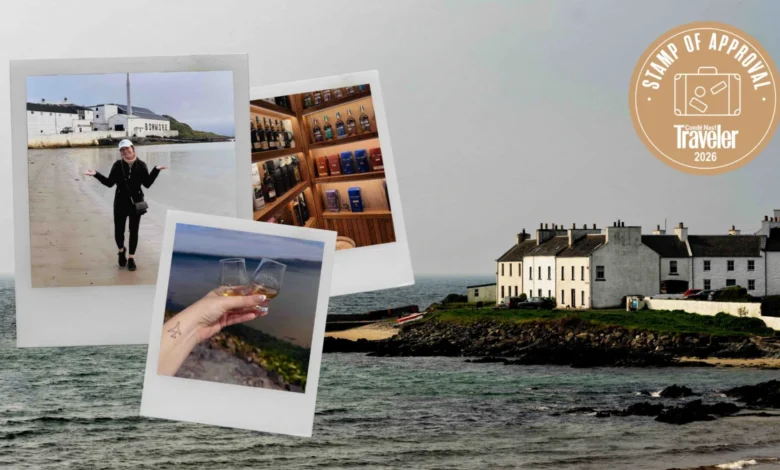
For whisky connoisseurs around the world, the Isle of Islay represents a secular pilgrimage of the highest order. Situated off the west coast of Scotland as the southernmost island of the Inner Hebrides, this 240-square-foot landmass produces some of the most distinct, heavily peated single malts in existence. When a dedicated aficionado approached his milestone 60th birthday, his lifelong dream was to travel to this rugged coastline, nose the sea-salty air, and experience firsthand the craft that shapes his collection of over 200 bottles at home. To navigate the complex logistics of the Inner Hebrides, the traveler and her daughter opted for Rabbie’s four-day Islay and the Whisky Coast tour, a small-group excursion operating out of Edinburgh. The journey combined the structured reliability of organized travel with the spontaneous camaraderie characteristic of niche cultural tourism, shedding light on how structured itineraries are transforming regional spirits travel.
Main Facts and Tour Logistics
The multi-day itinerary offers a comprehensive solution to the notoriously intricate travel logistics required to reach and traverse Islay, which typically demands coordinated driving, multiple ferry bookings, and advance reservations at highly competitive distillery visitor centers. Operating with a strict passenger cap of 16 people aboard a Mercedes mini-coach, the tour balances group cohesion with independent exploration.

Pricing structures for the experience range significantly depending on the level of inclusion desired. Base rates start at approximately $609 per adult, which covers transportation and the services of a local driver-guide, while excluding accommodations, ferry tickets, and distillery admissions. Conversely, comprehensive all-in packages can scale up to roughly $1,464 per person, bundling lodging and primary operational fees.
The route positions Edinburgh as both the departure and return hub. For this specific birthday expedition, the pairing of a seasoned Glaswegian guide—versed in regional folklore, geography, and distilling history—with a compact group dynamic proved integral to smoothing out the operational realities of island travel, where weather and ferry schedules frequently dictate daily shifts in plans.
Chronology of the Four-Day Whisky Expedition
The journey unfolded across four distinct days, moving steadily from Scotland’s urban eastern coast through its dramatic central highlands, across the Sound of Jura, and deep into the peat-rich heartland of Islay.

Day One: Departure and the Gateway to the Isles
Following an initial acclimatization evening in Edinburgh to recover from international travel, the group assembled at the central bus station. A 16-seat Mercedes mini-coach departed northward, accompanied by traditional Celtic music and introductory commentary from guide Peter McShane. The first structural stop occurred at Falkirk, roughly 25 miles from the capital, allowing passengers to view the towering Kelpies public art sculptures before pressing onward through the Lowlands.
Traversing the mountainous terrain surrounding Loch Lomond and the Trossachs National Park, the vehicle arrived in Oban, widely designated as the "Gateway to the Isles." Following a midday break featuring local seafood and a preliminary tasting at the historic Oban Distillery, the group motored to the port of Kennacraig. There, travelers boarded an evening ferry for a two-hour sailing across the glassy Sound of Jura. The emergence of the Paps of Jura mountain peaks on the horizon signaled the approach to Islay. Upon docking, the group settled into the Bowmore Distillery Cottages, a shared residential setup in the island capital of Bowmore.
Day Two: Western Roots and Remote Distilleries
The inaugural full day on Islay began with a brief walk to the 240-year-old Bowmore Distillery. The visit featured an educational seminar on the facility’s history, a direct cask tasting in the cellar, and a secondary flight paired with artisanal chocolate overlooking the sea.
Due to the fluid nature of island schedules—where micro-economies and seasonal operational hours demand flexibility—the original itinerary’s stop at Kilchoman was substituted with a dynamic tour of Ardnahoe Distillery. This was followed by a scenic drive to Bunnahabhain, Islay’s most remote distillery, perched along clear blue northern waters for a four-dram comparative tasting. Evenings were left unscripted, providing independent time for participants to dine and reflect away from the group.

Day Three: The Southern Coastline and Historic Monuments
The third day constituted the logistical centerpiece for many travelers, focusing on the celebrated distilleries of Islay’s southern shore: Ardbeg, Lagavulin, and Laphroaig. Despite arriving on a Saturday—a day when formal production tours at Ardbeg are typically restricted—the group was granted access to operational facilities, culminating in an outdoor five-dram tasting session.
A cultural excursion to Kildalton Church provided historical context, introducing travelers to an eighth-century Celtic cross and one of Scotland’s premier early Christian stone monuments. Lunch was taken in Port Ellen, a harbor town situated around Loch Leodamais. Afterward, brief stops at Lagavulin preceded a comprehensive, immersive tour at Laphroaig, where participants inspected peat kilns, traditional floor maltings, and maturation warehouses while wearing custom Glencairn tasting glasses on lanyards.
Day Four: Return Across the Sound and Highland Vistas
The final morning required an early departure, boarding the ferry from Islay back to the mainland port of Kennacraig. Following a full Scottish breakfast onboard, the coach drove through the castle town of Inveraray for a midday stop. The return route wound through the rugged Arrochar Alps, pausing at the famous "Rest and Be Thankful" mountain pass viewpoint before a final cultural stop in the quintessential lochside village of Luss. The tour concluded back in Edinburgh by late afternoon.
Supporting Data and Industry Context

The commercial landscape of Scotch whisky tourism has experienced unprecedented growth over the past decade. According to the Scotch Whisky Association (SWA), visitor numbers to Scottish distilleries surpassed pre-pandemic highs, contributing hundreds of millions of dollars annually to the rural Scottish economy. Islay alone, home to fewer than 3,200 permanent residents, welcomes tens of thousands of international whiskey tourists each year, placing considerable strain on local infrastructure, rental cars, and hospitality providers.
Consequently, small-group tour operators have emerged as vital economic conduits. By bulk-purchasing ferry allocations, partnering with local cottage networks, and managing unpredictable distillery appointment windows, operators like Rabbie’s mitigate the friction points that independent travelers frequently encounter. Industry analysts note that organized niche tourism models help distribute visitor spending more evenly across peripheral rural communities, benefiting local eateries, craft makers, and heritage sites that might otherwise be bypassed by independent day-trippers.
Official Responses and Participant Reflections
While formal corporate responses from major distillery conglomerates emphasize the economic vitality brought by organized coach tours, individual participant accounts highlight the interpersonal dynamics of such travel. For the birthday traveler and her father, the fusion of structured safety nets with social flexibility proved decisive.

Reflecting on the experience, the father—possessing an extensive private collection numbering over 200 bottles—affirmed the substantive value of the journey, noting that the access to direct-from-cask samplings and local expert narration justified the financial investment. Observers and guides alike frequently emphasize that group tours crossing remote maritime boundaries foster a distinct sense of community, transforming independent strangers into cohesive social cohorts over shared tastings and maritime transits.
Broader Impact and Economic Implications
The success of structured whisky tours on Islay points to a broader evolution in experiential travel. As consumers increasingly prioritize depth, authenticity, and educational enrichment over passive sightseeing, regional tourism boards are adapting infrastructure to support specialized interest groups.
However, this surge in popularity carries structural implications. Islay’s delicate ecological balance, limited road infrastructure, and finite housing stock face acute seasonal pressures. The reliance on centralized mini-coach transport models—as opposed to dozens of individual rental vehicles navigating single-track rural roads—offers an environmentally and logistically favorable alternative, reducing traffic congestion while ensuring reliable economic inputs for local distillers.

Ultimately, the father-daughter pilgrimage underscores the enduring appeal of heritage travel. By bridging the gap between remote island craft and accessible group logistics, such itineraries demonstrate how modern tourism can honor localized traditions while providing seamless pathways for travelers seeking a deeper connection to the world’s most storied spirits regions.