The intersection of religious fervor, repressed human desire, and modern spectacle takes center stage in Trinity, the ambitious new feature film from celebrated Singaporean director Boo Junfeng. Currently in its post-production phase, the international co-production is actively seeking to close its final financial gap while participating in the Tokyo Gap-Financing Market, a prominent industry event held alongside TIFFCOM and the Tokyo International Film Festival.
Conceived as a tripartite exploration of the Christian Holy Trinity—structured deliberately around the Father, the Son, and the Holy Spirit—the film dives deep into the psychological intricacies of faith, hypocrisy, and sexuality. As Asian cinema increasingly explores the nuanced impacts of modern evangelism, Trinity positions itself as a daring cinematic examination of human frailty set against the backdrop of high-energy, contemporary megachurch culture.
A Portrait of Power, Performance, and Repressed Desire
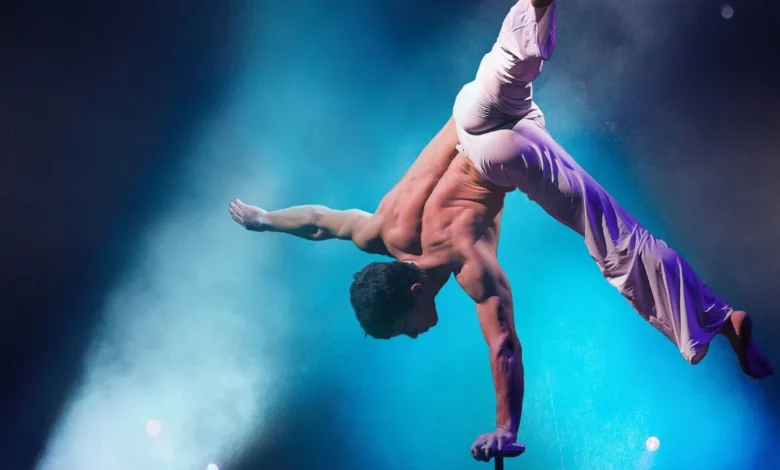
At the narrative core of Trinity is Johnny, a charismatic Taiwanese pastor whose commanding pulpit presence has cultivated a massive, devoted following within a thriving Singaporean megachurch. Johnny is not your traditional clergyman; alongside his conservative theological stance, he is known for performing death-defying, daredevil stunts for his congregation. These spectacles draw direct inspiration from world-class theatrical enterprises like Cirque du Soleil, blending spiritual messaging with jaw-dropping physical performance art to draw in the masses.
Despite his public image as a pillar of conservative righteousness, Johnny harbors a profound and increasingly uncontrollable secret: a deep fixation on Yang, a young newcomer who enrolls in the church’s rigorous training program. As Johnny’s preferential treatment of Yang becomes glaringly obvious, it strains the relationships within the church’s tightly knit leadership circle.
The pastor’s favoritism visibly unsettles his wife, Ruth, as well as David, Johnny’s leading disciple and the prospective husband of the pastor’s daughter. Both Ruth and David share administrative responsibilities in running the institution, making them immediate witnesses to the ethical and emotional fractures developing within the leadership.
The plot thickens dramatically when the young newcomer, Yang, mysteriously vanishes. Driven by panic and obsession, a frantic Johnny launches his own private investigation into the disappearance. As he digs deeper, the trail of clues leads directly back to the individuals within his inner circle, culminating in tragic consequences that forever alter their lives.
In the wake of the tragedy, Johnny and Ruth relocate to a quiet, rural corner of Taiwan. There, they attempt to keep a low profile, seeking redemption by worshipping quietly at a modest local congregation. Their secluded existence continues until Johnny catches a glimpse of an enigmatic stranger—an encounter that hints at the possibility of ultimate grace or yet another spiritual reckoning.
The Vision Behind the Lens
Director Boo Junfeng is no stranger to critical acclaim and tackling complex societal issues. A prominent figure in contemporary Southeast Asian cinema, Boo made his feature film debut with Sandcastle in 2010. The film earned immense international prestige, making history as the first Singaporean motion picture to be officially selected for the prestigious Critics’ Week section at the Cannes Film Festival.
His subsequent feature, the gripping capital punishment drama Apprentice, premiered in the Un Certain Regard section of the Cannes Film Festival in 2016, further solidifying his reputation as a fearless storyteller willing to confront uncomfortable institutional realities. Beyond his cinematic endeavors, Boo has maintained a prominent cultural footprint in Singapore. He served as the creative director for Singapore’s National Day Parade—including the landmark 2025 edition celebrating the nation’s 60th independence anniversary—and currently holds the prestigious position of chair for the Singapore International Film Festival.
Discussing the thematic impetus behind his latest project, Boo shared insights into his creative motivations. "I’ve always been very interested in the subject of sexuality and faith, and I wanted to make a film that dives deep into the psyche of these characters within a church," the director explained. He further noted that his primary artistic objective is to elicit human empathy, adding, "I hope people will empathize with the characters, despite them being flawed human beings."
The Collaboration and the Reality of Modern Evangelism
Trinity is co-written by Boo and veteran producer Raymond Phathanavirangoon, who has been attached to the project since its earliest conceptual stages. Phathanavirangoon brings a wealth of international experience to the table, having previously produced Boo’s Apprentice, Pen-ek Ratanaruang’s Headshot, Ron Howard’s biographical survival drama Thirteen Lives, and Pang Ho-Cheung’s Dream Home and Aberdeen. His extensive industry background includes working as an international programmer for the Toronto International Film Festival, serving as a program delegate for Cannes Critics’ Week, and co-founding the Southeast Asia Fiction Film Lab (SEAFIC).
Phathanavirangoon emphasized that Trinity tackles a cultural phenomenon that remains largely underrepresented in regional cinema: the rapid spread of modern evangelical Christianity across Asia and its profound personal impact on families and communities. "Personally, I have had people close to me convert to Christianity due to Evangelism, but this is seldom seen in Asian films," the producer noted.
What particularly sets the narrative apart, according to Phathanavirangoon, is the theatrical scale and commercial showmanship adopted by contemporary Asian megachurches to attract and retain congregants. While external audiences might find the incorporation of acrobatic stunts unusual, the filmmakers point out that it reflects a very real, evolving trend in modern religious gatherings.
"Some are surprised that churches can host Cirque du Soleil-style performances like in our film, but just earlier this year in Korea, a stunt sent a man dressed as Jesus into the sky, and that went super viral," Phathanavirangoon remarked, underscoring how closely the film mirrors contemporary cultural phenomena.
Global Production Scale and the Path to Completion
As Trinity enters its critical post-production phase, the creative team has brought the project to the Tokyo Gap-Financing Market to secure the final financial pieces required to complete the film. Both Boo and Phathanavirangoon confirmed that only a minor gap in financing remains, making their participation in the Tokyo-based market a vital stepping stone toward final delivery.
The film represents a monumental collaborative effort on a global scale. Trinity is officially structured as an unprecedented 11-country co-production, linking creative and financial resources across Taiwan, France, Singapore, Poland, Greece, Japan, Germany, Brazil, South Korea, Indonesia, and the Philippines. Production duties are spearheaded by Peanut Pictures, Filmagic Pictures, and Gaïjin.
The Tokyo Gap-Financing Market, where the project is currently being showcased, serves as an essential platform for producers of well-packaged feature films, animations, and documentaries from Asia and beyond. By connecting filmmakers with potential co-producers, sales agents, distributors, and financiers, the market facilitates the final stages of realization for high-profile independent cinema.
Broader Implications and Industry Impact
The journey of Trinity through the festival and financing ecosystem highlights shifting trends in international co-productions, particularly those originating from or touching upon Southeast Asia. By pooling resources from eleven distinct nations, the project demonstrates a growing model of borderless filmmaking that allows regional stories with universal themes to achieve a global aesthetic and financial foundation.
Furthermore, the film’s exploration of religious institutions, spiritual showmanship, and repressed individual identity taps into timely global conversations regarding authority, institutional accountability, and personal autonomy. As religious organizations increasingly leverage entertainment, media, and athletic performance to engage younger generations, films like Trinity offer a critical, humanizing lens through which to examine the pressures and private vulnerabilities hidden behind public sanctuaries.
With principal photography completed and the finishing touches currently underway, anticipation is building within the international film community for Trinity’s eventual premiere. As Boo Junfeng and Raymond Phathanavirangoon work to finalize the project in Tokyo, the global cinephile community waits to see how this multi-national exploration of faith, desire, and theatrical devotion will resonate on the world stage.