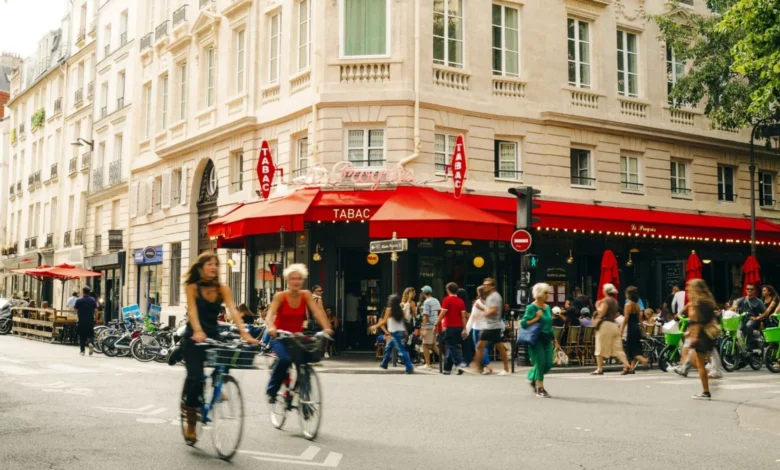
The question of whether to tip in Paris remains one of the most persistent dilemmas for international travelers arriving in the French capital. Unlike in North America, South Africa, Egypt, or Morocco—where tipping is deeply ingrained in the service economy and often functions as a mandatory component of a worker’s livelihood—tipping in Paris, and France at large, is fundamentally unnecessary. In the French Republic, service charges are legally required to be built directly into the final pricing of goods and services, transforming gratuity from an expected financial obligation into an entirely voluntary gesture of personal appreciation.
To demystify local customs, travel experts and industry specialists emphasize that the underlying philosophy of French hospitality contrasts sharply with Anglo-Saxon tipping models. Understanding the mechanics of these differences requires examining labor laws, cultural pride, and the evolving habits of modern urban dining.
The Cultural and Economic Foundation of French Service
At the heart of the French approach to service is a deep-seated cultural pride in transparent pricing. According to Camilla Davidson, head of destination management for France, the United Kingdom, and Ireland at Red Savannah, consumers in France benefit from an "all-inclusive" pricing model.
"In many instances, there is a sense of pride that pricing is ‘all-inclusive’ and that service is not expected beyond the cost you are charged," Davidson explains.
This pricing structure is heavily reinforced by French labor regulations. Hospitality staff in France—ranging from waiters and bartenders to hotel housekeepers—are classified as salaried employees protected by strict labor laws and national collective bargaining agreements. Mark Bonte of the France-based travel agency French Side Travel notes that because hospitality workers receive a stable, legally mandated base wage, tips function strictly as an unexpected bonus.
"Tips are considered an extra gesture of appreciation rather than part of their expected compensation," Bonte states.
This stands in stark contrast to labor laws in the United States, where federal and state regulations permit employers to pay tipped service workers a significantly lower sub-minimum base wage, effectively shifting the responsibility of covering the employee’s living wage onto the customer via mandatory percentage-based tips of 15 to 20 percent.
Historical Evolution of the French Tipping System
The current landscape of French gratuity is rooted in decades of legislative reform designed to professionalize the hospitality sector and protect workers from financial precarity. Historically, French restaurants added a mandatory service charge known as the pourboire directly to the bill, a practice formalized by the government in the mid-20th century to ensure service workers received a guaranteed income.
Over time, French labor laws evolved to integrate these service charges completely into the advertised menu prices, culminating in the widespread use of the phrase service compris (service included). Under modern French law, any establishment operating as a registered restaurant or café must include all taxes and service fees in its listed prices. Furthermore, because restaurant and hotel workers are part of officially recognized professional bodies with standardized pay scales, supplementing their wages through customer tips is legally unnecessary and culturally alien to the traditional European social contract.
Navigating Tipping at Restaurants, Cafés, and Brasseries
Even though tipping is not required at the finest dining establishments in Paris, the globalization of tourism and the influence of international dining habits have created subtle shifts in contemporary behavior.
"That said, tipping at restaurants has become increasingly common, especially for a leisurely lunch or dinner with good service," Bonte observes. "The French approach remains less about calculating a set percentage and more about acknowledging a particularly enjoyable experience or attentive service."
When dining out in Paris, patrons should check their bills for the inclusionary label service compris. Traditional brasseries and bistros frequently highlight this notation to reassure diners that service costs are accounted for. If a customer wishes to reward exceptional attentiveness during a multi-course dinner, calculating a percentage is discouraged. Instead, leaving a modest cash sum—typically a few euros, or simply rounding up the total bill—is the accepted norm.

At casual cafés and coffee shops, the protocol is even simpler. It is customary to round up the total to the nearest whole euro or leave behind the loose change received from paying in cash. For instance, leaving a 20-euro bill for an 18-euro coffee order is a standard, polite gesture. This practice also offers a practical way for travelers to clear out heavy metallic euro coins, which are widely utilized in daily European commerce.
Hotel Gratuities: From Bellhops to Concierges
The hospitality sector in Paris follows similar non-mandatory guidelines, though personalized services warrant acknowledgment through direct tips. While room rates cover the comprehensive cost of accommodation, guests interacting directly with support staff often express gratitude through targeted gratuities.
According to Bonte, leaving two to five euros for a porter or bellhop who assists with heavy luggage is standard practice. For housekeeping staff, a few euros left per day—preferably handed directly or left with a clear note indicating it is intended for room cleaning—is a thoughtful gesture. For extraordinary concierge assistance, such as securing hard-to-get reservations at Michelin-starred restaurants or arranging complex logistical itineraries, higher amounts are welcomed.
Camilla Davidson notes that while some high-end properties occasionally add a voluntary service charge to the final room bill, guests retain the right to inquire about how those funds are distributed.
"You can certainly ask how it is allocated and who will get it," Davidson advises, ensuring that expressions of gratitude reach the intended staff members. She adds that rewarding specialized staff members—such as a bartender crafting an intricate cocktail or a spa therapist delivering a massage—is deeply appreciated, even if it lacks the mandatory social pressure found in North American resorts. Spa therapists generally appreciate direct tips ranging between 10 and 20 euros for exceptional treatments.
Tipping Private Drivers, Chauffeurs, and Taxis
Transportation services in Paris adhere to distinct protocols depending on whether a traveler hails a standard municipal taxi or hires a private chauffeur service.
For standard street-hail or app-booked taxis, passengers are not expected to provide a substantial tip. Rounding up the final meter fare to the nearest euro is entirely acceptable, and drivers will not express dissatisfaction with exact-change payments.
However, the expectations shift significantly when engaging private drivers, multi-day chauffeurs, or driver-guides. Because these professionals provide extended, highly personalized service, tipping becomes customary. Bonte recommends providing approximately 20 to 30 euros per day for standard private driving services, scaling up to 50 euros per day if the driver acts as an informal tour guide or manages complex itineraries.
Davidson echoes this assessment, noting that private drivers and guides are enormously grateful for gratuities, making a 50-euro daily tip an appropriate benchmark for high-tier, white-glove service.
Broader Economic and Travel Implications
The distinction between North American and European tipping models carries broader economic implications for both international travelers and local labor markets. For tourists, understanding that French prices are all-inclusive helps eliminate the anxiety of calculating hidden post-tax and post-service costs when budgeting for a vacation. Menus display the exact price the consumer will pay, simplifying financial management.
For the French labor market, the absence of reliance on tips reinforces worker stability. By guaranteeing living wages through collective bargaining and statutory minimums, the French system protects hospitality workers from income volatility driven by customer moods, economic downturns, or discriminatory tipping patterns.
Ultimately, travelers in Paris should view tipping not as a mandatory tax on hospitality, but as a genuine, localized expression of personal gratitude. Whether leaving a few coins after an espresso at a corner zinc bar or thanking a private guide for an insightful tour of the city, the guiding principle in Paris remains unchanged: tip to show thanks for a job exceptionally done—no more, no less.