In a high-stakes moment for one of the world’s most valuable technology companies, Apple CEO John Ternus has broken his silence regarding the firm’s deliberate, sometimes cautious, approach to artificial intelligence. Speaking in a candid interview with Wired’s Steven Levy, the newly appointed leader of Apple sought to quell long-standing industry skepticism regarding whether the tech giant has fallen behind competitors like Google, Microsoft, and OpenAI in the race to dominate the generative AI landscape. As Apple pivots to a new chapter under his leadership, the core of his message remains clear: quality, utility, and user experience will always supersede the frantic pursuit of AI-driven headlines.
The Context of the Leadership Transition
The timing of these remarks is particularly significant. John Ternus officially assumed the role of CEO at the beginning of September 2026, succeeding a long period of strategic preparation. His ascension followed a period of intense external scrutiny regarding Apple’s AI roadmap. For much of 2024 and 2025, market analysts and investors frequently questioned why Apple had not released a breakthrough generative AI product comparable to ChatGPT or Gemini.
This skepticism reached a fever pitch earlier this summer when Apple finally rolled out its long-awaited, overhauled version of Siri. While the update was technically sophisticated, the market reaction was lukewarm; critics noted that it felt like an incremental improvement rather than the revolutionary leap many had anticipated. By addressing these concerns directly in his first major public interviews as CEO, Ternus is attempting to realign Wall Street’s expectations with Apple’s internal philosophy of "human-centric" technology.
Chronology of Apple’s AI Evolution
To understand the current tension, one must look at the timeline of Apple’s developments over the last three years.
- Late 2023: Apple begins aggressive internal testing of "Ajax," its foundation large language model (LLM), intended to eventually power on-device intelligence.
- Mid-2024: Rivals accelerate the integration of LLMs into operating systems, pressuring Apple to demonstrate its own capabilities.
- August 2026: The official launch of the upgraded Siri occurs. While featuring improved natural language processing, it draws criticism for being "anticlimactic" in a landscape crowded with hyper-advanced AI agents.
- September 2026: John Ternus is appointed CEO, signaling a shift in management style and a push to integrate AI more deeply into the hardware-software stack.
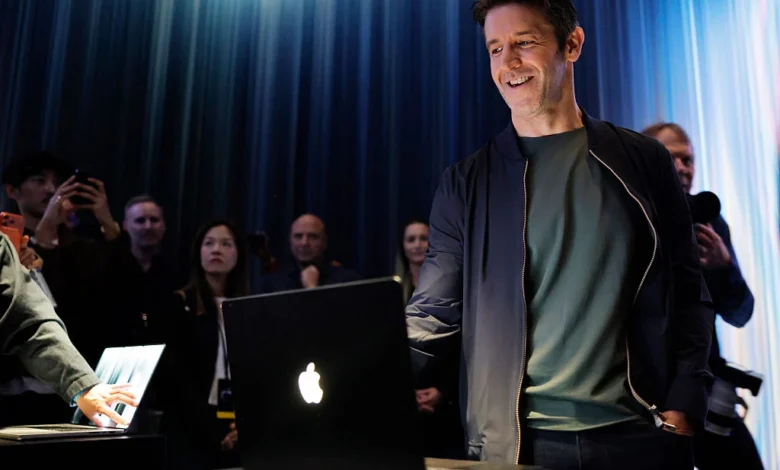
- October 2026: Apple hosts a high-profile event in Los Angeles, showcasing new product lines that feature "invisible" AI integration, marking the company’s pivot toward the "AI for utility" strategy.
The Philosophy of "AI for Utility"
Ternus’s primary defense rests on a philosophy of "AI for utility" rather than "AI for AI’s sake." During his conversation with Levy, he emphasized that Apple’s engineering culture is fundamentally opposed to shipping features that are technologically impressive but practically irrelevant to the user.
"When we’re doing it right, people won’t have to think about whether it was AI that made this happen or more traditional software," Ternus explained. This approach mirrors Apple’s historical strategy with features like FaceID or computational photography. In those instances, the company utilized machine learning to solve specific, daily friction points—like unlocking a phone or improving image quality—without marketing the underlying algorithms as the primary product. By contrast, competitors have often marketed the AI itself as the product, a strategy that Ternus clearly views as short-sighted.
Data and Market Implications
The financial implications of this strategy are substantial. According to recent quarterly data, Apple’s R&D expenditure has risen by approximately 14% year-over-year, much of which is directed toward specialized silicon—specifically the Neural Engine chips found in the latest A-series and M-series processors. This hardware-first approach ensures that Apple’s AI features run on-device, prioritizing privacy and latency over the cloud-heavy models favored by its competitors.

From an investor standpoint, the challenge is clear: Apple’s services revenue is currently tied to a robust ecosystem of apps and subscriptions. If, as some futurists predict, AI agents eventually replace the need for traditional apps, Apple’s revenue model could face significant disruption. When pressed on whether AI might cannibalize the very ecosystem that makes Apple a trillion-dollar entity, Ternus was dismissive of the apocalyptic view. He argued that the "creation of products is a deeply human and personal thing," suggesting that while agents may handle administrative tasks, the core experience of computing remains a creative and intentional endeavor.
Industry Reactions and Expert Analysis
Industry analysts have offered mixed reactions to Ternus’s stance. Some, like those at Gartner and IDC, suggest that Apple’s slow-and-steady approach may cost them market share among "power users" who prioritize the latest features. Conversely, others argue that Apple’s focus on privacy and on-device execution will ultimately win over the mainstream consumer, who is increasingly wary of the privacy trade-offs associated with cloud-based AI.
"Apple is playing the long game," says one industry analyst who requested anonymity. "They aren’t trying to win the sprint of 2026. They are trying to ensure that by 2030, their ecosystem is the only one where AI feels like a natural, helpful extension of the human experience rather than an intrusive, buggy third party."
Looking Toward the Future
As the Los Angeles event demonstrated, the new product lineup is heavily optimized for these "invisible" AI tasks. From advanced health monitoring features that use predictive modeling to identify anomalies, to real-time translation tools that function without internet connectivity, the company is betting that its users will value reliability and privacy over raw model scale.
The shift in tone under Ternus is unmistakable. Where the previous leadership often relied on a sense of mystery, Ternus is proving to be more communicative about the company’s strategic intent. By framing the AI debate not as a competition of parameter counts or training data volume, but as a competition of utility, Apple is positioning itself to avoid the "hype cycle" traps that have ensnared its peers.
However, the pressure remains. As AI models continue to evolve at an exponential rate, Apple will eventually need to prove that its "human-centric" approach can keep pace with the rapid innovation occurring in open-source and rival ecosystems. Whether the company can maintain its status as the arbiter of "the right way to build tech" depends on whether the next generation of users values the seamlessness of the Apple ecosystem more than the raw capabilities of competing, agent-based AI platforms.
For now, John Ternus is comfortable in his position. He has clearly defined the boundaries of Apple’s AI journey: it will be integrated, it will be private, and it will be, above all else, designed to solve problems—not to create new ones. As the tech industry watches closely, the success of this strategy will be measured not by the excitement of a keynote, but by the daily, silent utility of the millions of devices currently sitting in the hands of Apple’s global user base. Whether this conservative path leads to dominance or obsolescence remains the most significant open question in the technology sector for the coming decade.