The intersection of antiquity and contemporary design has long served as a fertile ground for creative exploration, yet few practitioners bridge this divide with the precision of Polish-born designer Daniel Kolodziejczak. His latest body of work, the Tesserae series, currently on exhibition at New York’s esteemed Ateliers Courbet, represents a sophisticated dialogue between the volcanic-frozen remnants of Pompeii and the modern luxury of bespoke interior furnishing. By transposing the meticulous craftsmanship of high-end jewelry design onto the scale of architectural objects, Kolodziejczak has curated a collection that transcends mere utility, positioning furniture as a form of wearable—or at least, inhabitable—adornment.
The Provenance of Inspiration: From Carrara to Pompeii
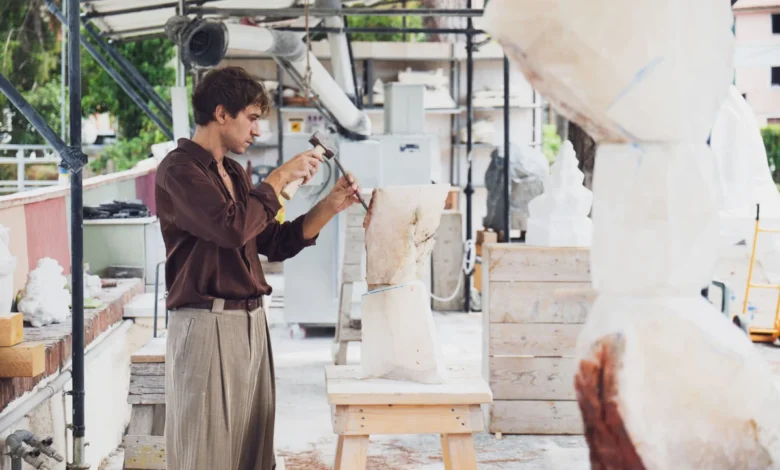
The genesis of the Tesserae series can be traced to the marble quarries of Carrara, Italy. For centuries, these quarries have supplied the world’s most iconic sculptures and architectural marvels, from Michelangelo’s David to the Pantheon’s facade. It was within these sprawling industrial yards that Kolodziejczak first began collecting discarded fragments of stone—off-cuts and remnants that would otherwise be relegated to waste.

However, the conceptual framework for these materials did not fully materialize until a transformative visit to the ruins of Pompeii. The ancient city, famously entombed by the AD 79 eruption of Mount Vesuvius, offers an unparalleled view into the domestic lives of the Roman elite. The intricate mosaics—or tesserae—that adorned the floors and walls of villas provided the catalyst for Kolodziejczak’s vision. He observed that even in their state of decay, these surfaces communicated a profound devotion to precious materials and geometric perfection. By gathering his own fragments in Carrara and organizing them into cohesive, functional vessels and tables, the designer essentially mirrored the process of the ancient mosaicist: assembling disparate pieces of natural history to create a unified, artistic whole.
A Career Forged in the Atelier
To understand the nuance of the Tesserae collection, one must examine the professional trajectory of its creator. Kolodziejczak’s aesthetic sensibilities were refined during his tenure in the competitive, high-stakes environment of Parisian fashion. Working as a jewelry designer for heritage houses including Givenchy and Saint Laurent, he mastered the art of the minute detail. In jewelry, the margin for error is nonexistent; the weight, the setting, and the luminosity of a gemstone are critical to the object’s success.
When Kolodziejczak eventually transitioned from the intimate scale of accessories to the more imposing requirements of furniture and decorative objects after moving to Milan, he did not abandon his training. Instead, he scaled up his methodology. His workshop in Italy functions less like a standard furniture factory and more like a jeweler’s bench. Whether he is carving a vessel from smoky quartz or polishing a marble base for a console, his approach is governed by the same meticulous standards applied to precious metals and diamonds.

Technical Composition and Materiality
The material palette of the Tesserae series is intentionally diverse, bridging the gap between raw earth and refined luxury. The collection features a curated selection of:
- Marble: Sourced from the Carrara region, utilized for structural integrity and grounding mass.
- Rock Crystal: Employed for its transparency and ethereal light-refracting properties.
- Smoky Quartz: A grounding element that offers depth and tonal variation.
- Citrine Quartz: Used for its vibrant, solar-infused hue, providing contrast to the cooler marble tones.
- Bronze: Cast and finished to serve as structural armatures for the lighter, stone-based elements.
The inclusion of lighting—specifically a monumental crystal pendant and bronze sconces with citrine shades—demonstrates the designer’s intent to manipulate light as a primary medium. By allowing light to pass through quartz, the objects interact with their environment, casting patterns reminiscent of the flickering candlelight that once illuminated Roman interiors.
Chronology of the Exhibition
The development and public debut of this collection followed a distinct timeline that underscores the complexity of the production process:

- 2023–2024: Intensive scouting of marble yards in Carrara and the conceptualization of the vessel shapes based on Roman archetypes.
- Early 2025: Prototype development in the Milanese studio, where the intersection of bronze casting and stone carving was refined.
- Late 2025: Final production phase, involving the precise calibration of crystal pendants and stone tables.
- November 2026: Official unveiling of the Tesserae collection at Ateliers Courbet in New York City.
- January 16, 2027: Conclusion of the exhibition.
Industry Analysis: The Evolution of Collectible Design
The reception of the Tesserae series highlights a broader shift in the market for collectible design. According to recent trends in the decorative arts sector, there is an increasing demand for pieces that possess a narrative weight. Collectors are moving away from mass-produced luxury in favor of "slow design"—objects that require significant lead times and involve artisanal techniques that are in danger of extinction.
"Furniture has become the new frontier for individual expression," notes a lead curator at a prominent design institution. "When a designer like Kolodziejczak approaches a table as if it were a necklace, they elevate the status of the home environment. It is no longer about filling a room; it is about curating an experience."
The implication of this approach is significant. By utilizing reclaimed stone, the designer also touches upon the growing necessity for sustainability within the luxury sector. While the materials are inherently rare, the act of repurposing quarry remnants aligns with contemporary efforts to reduce industrial waste, proving that high-end design does not have to be extractive in nature.

The Philosophy of Adornment
At the core of the Tesserae series is the designer’s stated mantra: "I treat furniture like jewelry." This is not merely a stylistic preference but a fundamental philosophy regarding the function of domestic objects. In an era where living spaces are often cluttered with disposable goods, Kolodziejczak’s pieces are designed to act as anchors—extraordinary accents that command attention without overwhelming the architectural space.
This philosophy challenges the traditional division between the fine arts and the decorative arts. If a chair or a light fixture is designed with the same rigor as a gemstone setting, it effectively earns the status of a sculptural object. The Tesserae collection invites the viewer to reconsider the objects they live with, proposing that beauty should not be reserved for the body, but should instead be woven into the fabric of the domestic landscape.
Broader Impact and Future Outlook
As the Tesserae exhibition continues its run at Ateliers Courbet, the design community is watching closely to see how this synthesis of ancient inspiration and modern technique will influence future trends. The success of the collection rests on its ability to evoke a sense of history while remaining firmly planted in the present.

For those interested in the future of the Studio Daniel K brand, the trajectory suggests a deeper exploration of material combinations. The designer’s ability to successfully marry the structural weight of marble with the delicate luminosity of quartz sets a high bar for upcoming collections. Whether this trend toward "jeweled architecture" will take hold in the broader furniture market remains to be seen, but for now, Kolodziejczak has successfully carved a niche that honors the past while pushing the boundaries of what is possible in contemporary furniture design.
Visitors to the exhibition until January 2027 are invited to experience these objects firsthand, noting the interplay of shadow and light, the tactile quality of the hand-carved surfaces, and the deliberate silence that these objects occupy in a room—a quietude that reflects the ancient city that inspired them.