The journey from Dublin to the rugged expanse of County Clare serves as more than a mere transit route; it represents a transition from the frantic pace of Ireland’s urban centers to the pastoral, slow-living ethos that increasingly defines the modern Irish tourism sector. Spanning approximately 250 kilometers, the drive is a microcosm of the country’s geography, moving from the Leinster plains through the limestone-dominated karst landscapes of the west. For travelers seeking an authentic connection to the Irish countryside, the emergence of high-end, purpose-built farmstays—such as the 70-acre organic property located just outside the village of Corofin—signals a notable shift in hospitality preferences.
The Evolution of Rural Hospitality
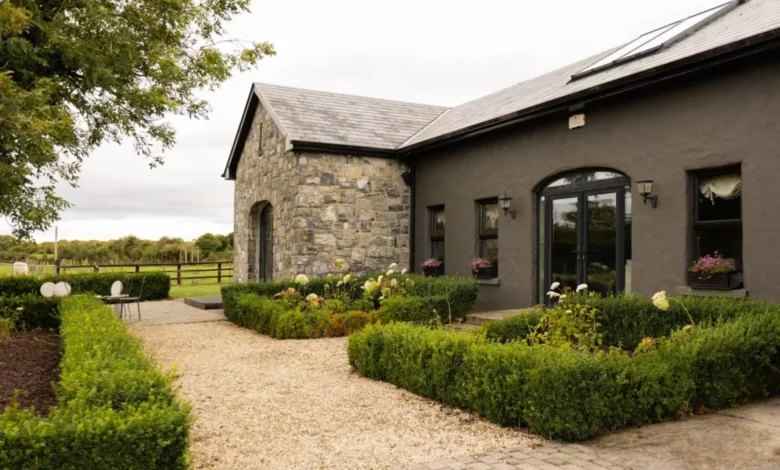
Historically, the Irish tourism model relied heavily on centralized hotel chains and historic bed-and-breakfasts. However, data from Fáilte Ireland, the National Tourism Development Authority, suggests a growing market demand for "agritourism," where visitors prioritize isolation, self-sufficiency, and proximity to nature. The subject property, a two-bedroom architectural build, reflects this demand. By combining modern construction standards—such as high-efficiency insulation, open-concept living, and structural aesthetics that mirror local vernacular—with the traditional elements of a working farm, the owners have tapped into a segment of the market that seeks the "Nancy Meyers" aesthetic: a romanticized, warm, and highly curated version of rural life.
The structural design of this specific farmstay incorporates cathedral-height ceilings and expansive glazing to maximize natural light, a necessity given the often overcast Irish climate. The inclusion of wood-burning fireplaces, woven accents, and slipcovered furnishings is not merely a stylistic choice but a strategic design decision intended to foster a sense of "lived-in" comfort. This architectural strategy aligns with the findings of the Global Wellness Institute, which notes that travelers are increasingly selecting accommodations that offer a "psychological sanctuary" from the stressors of modern life.

Strategic Geography: Accessing the Burren and Beyond
The property’s location in County Clare is strategically advantageous for travelers prioritizing access to Ireland’s most iconic natural landmarks. The Burren National Park, a glacial-karst landscape of international geological significance, sits a mere 10-minute drive from the property. Further west, the Cliffs of Moher—which welcomed over 1.1 million visitors in recent pre-pandemic benchmarks—are accessible within a 30-minute window.
This proximity allows guests to balance high-traffic tourism with the quietude of a working organic farm. The local municipality of Corofin acts as a functional hub, providing necessary amenities that bridge the gap between rural isolation and modern convenience. The presence of nearby retailers, such as the Centra convenience chain, highlights the integration of local infrastructure with the needs of the burgeoning short-term rental economy.
Chronology of the Rural Experience
A typical stay at a facility of this nature follows a specific rhythmic cycle. Upon arrival, guests are often provided with locally sourced provisions, such as farm-fresh eggs and organic sourdough. This serves two purposes: it reduces the immediate need for travel to local shops and reinforces the "farm-to-table" narrative that is central to the Irish agritourism brand.
The following timeline illustrates a standard 48-hour guest experience:

- Day One: Arrival via the Dublin-Clare transit corridor. Engagement with the physical environment, including a tour of the 70-acre holding and the surrounding walking paths. Evening transition involves the maintenance of the wood-burning fireplace and quiet recreation.
- Day Two: Morning observation of livestock, including local equine and ovine populations. Midday excursion to the Burren or the Cliffs of Moher. Afternoon return to the property, utilizing the kitchenette for meal preparation and utilizing the private terrace space for sunset viewing.
- Day Three: Departure protocol, which often involves an extension of the visit due to the property’s deliberate design for "slow living."
Economic and Environmental Implications
The rise of luxury farmstays carries significant economic implications for rural Ireland. By repurposing agricultural land for mixed-use, multi-cabin hospitality, farm owners can diversify their revenue streams, which are often vulnerable to the fluctuations of the global dairy and beef markets. Furthermore, the emphasis on organic farming practices—as seen at the Corofin property—aligns with the European Union’s "Farm to Fork" strategy, which aims to make food systems fair, healthy, and environmentally friendly.
However, the expansion of these facilities is not without challenges. Infrastructure in rural County Clare, particularly concerning sewage, water, and road maintenance, faces increased strain as the density of short-term rentals rises. Local planners have noted that while tourism provides a vital economic stimulus, it must be balanced against the preservation of the agrarian character that attracts visitors in the first place.
The Role of Design in Guest Satisfaction
The interior configuration of the accommodation plays a critical role in its appeal. The provision of a four-poster bed and high-density linens in the primary bedroom, alongside a separate space with twin beds, indicates that the property is designed to cater to both couples and small families. The inclusion of a cobbled terrace with direct access from the bedrooms facilitates a seamless transition between indoor and outdoor living, a feature that significantly enhances the perceived value of the stay.
Furthermore, the absence of central air conditioning—a common feature in European rural construction—is framed as a benefit rather than a deficiency. In the context of the recent European heat waves, the ability to regulate internal temperatures through natural ventilation and thick masonry walls has become a selling point. The environmental noise of the farm—ranging from the peaceful grazing of livestock to the occasional, unpredictable vocalizations of donkeys—is increasingly marketed as an "authentic" component of the rural experience, contrasting sharply with the white noise of urban environments.
.jpg)
Analysis of Future Trends
As the global travel market continues to prioritize privacy and domestic-style accommodations over traditional hotel models, the "Airbnb-plus" style of rural farmstays is expected to grow. Industry experts suggest that the next phase of this development will be the integration of more robust sustainable technology, such as geothermal heating and solar energy, to minimize the carbon footprint of these rural retreats.
Furthermore, the "communal but private" model, where multiple cabins share a single lot but retain independent footprints, offers a scalable solution for families or groups who desire social interaction without sacrificing the solitude of their personal quarters. The success of the Corofin farmstay, which maintained full occupancy even during peak travel periods, serves as a case study for property owners looking to capitalize on the desire for controlled, high-quality, nature-integrated tourism.
In conclusion, the intersection of modern luxury design and traditional Irish farming culture provides a compelling template for the future of rural tourism. As travelers move away from "check-box" sightseeing toward immersive, experiential stays, the ability to provide a space that is both physically comfortable and environmentally connected will remain the primary driver of success in the hospitality sector. Whether for the proximity to the Cliffs of Moher or the quiet rhythm of an organic farm, the demand for such escapes underscores a permanent change in how individuals engage with the rural landscape.