For 18-year-old Elijah Lee, the concept of environmental advocacy has never been a distant, abstract pursuit reserved for academic circles or elite policy forums; it has been a visceral, daily reality. Growing up in a predominantly Black, low-income community in Roanoke Rapids, North Carolina, Lee’s childhood was framed by the imposing presence of a local paper mill. The facility, a primary source of employment for his neighbors, simultaneously served as a constant source of air pollution. For Lee, the experience prompted a foundational question that would shape his political consciousness: Why is the only path to economic stability in his community so frequently tethered to environmental degradation?
As Lee transitions into adulthood in Virginia—a state that has rapidly transformed into the global epicenter of the data center industry—his skepticism has only deepened. He finds himself at the intersection of a massive technological expansion and a growing climate crisis, fearing that the political promises of "data-driven prosperity" will bypass his generation just as previous industrial promises left his hometown struggling. Now, as he prepares to cast his first ballot in a midterm election, he views climate policy not as a separate category, but as an inextricable component of his family’s kitchen-table economic struggles.
The Myth of the Apolitical Voter
The prevailing narrative in many political circles suggests that Black voters are largely indifferent to climate change. However, recent polling data indicates that this perception is fundamentally flawed. While climate change may not rank as a top-three "motivating issue" for many voters, the data suggests that the low ranking is a reflection of economic desperation rather than apathy.
In a comprehensive seven-state survey conducted by HIT Strategies for the Climate Equity Action Fund and the League of Conservation Voters, the disparity between economic anxiety and environmental concern was stark. When asked to identify the primary issues driving their vote, 74 percent of Black registered voters cited the cost of living, while only 9 percent placed climate change in their top three. Yet, this data point masks a deeper, more urgent desire for change. When researchers shifted the focus from abstract terms like "climate change" to tangible outcomes—such as lowering energy bills, ensuring clean water access, and reducing industrial pollution—the support for aggressive policy action surged.
The data reveals that 89 percent of respondents prioritized lowering energy costs, 86 percent sought reductions in air and water pollution, and 82 percent demanded that candidates make climate policy a primary focus. This trend holds true across political lines, with an overwhelming 79 percent of Black Republicans asserting that it is essential for candidates to address climate change.
The Rise of the Data Center Debate
The modern landscape of environmental activism is increasingly being defined by the rapid proliferation of data centers. These facilities, which power the cloud computing, artificial intelligence, and digital infrastructure upon which the modern economy relies, are energy-intensive behemoths. In Virginia, the construction of these centers has become a flashpoint for local debates regarding tax incentives, energy grid strain, and the potential for increased electricity costs for residential ratepayers.
The concern is not merely speculative. Residents are witnessing a shift in land use, where local governments often offer substantial tax breaks to corporations to attract these developments, promising jobs that often fail to materialize at the scale projected. Bill Hairston, national field director for the League of Conservation Voters, notes that the "data center boom" is acting as a catalyst, forcing a connection between corporate energy consumption and the individual household budget.
"I think it’s actually just putting the two and two together," Hairston explains. His own upbringing in Charleston, West Virginia, informs his perspective. He recalls the constant presence of coal trucks in his neighborhood, the yellowing of the grass, and the soot that coated his grandmother’s home. For many voters, the current debate over data centers is simply a modern iteration of the same struggle: who bears the cost of industrial expansion, and who reaps the benefits?
A Chronology of Environmental Inequity
The current climate of mistrust is not a recent phenomenon; it is the culmination of decades of environmental policy that has historically marginalized low-income and minority communities.
- Mid-20th Century: Industrial zones are frequently sited in or near Black neighborhoods due to zoning practices, lack of political representation, and lower land costs, leading to long-term health disparities.
- Early 2000s: The emergence of modern climate advocacy begins to focus on global carbon targets, often failing to address the "local" environmental issues—such as particulate matter from factories or water toxicity—that directly impact the daily lives of marginalized voters.
- 2024 Election Cycle: Data centers become a central economic issue in states like Virginia and Georgia. Concerns over grid capacity and utility rate hikes merge with traditional environmental justice advocacy.
- September–October 2026: Survey data highlights a critical disconnect: while voters are deeply concerned about the environment, they exhibit a profound lack of trust in the ability of elected officials to implement policies that prioritize public health over corporate interests.
Analyzing the Trust Deficit
Erica Tebbs, a senior analyst at HIT Strategies, argues that the central challenge for policymakers is not education, but trust. The survey results demonstrate a deep-seated cynicism toward government efficacy. When respondents were informed of potential legislative solutions—such as federal mandates requiring data center companies to absorb the costs of the electricity they consume rather than passing those costs to residents—a majority remained unconvinced. Fifty-two percent of Black voters stated they expected electricity costs to rise regardless of these proposed protections.
This skepticism is rooted in the lived reality of failed policy. When communities are repeatedly told that industrial expansion will bring prosperity, only to face higher utility bills, degraded air quality, and stagnant wages, they develop a defensive posture toward new proposals. This is not an anti-technology stance; it is a rational response to a history of broken social contracts.
The Political Implications of Environmental Justice
For advocates like Andrea Cristina Mercado, the director of the Climate Equity Action Fund, the path forward requires a fundamental restructuring of how climate policy is communicated. Climate policy, she argues, must be reframed as an economic survival strategy. The "organic movement" emerging against the unchecked growth of data centers is a clear signal that the public is ready to engage, provided the conversation is centered on affordability and corporate accountability.
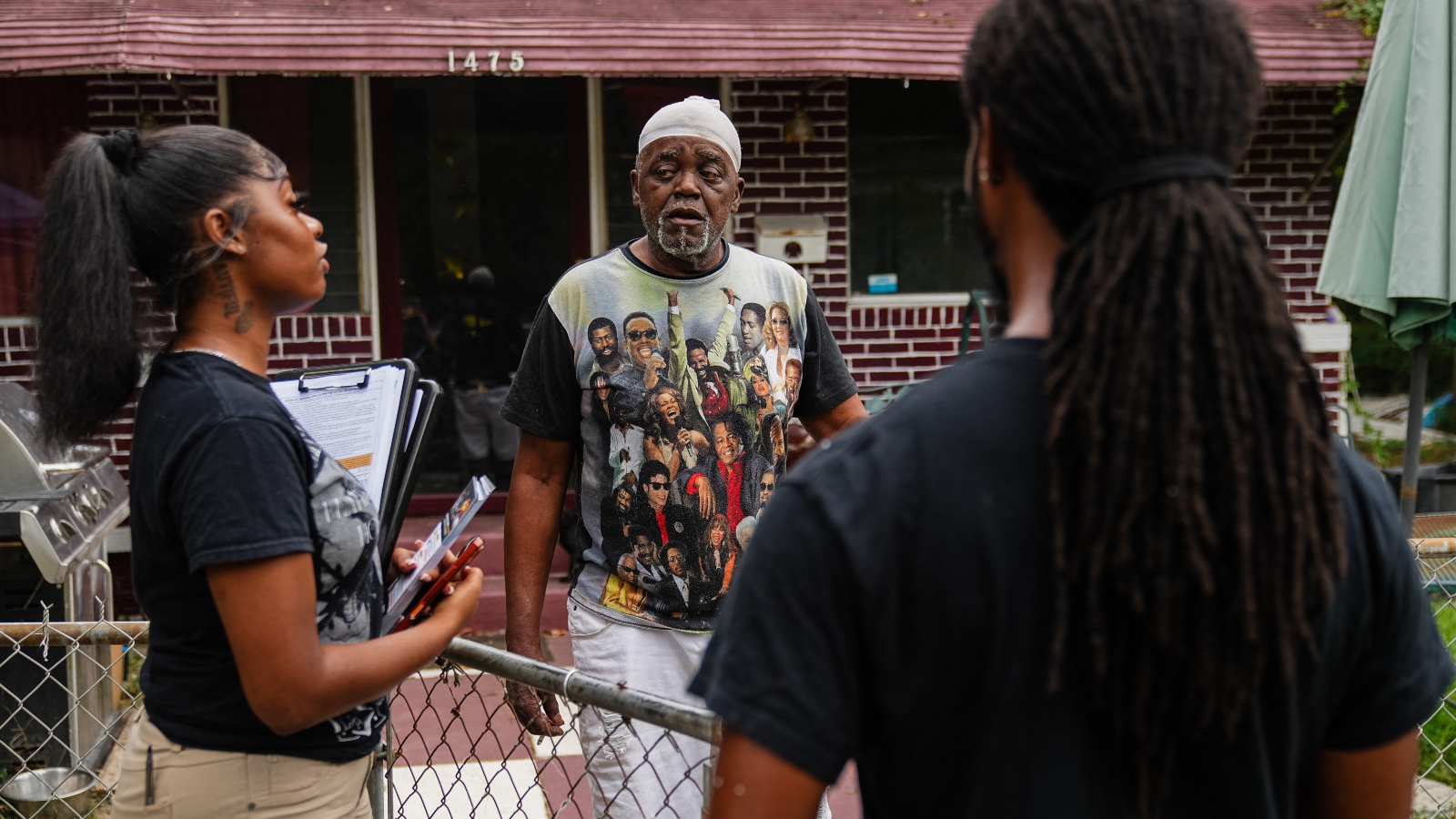
This shift in strategy is particularly vital for engaging younger voters. For individuals like Elijah Lee, the future is not a theoretical construct; it is a series of inherited crises—housing, food inflation, and environmental degradation. Lee points to the grassroots organizing occurring in places like Spartanburg, South Carolina, where high school students are mobilizing against proposed data center projects. These youth-led movements suggest that the next generation of voters is less interested in the incremental progress of traditional lobbying and more focused on holding corporations and local officials directly accountable for the environments they are constructing.
Conclusion: A Call for Systemic Integration
The data suggests that the political divide on climate change is not between those who care and those who do not, but between those who view it as an abstract, long-term threat and those who view it as an immediate, existential, and economic crisis. As the midterm elections approach, the success of any candidate attempting to bridge this gap will likely depend on their ability to move beyond platitudes.

If leaders wish to secure the support of voters who are currently navigating a reality of high inflation and environmental instability, they must demonstrate that they understand the link between the two. The "green transition" cannot be a top-down mandate that ignores the immediate financial hardships of working families. Instead, it must be an integrated approach that addresses the cost of living, the quality of air and water, and the transparency of corporate utility agreements.
For voters like Lee, the stakes could not be higher. They are waiting for a leadership that treats their environment with the same importance as their economic viability. Until that happens, the skepticism will remain, and the disconnect between the electorate and their representatives will continue to define the political landscape. The challenge for the coming years is to transform that skepticism into actionable, localized change that restores the belief that the political system can, in fact, work for the people living closest to the machinery of progress.