Try this dried citrus ornaments, a simple yet elegant craft that adds a touch of rustic charm to your home décor. The fragrant aroma of dried oranges, lemons, and limes fills the air, creating a warm and inviting atmosphere. This timeless tradition, rooted in the use of citrus fruits for decorations, has seen a resurgence in recent years, appealing to those seeking unique and sustainable ways to embellish their spaces.
Dried citrus ornaments offer a delightful way to embrace the beauty of nature, transforming ordinary fruits into festive decorations. From classic shapes like stars and hearts to whimsical designs adorned with spices and ribbons, the possibilities are endless. Let’s delve into the art of crafting these fragrant ornaments, exploring techniques, designs, and creative applications.
Introduction to Dried Citrus Ornaments: Try This Dried Citrus Ornaments
Dried citrus ornaments are a charming and fragrant way to add a touch of natural beauty and holiday cheer to your home. These ornaments are made by drying slices of citrus fruits, such as oranges, lemons, limes, and grapefruits, and then decorating them with various embellishments.
The practice of using citrus fruit for decorations dates back centuries, with evidence suggesting that dried citrus peels were used as air fresheners and decorative elements in ancient civilizations. The popularity of dried citrus ornaments has surged in recent years, particularly during the holiday season, as people seek unique and sustainable ways to decorate their homes.
The Appeal of Dried Citrus Ornaments
Dried citrus ornaments are highly sought after for their unique blend of visual appeal, pleasant aroma, and eco-friendly nature.
- Visual Appeal:The vibrant colors of dried citrus fruits, ranging from bright orange to sunny yellow, add a cheerful and festive touch to any space. The intricate patterns and textures of the fruit slices create a visually appealing contrast against the smooth surfaces of ornaments.
- Fragrant Aroma:Dried citrus fruits retain their natural aroma, filling the air with a refreshing and uplifting scent. The fragrance of citrus is known for its calming and mood-boosting properties, making these ornaments ideal for creating a cozy and inviting atmosphere.
- Sustainability:Dried citrus ornaments are a sustainable and eco-friendly alternative to traditional plastic ornaments. They are made from natural materials and can be easily composted or reused after the holiday season.
Materials and Supplies
Creating dried citrus ornaments is a fun and easy craft project that requires minimal materials. You can likely find most of these items around your home, making this a budget-friendly activity.
Citrus Fruits
The heart of these ornaments is the citrus fruit itself. Choose from a variety of options, including oranges, lemons, limes, grapefruits, and even kumquats. The key is to select fruits that are firm and free of blemishes, as they will be the base for your decorations.
Baking Sheet, Try this dried citrus ornaments
A baking sheet provides a flat surface for drying the citrus slices. It is essential for even drying and prevents the slices from sticking to the oven rack.
Parchment Paper
Parchment paper is crucial for preventing the citrus slices from sticking to the baking sheet. Its non-stick surface ensures easy removal and prevents any scorching or discoloration.
Knife
A sharp knife is needed for slicing the citrus fruits into thin, even slices. A serrated knife works best for cutting through the rind, while a paring knife is useful for removing any excess pith.
Cookie Cutters
Cookie cutters are optional but add a touch of creativity and fun to the ornaments. Choose shapes like stars, hearts, snowflakes, or even Christmas trees to create unique designs.
String or Ribbon
String or ribbon is essential for hanging the finished ornaments. Use a sturdy material that can withstand the weight of the dried citrus slices. Choose colors that complement the citrus fruits, or opt for a natural twine for a rustic look.
Optional Materials
There are a few optional materials that can enhance the appearance of your dried citrus ornaments. These include:
- Cinnamon sticks: Add a warm, festive scent to your ornaments by inserting a cinnamon stick into the center of a dried citrus slice.
- Whole cloves: Create a rustic and aromatic design by poking whole cloves into the citrus slices.
- Dried herbs: Add a touch of natural beauty by using dried herbs like rosemary or thyme to decorate the citrus slices.
- Glitter: For a sparkly finish, sprinkle a thin layer of glitter over the dried citrus slices.
- Food coloring: Enhance the natural colors of the citrus slices by using food coloring to create vibrant hues.
Drying Techniques
Drying citrus fruit for ornaments is an essential step in creating these beautiful and fragrant decorations. Different drying methods offer various advantages and disadvantages, influencing the final look and longevity of your ornaments. Let’s explore some popular techniques to help you choose the best approach for your crafting needs.
Air Drying
Air drying is the simplest and most traditional method for drying citrus fruit. It involves letting the fruit dry naturally in a well-ventilated, dry, and dark place. This method allows the fruit to dry slowly, preserving its natural color and fragrance.
- Advantages:Air drying is a cost-effective and environmentally friendly method that requires no special equipment. It also preserves the natural color and fragrance of the fruit, resulting in ornaments with a rustic and authentic charm.
- Disadvantages:Air drying can be a slow process, taking several weeks to dry the fruit completely. It also requires a dry and well-ventilated space, making it unsuitable for humid climates. Additionally, air drying can attract insects and mold, so it’s crucial to keep the fruit clean and protected.
Tips for successful air drying:
- Choose ripe fruit:Ripe citrus fruit dries faster and more evenly than unripe fruit.
- Slice thinly:Thinly sliced fruit dries faster and more evenly than thick slices.
- Remove seeds:Seeds can cause the fruit to rot, so remove them before drying.
- Place on a drying rack:A drying rack allows air to circulate around the fruit, ensuring even drying.
- Turn the fruit regularly:Turning the fruit regularly helps to prevent mold and ensures even drying on all sides.
Oven Drying
Oven drying offers a faster alternative to air drying, allowing you to dry citrus fruit in a controlled environment. This method involves using a low oven temperature to dehydrate the fruit, reducing the drying time significantly.
- Advantages:Oven drying is faster than air drying, allowing you to dry citrus fruit in a matter of hours. It also offers a more controlled environment, minimizing the risk of insect infestation or mold growth.
- Disadvantages:Oven drying can be energy-intensive and may require careful monitoring to prevent over-drying or burning. It also may slightly alter the color and fragrance of the fruit, making it less vibrant than air-dried ornaments.
Tips for successful oven drying:
Dried citrus ornaments are a beautiful and fragrant way to add a touch of natural charm to your holiday decor. They’re also incredibly easy to make! And speaking of beautiful things, did you hear that Twitter has finally stopped cropping timeline photos?
twitter stops cropping timeline photos Now we can see our photos in all their glory! Back to those citrus ornaments, they’re a fun project to do with kids, and they’ll add a warm, inviting feel to your home.
- Preheat oven to low temperature:A low oven temperature, around 200°F (93°C), is ideal for drying citrus fruit.
- Place fruit on a baking sheet lined with parchment paper:This prevents the fruit from sticking to the baking sheet and ensures even drying.
- Dry for several hours:The drying time will vary depending on the thickness of the slices and the oven temperature.
- Check the fruit regularly:The fruit is done drying when it is leathery and flexible, but not brittle.
Microwave Drying
Microwave drying offers the fastest drying method for citrus fruit, but it requires careful attention and may not be suitable for all types of fruit. This method uses microwave energy to quickly dehydrate the fruit, reducing the drying time to minutes.
- Advantages:Microwave drying is incredibly fast, allowing you to dry citrus fruit in minutes. It also requires minimal space and is convenient for small batches of fruit.
- Disadvantages:Microwave drying can be uneven, resulting in some parts of the fruit being over-dried while others remain moist. It can also alter the color and fragrance of the fruit, making it less vibrant and fragrant.
Tips for successful microwave drying:
- Use a microwave-safe dish:Place the fruit on a microwave-safe dish lined with parchment paper.
- Microwave in short intervals:Microwave the fruit in short intervals, checking it regularly to prevent over-drying.
- Turn the fruit:Turn the fruit halfway through the drying process to ensure even drying.
- Let the fruit cool:Allow the fruit to cool completely before handling to prevent burns.
Ornament Designs and Ideas

Dried citrus ornaments offer a versatile canvas for creativity. You can create simple, classic shapes or explore more intricate designs, adding personal touches and unique embellishments. Let’s delve into some design ideas and explore the possibilities.
Traditional Designs
Traditional dried citrus ornaments often feature classic shapes like stars, snowflakes, and hearts. These designs are timeless and elegant, perfect for adding a touch of rustic charm to your holiday decor.
- Stars:Slice a citrus fruit (orange, lemon, or grapefruit) into thin rounds. Use cookie cutters to create star shapes. You can even create layered stars by stacking two or three star shapes together.
- Snowflakes:Cut thin slices of citrus fruit and use a sharp knife or cookie cutters to create snowflake patterns. You can add extra detail by using a toothpick to create intricate designs on the edges of the snowflakes.
- Hearts:Use cookie cutters to cut heart shapes from citrus slices. You can add a touch of whimsy by using different citrus fruits for the heart’s layers, creating a vibrant color combination.
Modern Designs
Modern dried citrus ornaments often feature more abstract and geometric shapes. These designs are perfect for adding a contemporary touch to your holiday decor.
- Circles and Spirals:Cut citrus fruit into thin rounds and use a small cookie cutter to create circles. You can also create spirals by twisting the citrus slices before drying them.
- Geometric Shapes:Use cookie cutters to create various geometric shapes, such as triangles, squares, and hexagons, from citrus slices. You can create a playful and modern design by combining different shapes and colors.
- Abstract Shapes:Experiment with freehand cutting, creating abstract shapes that evoke natural forms or whimsical patterns. You can also use a sharp knife to create delicate details and textures.
Incorporating Other Elements
Dried citrus ornaments can be further enhanced by incorporating other elements like spices, ribbons, and embellishments. This adds depth and dimension to your creations, creating unique and personalized ornaments.
- Spices:Cinnamon sticks, cloves, and star anise can be added to your dried citrus ornaments for a fragrant and festive touch. You can tie cinnamon sticks around the ornaments, or use cloves to create patterns or designs.
- Ribbons:Ribbons in festive colors can be used to hang your ornaments or add a touch of elegance. You can tie ribbons around the citrus slices or create loops for hanging.
- Embellishments:You can add beads, sequins, glitter, or other embellishments to your dried citrus ornaments to personalize them further. You can use glue or a hot glue gun to secure the embellishments.
Decorating Techniques
Once your citrus slices are dried and ready, the fun part begins: decorating! There are endless possibilities to transform these simple ornaments into festive masterpieces. Let’s explore some popular techniques and embellishments.
Paint
Acrylic paints are a versatile option for adding color and detail to your dried citrus ornaments. They come in a wide array of colors and finishes, allowing you to create everything from simple patterns to intricate designs. * Preparing the Surface:Before painting, ensure your citrus slices are completely dry.
You can lightly sand the surface to create a smoother finish for better paint adhesion.
Applying Paint
Use a fine-tipped paintbrush for detailed work or a sponge brush for larger areas. Apply thin coats of paint, allowing each layer to dry completely before applying the next.
Adding Dimension
Create texture by using a sponge brush to dab on paint or by layering different colors. You can also use a toothpick or a fine-tipped brush to add intricate details and patterns.
Examples
Dried citrus ornaments are a delightful way to bring a touch of nature’s beauty into your home, and they’re surprisingly easy to make. If you’re feeling adventurous, you can even experiment with natural dyes to give your ornaments a unique and vibrant look.
I recently learned about the amazing world of natural dyeing, and it’s opened up a whole new way of crafting. Experimenting with natural dyes is a wonderful way to connect with nature and create one-of-a-kind pieces. You can use everything from berries and flowers to turmeric and coffee grounds to create beautiful colors.
So, if you’re looking for a fun and creative project, give dried citrus ornaments a try and see what amazing colors you can achieve with natural dyes!
Winter Wonderland
Paint a white base on the citrus slice and add snowflakes with blue and silver paint.
Gingerbread House
Paint a brown base and add details like candy canes, gumdrops, and frosting with red, white, and green paint.
Autumn Leaves
Paint a base of orange, yellow, and red, then add veins and details with brown paint.
Glitter
Glitter adds a touch of sparkle and whimsy to dried citrus ornaments. It comes in various colors, sizes, and textures, offering a wide range of options to match your design.* Applying Glitter:There are several ways to apply glitter to your ornaments:
Glue
Apply a thin layer of glue to the desired area and sprinkle glitter on top.
Mod Podge
Use Mod Podge as an adhesive and sealer. Apply a thin layer to the citrus slice, sprinkle glitter, and let it dry.
Glitter Glue
Use glitter glue directly to create patterns or designs.
Tips
Dried citrus ornaments are a fun and easy way to add a touch of natural beauty to your home. If you’re looking for a more intricate project, you might enjoy making your own crochet cowl, a beautiful and cozy accessory.
Make your own crochet cowl and then pair it with a few of those citrus ornaments for a truly unique and festive look.
Protect Your Work Area
Spread newspaper or a craft mat to catch any stray glitter.
Seal the Glitter
Once the glitter is dry, apply a thin layer of Mod Podge or clear acrylic sealer to prevent shedding.
Examples
Snowy Citrus
Coat the entire citrus slice with white glitter for a snowy effect.
Sparkling Star
Create a star shape on the citrus slice using glitter glue or glue and glitter.
Rainbow Glitter
Use different colors of glitter to create a colorful design.
Other Embellishments
Beyond paint and glitter, many other embellishments can enhance your dried citrus ornaments. * Beads:Beads add color, texture, and dimension to your ornaments. Use beads in various sizes, shapes, and materials to create unique designs.
Ribbons
Ribbons provide a touch of elegance and can be used to create loops for hanging. Tie ribbons around the citrus slice or create bows for a festive touch.
Twine
Twine adds a rustic charm to your ornaments. Wrap twine around the citrus slice, creating patterns or adding a simple loop for hanging.
Dried Herbs and Spices
Incorporate dried herbs and spices like cinnamon sticks, star anise, cloves, and dried rosemary sprigs for a natural and aromatic touch.
Natural Elements
Use dried flowers, leaves, or berries to add a touch of nature to your ornaments.
Hanging and Displaying Ornaments
Now that you have created your beautiful dried citrus ornaments, it’s time to showcase them! There are many creative ways to hang and display these fragrant decorations, adding a touch of warmth and festive cheer to your home.
Methods for Hanging and Displaying Ornaments
Hanging dried citrus ornaments is a simple and elegant way to display them. You can use a variety of methods to achieve this, depending on your preferences and the size of your ornaments.
- Thread and Needle:A simple and traditional method, thread a needle with thin twine or ribbon and carefully sew through the top of the ornament. You can tie a knot to secure the thread, or use a small bead or button to create a decorative finish.
- Ribbon Loops:Cut a length of ribbon and tie it into a loop. Secure the loop to the top of the ornament using a glue gun or a small piece of wire. This method is ideal for thicker ornaments or those with a larger hole.
- Wire Hanger:Use a small piece of wire to create a loop for hanging. Bend the wire into a small circle and attach it to the ornament using a glue gun or a small bead.
- Wooden Clothespins:Attach a wooden clothespin to the ornament with a glue gun or a small piece of wire. You can then hang the ornament from a hook or a string of clothespins.
Creating Decorative Arrangements
Dried citrus ornaments can be incorporated into a variety of decorative arrangements. Here are some ideas to inspire you:
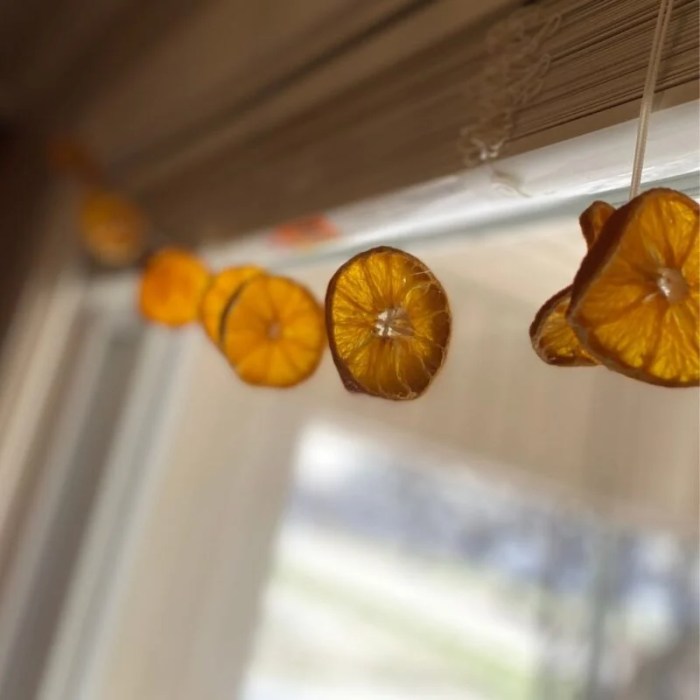
- Citrus Garland:String dried citrus ornaments together with twine or ribbon to create a fragrant garland. Hang the garland over a doorway, window, or fireplace mantel.
- Citrus Tree:Use a small artificial tree or a twig branch and decorate it with dried citrus ornaments, cinnamon sticks, and other natural elements. This creates a beautiful and festive centerpiece for your home.
- Citrus Wreath:Create a wreath using a foam ring and attach dried citrus ornaments, cinnamon sticks, pine cones, and other natural elements. You can use hot glue or wire to secure the decorations.
- Citrus Bowl:Fill a bowl or vase with dried citrus ornaments, cinnamon sticks, and other natural elements. This creates a simple and elegant centerpiece for a table or coffee table.
Preserving the Longevity of Ornaments
To ensure your dried citrus ornaments last for years to come, it’s important to take some precautions to preserve them.
- Store in a Cool, Dry Place:Store your ornaments in a cool, dry place, away from direct sunlight and heat. This will help prevent them from fading or becoming brittle.
- Avoid Moisture:Keep your ornaments away from moisture, as this can cause them to mold or rot. If they do get wet, allow them to dry completely before storing them.
- Use a Protective Coating:You can apply a clear sealant, such as acrylic spray, to your ornaments to help protect them from dust and moisture. This will also help to preserve their color and prevent them from fading.
Variations and Applications
Dried citrus fruit, beyond their decorative appeal, offer a versatile range of applications. Their natural fragrance, vibrant colors, and unique textures lend themselves to a variety of craft projects and home décor ideas. This section explores alternative uses for dried citrus fruit beyond ornaments, highlighting their potential in other crafts and projects.
Dried Citrus in Other Crafts and Projects
Dried citrus can be incorporated into a variety of crafts and projects beyond ornaments. Their versatility stems from their natural beauty, fragrance, and texture, making them ideal for crafting, DIY projects, and home décor.
- Potpourri: Dried citrus peels, along with other fragrant botanicals like cinnamon sticks, cloves, and star anise, create a delightful potpourri. The peels’ natural oils release a refreshing aroma, filling your home with a pleasant scent.
- Bath Salts: Dried citrus peels can be added to bath salts for a luxurious and aromatic bathing experience. The citrus oils have soothing and relaxing properties, while the peels add a visual appeal to the bath salts.
- Candles: Dried citrus peels can be incorporated into homemade candles, adding a subtle citrus fragrance and a unique visual element. The peels can be embedded into the wax or used as decorative elements around the candle.
- Soap Making: Dried citrus peels can be used in soap making, adding a natural fragrance and a visual appeal to the soap. The peels can be grated into the soap mixture or used as decorative elements on the top of the soap.
- Paper Crafts: Dried citrus peels can be used in paper crafts, adding texture and color to cards, scrapbook pages, and other paper projects. The peels can be glued onto paper, pressed into clay, or used as stencils for creating unique designs.