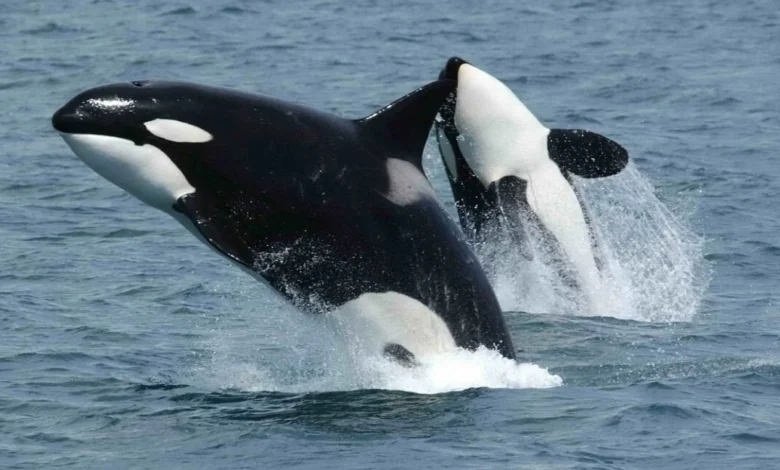
A recent and extraordinary observation in the Gulf of California has provided fresh evidence of the highly sophisticated and adaptable hunting strategies employed by orcas (Orcinus orca). In a behavior never before documented, a pod of orcas was filmed cooperatively ramming sunfish (Mola mola) with such immense force that the carcasses disintegrated into numerous small fragments. This discovery, detailed in a new paper published in the journal Frontiers in Ethology, suggests a potentially new form of culturally learned behavior, further illuminating the complex social and cognitive capabilities of these apex predators.
The incident, captured by a tourism operator in July 2024 off the coast of San Jose del Cabo, Mexico, involved a pod comprising three adult female orcas, one male, and one juvenile. Initially, the group was observed successfully hunting and consuming a spine-tail devil ray. Shortly thereafter, the attention shifted to a sunfish carcass. An adult female was seen holding the sunfish, which already bore a significant lateral wound, indicating the possible prior removal of its viscera. What followed was unprecedented: the male orca charged directly at the held carcass. Just before impact, the female released the sunfish, allowing the male to strike it with tremendous velocity. The impact produced an audible sound, and the sunfish carcass instantly fragmented, dispersing pieces of flesh throughout the water. The juvenile orca then proceeded to feed on the smaller fragments, while the adult orcas consumed the larger portions of the split-open body.
This "ram-to-fragment" technique differs significantly from previously documented orca hunting methods for sunfish. Typically, orcas employ a three-pronged approach: first targeting the pectoral fins to immobilize the fish, then slashing its body to remove the viscera, and finally using their beaks to access the remaining tissue. The newly observed behavior, however, appears to be a more advanced and cooperative modification of this basic strategy, designed to make feeding, especially for younger pod members, more efficient.
The Significance of Culturally Learned Behavior
The concept of culturally learned behavior in orcas has gained considerable scientific attention in recent years, particularly in the wake of numerous accounts of orcas ramming and occasionally sinking boats, predominantly off the Iberian Peninsula. Scientists believe these boat interactions are a form of social learning, passed down through generations within specific pods. The "ram-to-fragment" sunfish hunting technique adds another compelling example to this growing body of evidence, suggesting that complex behaviors, whether predatory or social, can be transmitted and refined within orca communities.
Kathryn Ayres, a co-author of the Frontiers in Ethology paper and affiliated with Beneath The Waves, a non-profit organization dedicated to ocean health, commented on the findings: "We think this may help younger orcas feed more easily, or it could also just be for fun. Orcas are known for playing with their food." This dual hypothesis—efficiency for feeding and the element of play—underscores the multifaceted motivations behind orca behavior. Play, for highly intelligent species like orcas, is not merely recreational; it serves as a critical mechanism for skill development, social bonding, and the practice of complex actions vital for survival. The ease with which the juvenile orca could access the fragmented sunfish meat supports the hypothesis of improved feeding efficiency, particularly for less experienced hunters.
A History of Sophisticated Cooperative Hunting
Orcas are renowned for their highly developed cooperative hunting strategies, which vary widely across different populations and ecosystems, reflecting their incredible adaptability and intelligence. These strategies often involve intricate coordination and specialized roles among pod members. The "ram-to-fragment" behavior aligns with a broader pattern of sophisticated group tactics.
For instance, orcas have been observed cooperatively hunting large prey like whale sharks, with one orca holding the prey steady while another strikes it. Other documented cooperative methods include:
- Herding Mobile Rays: Orcas work together to encircle and direct agile ray species, preventing their escape before an attack.
- Blocking Escape Paths: When hunting white sharks, orcas have been observed strategically positioning themselves to cut off escape routes, effectively trapping their formidable prey.
- Wave-Washing: A particularly famous example involves pods in the Antarctic creating deliberate waves to knock seals and penguins off ice floes, making them vulnerable in the water. This requires precise timing, synchronized swimming, and an understanding of physics.
- Carousel Feeding: In the Arctic, orcas often herd schools of fish, such as herring, into a tight "bait ball" by blowing bubbles or flashing their white undersides. They then take turns stunning the fish with tail slaps before consuming them.
Each of these strategies requires a high degree of communication, planning, and role specialization, showcasing the complex social structures and cognitive abilities of orcas. The "ram-to-fragment" sunfish behavior can be viewed as an extension of this repertoire, demonstrating innovation within their existing predatory framework.
The Role of Play and Social Learning in Orca Development
The suggestion that the "ram-to-fragment" behavior could be "just for fun" is not to be underestimated in the context of orca intelligence. Play is a fundamental aspect of development in many intelligent species, including humans. For orcas, play serves several critical functions:
- Skill Development: Practicing hunting techniques, coordination, and strength in a low-stakes environment.
- Social Bonding: Strengthening relationships within the pod through shared activities.
- Learning and Innovation: Experimenting with new behaviors that might later prove beneficial for survival.
- Energy Release: A way to expend excess energy and maintain physical fitness.
The observation of the juvenile orca readily consuming the fragmented sunfish pieces highlights the potential adaptive benefit of this play-like behavior. By making the prey more accessible, the adults are not only potentially teaching the juvenile a new hunting skill but also ensuring its easier sustenance, which is crucial for the survival and health of the younger generation. This act can be interpreted as a form of social pedagogy, where experienced individuals facilitate learning for the younger members of the pod.
Broader Context: The Orca-Boat Interactions
While the sunfish ramming is clearly a predatory behavior, the recent and widely publicized incidents of orcas ramming boats, particularly off the Iberian Peninsula, provide an important comparative context for understanding culturally learned behaviors in these animals. These interactions, which began escalating around 2020, have involved orcas, primarily juveniles and sub-adults, approaching yachts and sailboats, often targeting their rudders. The incidents have resulted in significant damage, and in some cases, the sinking of vessels.
The leading hypotheses for the boat interactions include:
- Play and Curiosity: Orcas, especially younger ones, are highly curious and playful. The rudders of boats might present an appealing object for interaction, akin to a toy.
- Learned Behavior: A specific matriarch orca named Gladis is often cited as a potential "originator" of the behavior. It’s hypothesized that she may have had a negative interaction with a boat, leading to a defensive response, which was then mimicked and culturally transmitted through her pod and subsequently to other pods.
- Stress or Trauma: Some theories suggest that the behavior could stem from stress or trauma, possibly related to past entanglement in fishing gear or injury from boat propellers.
- Practice for Hunting: While less likely for non-prey objects like rudders, some behaviors might inadvertently train orcas for applying force or precision.
Crucially, the boat interactions are distinct from the sunfish ramming in their objective. The boat interactions are not predatory; there is no evidence that the orcas are attempting to consume the boats or their occupants. Instead, they appear to be social or playful interactions, albeit with serious consequences for humans. The sunfish ramming, conversely, is directly linked to feeding and prey manipulation, showcasing the orca’s predatory prowess and ingenuity. Both, however, underscore the remarkable capacity for social learning and cultural transmission within orca populations.
Ecological Implications and Future Research
The discovery of the "ram-to-fragment" technique has several ecological implications. Sunfish, also known as Mola mola, are the heaviest known bony fish in the world, often reaching immense sizes. Their tough, leathery skin and large, cumbersome bodies make them challenging prey. The orcas’ innovation suggests a highly efficient method for processing such prey, potentially reducing energy expenditure and maximizing nutritional intake for the entire pod, especially the juveniles.
Understanding these new behaviors is crucial for marine conservation efforts. Orcas, as apex predators, play a vital role in maintaining the health and balance of marine ecosystems. Monitoring their hunting strategies and adaptability provides insights into the overall health of their environment and the availability of prey species. The research by Beneath The Waves, for instance, aligns with their mission to promote ocean health, as understanding the intricate behaviors of top predators is key to comprehensive ecosystem management.
The observation also highlights the increasing importance of opportunistic data collection, such as that provided by tourism operators. As human presence in marine environments grows, so does the potential for citizen science to contribute valuable, real-time observations that might otherwise go unnoticed by dedicated scientific expeditions.
Future research will undoubtedly focus on several key areas:
- Prevalence and Spread: Determining how widespread this "ram-to-fragment" behavior is among other orca pods and if it will spread geographically or become a more common hunting technique.
- Energetic Costs and Benefits: Quantifying the energy expenditure involved in this method versus traditional hunting, and the nutritional yield for the orcas.
- Long-term Impact: Assessing any potential long-term effects on sunfish populations, although orca predation is a natural part of the marine food web.
- Cognitive Underpinnings: Further investigating the cognitive processes involved in such complex cooperative behaviors, including communication, planning, and teaching.
The Gulf of California, a region known for its rich biodiversity and significant marine mammal populations, continues to be a crucial natural laboratory for studying these incredible creatures. The latest findings serve as a powerful reminder of the intelligence, social complexity, and continuous adaptability of orcas, urging scientists and the public alike to deepen their understanding and commitment to protecting these magnificent marine inhabitants. As Ayres noted, whether for sustenance or for play, these new observations reiterate the dynamic and ever-evolving world of orca behavior, leaving much more to be discovered about their enigmatic lives beneath the waves.