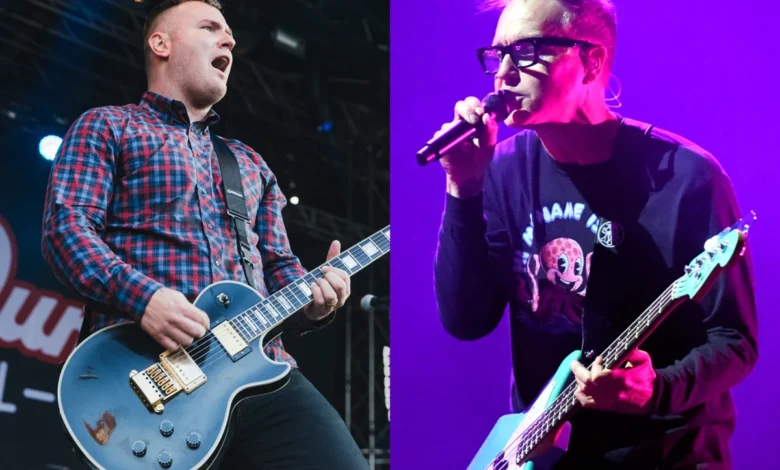
The global punk rock community is mourning the loss of Chad Gilbert, the founding member and lead guitarist of the influential pop-punk band New Found Glory, who passed away at the age of 45 following a courageous and prolonged battle with brain cancer. The news of his death on September 20 sent shockwaves through the alternative music industry, prompting an outpouring of grief, tributes, and reflections from peers, fans, and longtime collaborators. Among those deeply affected is Blink-182 co-founder, bassist, and co-lead vocalist Mark Hoppus, who shared an intimate and emotional exclusive tribute detailing a friendship that spanned decades, shared tours, and personal battles with serious illness.
The Main Facts of the Loss and Legacy
Chad Gilbert was widely recognized as a foundational architect of modern pop-punk. As the primary musical force behind New Found Glory—a band formed in Coral Springs, Florida, in 1997—Gilbert helped define the genre’s melodic aggression, infectious energy, and earnest lyricism. The band achieved mainstream success with landmark albums such as New Found Glory (2000) and Sticks and Stones (2002), both of which achieved gold certification and cemented the group as pioneers of the early 2000s pop-punk explosion.
Gilbert’s passing marks the end of a remarkable life dedicated to music, creativity, and relentless optimism. Diagnosed with brain cancer, Gilbert faced his prognosis with a public display of resilience that mirrored his stage presence. Throughout his illness, he provided regular updates to fans through social media, often sharing images from hospital beds with intravenous lines attached, yet maintaining his trademark smile. His death at 45 cuts short a life that had continually evolved, stretching from underground van tours to international arena headlining shows, and later into production, songwriting, and family life.
Early Beginnings and the Rise of New Found Glory
The relationship between Mark Hoppus and Chad Gilbert began long before New Found Glory became a household name in alternative rock. In the late 1990s, Gilbert and a circle of local Florida friends frequented nearly every Blink-182 concert in the region. Hoppus recalls these early interactions not as transactional fan encounters, but as the foundation of a deep, fraternal bond. Gilbert’s boundless enthusiasm for live music and local food spots quickly endeared him to the members of Blink-182.
Recognizing the raw talent of Gilbert’s band, Hoppus became an early champion of New Found Glory. After listening to their debut release on Drive-Thru Records, Hoppus championed the group to industry executives, radio programmers, and Blink-182’s management. This advocacy culminated in New Found Glory signing to Blink-182’s label, securing management representation, and joining the larger punk tour circuit.
The Chronology of a Decades-Long Friendship
As New Found Glory’s profile rose, Gilbert’s integration into the broader punk rock establishment deepened. During Blink-182’s high-profile tour for the 2001 album Take Off Your Pants and Jacket, Gilbert frequently rode on the tour bus with Hoppus and his wife. Despite the outward success, camaraderie, and chaotic fun that characterized the era—including Gilbert’s memorable cameo throwing a baseball bat into a bicycle spoke in the music video for Blink-182’s hit single "First Date"—the tour bus rides revealed a more vulnerable side to the young guitarist.
Hoppus has noted that beneath Gilbert’s perpetual cheerfulness, the pressures of sudden fame and touring occasionally led to moments of introspection and sadness. These shared vulnerabilities only strengthened their bond, framing Gilbert not merely as a peer, but as a younger brother.
The professional and personal relationship continued to evolve over the years. In 2009, Hoppus collaborated with New Found Glory as a producer on their sixth studio album, Not Without a Fight. The studio environment was not without its tension; creative frictions occasionally boiled over into intense disagreements. However, these conflicts were consistently defused by Gilbert’s resilience and forward-looking attitude, characterized by his ability to reset, smile, and refocus on the music the following day.
Shared Struggles: Navigating Cancer Together
In recent years, the bond between Hoppus and Gilbert took on a poignant and somber dimension as both musicians confronted major health crises. Hoppus himself is a cancer survivor, having publicly battled diffuse large B-cell lymphoma in 2021 before entering remission. This shared medical journey created a unique and intensely personal dialogue between the two friends.
The pair frequently exchanged text messages detailing the clinical realities of their conditions—discussing prognoses, methodologies, medical terminology, and rates of efficacy for various treatments. According to Hoppus, this period was defined by an emotional pendulum swinging between hope and despair. When one targeted treatment failed, Gilbert would pivot with characteristic determination to the next experimental protocol, maintaining an unwavering public positivity that continually inspired those around him.
A Final Meeting in Nashville
The final in-person meeting between the two musicians occurred backstage in Nashville during a Blink-182 concert. The backstage environment was characteristically chaotic, compounded by tour wrap-up duties, crew departures, and family logistics. Amidst this whirlwind, Hoppus encountered Gilbert, who was visibly weakened and walking with the assistance of a cane.
Accompanied by his wife and daughter, Gilbert exhibited the same foundational joy that Hoppus had first witnessed decades earlier in Florida. Despite facing advanced disease and the recent discovery of a new medical complication, Gilbert radiated pride, contentment, and enthusiasm for the experience his daughter was having. When Hoppus expressed sorrow over the ongoing medical setbacks, Gilbert brushed the concern aside with characteristic optimism, expressing absolute faith in his upcoming treatment protocols.
Broader Impact and Industry Reactions
Chad Gilbert’s death has reverberated far beyond his immediate circle of friends and family. Tributes have poured in from across the rock and alternative music community, with members of Paramore, Fall Out Boy, Yellowcard, and Green Day sharing memories of his generosity, mentorship, and musical influence.
Industry analysts and music historians note that Gilbert’s legacy extends beyond his guitar work with New Found Glory. As a producer, songwriter, and tireless advocate for independent music culture, he shaped the sonic landscape of 2000s and 2010s rock. His ability to balance aggressive, driving punk instrumentation with deeply infectious pop hooks influenced an entire generation of bands.
Furthermore, Gilbert’s open documentation of his cancer battle provided a roadmap of resilience for fans facing similar diagnoses. By demystifying the medical process and refusing to let the disease rob him of his engagement with the world—whether through his passion for collectible toys, niche card games, or live performance—he transformed his personal struggle into a public masterclass in grace under pressure.
Conclusion
The passing of Chad Gilbert leaves an indelible void in the alternative music landscape. From the humid venues of Florida in the late 1990s to the global stages of arena tours, his journey was defined by an uncompromising commitment to joy, creativity, and human connection. As expressed through Mark Hoppus’s reflections, Gilbert’s impact cannot be measured solely by record sales or chart positions, but by the enduring warmth of his friendships and the infectious enthusiasm he brought to every aspect of his life. Though the punk rock community has lost one of its most vibrant figures, the melodies he created and the spirit with which he lived remain a permanent fixture of modern rock history.