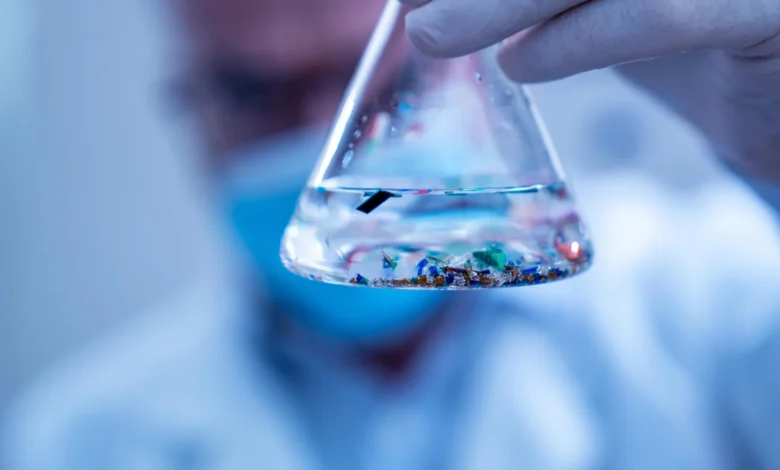
Researchers at the Department of Energy’s Oak Ridge National Laboratory (ORNL) have unveiled a groundbreaking chemical technique capable of transforming polyethylene—one of the world’s most ubiquitous and durable plastics—directly into gasoline- and diesel-grade fuels. The technological advance bypasses the intense thermal demands of traditional plastic recycling methods, operating at mild temperatures below 200 degrees Celsius without relying on costly noble-metal catalysts, organic solvents, or external chemical initiators.
The findings, which have been published in the Journal of the American Chemical Society and are currently subject to a pending patent application, represent a major shift in how industrial and consumer plastic waste might be managed in the future. By merging fundamental materials science with decades-old chemical engineering concepts, the ORNL-led team has demonstrated a closed-loop potential that could simultaneously mitigate municipal waste burdens and bolster domestic energy security.
The Genesis of the Breakthrough: Marrying Molten Salts With Polymer Science
Polyethylene is an exceptional material in terms of durability, flexibility, and chemical resistance, characteristics that make it ideal for everyday products ranging from single-use shopping bags to heavy-duty kitchen cutting boards and packaging materials. However, those very properties make it a persistent environmental pollutant. Because polyethylene features exceptionally stable, long carbon-carbon molecular chains, it resists natural degradation and challenges conventional mechanical and thermal recycling infrastructures.
To tackle this persistent chemical stability, the ORNL research team engineered a novel reaction medium utilizing molten inorganic salts containing aluminum chloride. In this system, the molten salts fulfill a dual role: they act simultaneously as the physical reaction medium and as the driving catalytic engine that cleaves the polymer’s stubborn molecular bonds.
According to Sheng Dai, an ORNL Corporate Fellow and section head for separations and polymer chemistry who co-led the research, the utilization of molten salts draws inspiration from a rich institutional history. During the 1960s, ORNL famously spearheaded the Molten Salt Reactor Experiment, demonstrating that liquid salt mixtures could successfully double as nuclear fuel and reactor coolant. Decades later, Dai recognized that these stable inorganic compounds could be repurposed to dismantle the intractable chemical architecture of discarded polymers.
Atom-by-Atom Chemistry: How the Conversion Works
Unlocking the precise mechanics of the polyethylene-to-fuel transformation required a multidisciplinary investigative effort spanning several national laboratories and advanced analytical user facilities.
When polyethylene is introduced into the aluminum-chloride-containing molten salts, charged aluminum atoms bind with three neighboring atoms, establishing highly active, acidic catalytic sites. These sites aggressively target the long-chain hydrocarbon polymers, splitting them into shorter, highly valuable hydrocarbon molecules.
To observe this process in real time, the research team deployed a battery of sophisticated diagnostic tools. At ORNL’s Spallation Neutron Source, scientists utilized neutron scattering via the VISION beamline to monitor the behavior of hydrogen, an element heavily abundant within polyethylene matrices. Because neutrons possess a unique capability to discern light elements and isotopes, researchers were able to track chemical shifts with exceptional clarity.
Complementary experiments performed at Lawrence Berkeley National Laboratory’s Advanced Light Source employed soft X-ray spectroscopy. Led by ORNL staff scientist Zhenzhen Yang, researchers examined aluminum-polyethylene interactions at the atomic and electronic levels. The resulting data revealed that the aluminum edge shifted toward a low-electron-density boundary, confirming the creation of electron-rich aromatic ring intermediates that coordinate with aluminum to induce a measurable binding-energy change.
Furthermore, isotopic labeling with deuterium—an isotope of hydrogen—allowed postdoctoral researcher Liqi Qiu and colleagues to tag positively charged carbon ions and trace their evolution throughout the reaction pathway. Computer simulations conducted by Bobby Sumpter at the Center for Nanophase Materials Sciences mapped the thermodynamic and energy shifts governing carbon ion stability, while in situ X-ray diffraction and nuclear magnetic resonance spectroscopy provided definitive structural confirmation of the catalytic sites.
Operational Efficiency and Mild Thermal Requirements
One of the most compelling aspects of the ORNL process is its operational efficiency and minimal energy footprint. Traditional methods for converting polyethylene into liquid hydrocarbons have historically relied on pyrolysis—a destructive thermal process requiring extreme temperatures ranging from 450 to 500 degrees Celsius to thermally snap large polymer chains apart.
By contrast, the new molten salt methodology achieves a gasoline yield of approximately 60 percent at temperatures below 200 degrees Celsius, conditions roughly comparable to a standard kitchen oven. Furthermore, the process achieves this high yield without requiring external hydrogen gas, volatile organic solvents, chemical initiators, or expensive precious-metal catalysts like platinum or palladium.
"We converted polymer waste to value-added fuels by using commercially available inorganic salts as the reaction media to provide the catalytic sites," noted Zhenzhen Yang, co-corresponding author of the study. "Unlike traditional techniques for converting polymer to fuel, the new process did not require noble-metal catalysts, organic solvents or external hydrogen. This is the first time molten salts were used as media to produce high-value-added chemicals from waste without any catalytic initiator or solvent and at a temperature below 200 degrees Celsius."
The structural properties of the starting polymer also dictate the final product profile. Through isotopic labeling and neutron scattering analyses, the team discovered that simpler polymer chains predominantly yield gasoline-like compounds, whereas more complex, branched polymer structures give rise to heavier diesel-like fuels.
Navigating Remaining Hurdles on the Path to Commercialization
Despite the technical triumphs of the laboratory-scale experiments, the research team emphasizes that several significant developmental hurdles must be cleared before the technology can be scaled for industrial deployment.
The primary challenge lies in the chemical nature of the aluminum-based catalytic system itself. The molten salts employed in the process are highly hygroscopic, meaning they readily absorb ambient moisture from the air. This moisture sensitivity can compromise the long-term stability of the system.
To overcome this limitation, the ORNL researchers are actively investigating containment and confinement strategies. Future phases of the research will explore the integration of halogen compounds or carbon-based hosting matrices to stabilize the molten salts, streamline their separation from reaction products, and ensure continuous reusability in a continuous-flow industrial plant setting.
Broader Implications for Energy Security and the Circular Economy
The broader implications of the ORNL breakthrough extend across multiple sectors, aligning national sustainability goals with industrial economic incentives. Millions of tons of polyethylene enter the global waste stream annually, representing a massive loss of embedded petrochemical energy. By establishing a direct, low-temperature pathway to convert this ubiquitous waste into drop-in transportation fuels, society could significantly reduce its reliance on virgin fossil fuel extraction while simultaneously mitigating landfill and environmental pollution.
Tomonori Saito, who managed the project and contributed polymer science expertise, emphasized the broader socioeconomic philosophy guiding the work. "In this case we tackled polyethylene, a widely available commodity polymer, using molten salt," Saito said. "We’re trying to understand fundamental science that will lead to discoveries and new economic opportunities."
If successfully scaled beyond the laboratory, the technology promises to strengthen U.S. industrial competitiveness and enhance national energy security by establishing a domestic, circular loop for liquid fuel production derived entirely from municipal and industrial refuse.
Funding for the foundational research was provided primarily by the Department of Energy’s Office of Science, specifically through the Materials Sciences and Engineering Division, alongside the Chemical Sciences, Geosciences and Biosciences Division’s Catalysis Science program. The project relied extensively on premier DOE Office of Science user facilities, underscoring the vital role of federal laboratory infrastructure in advancing transformative energy technologies.