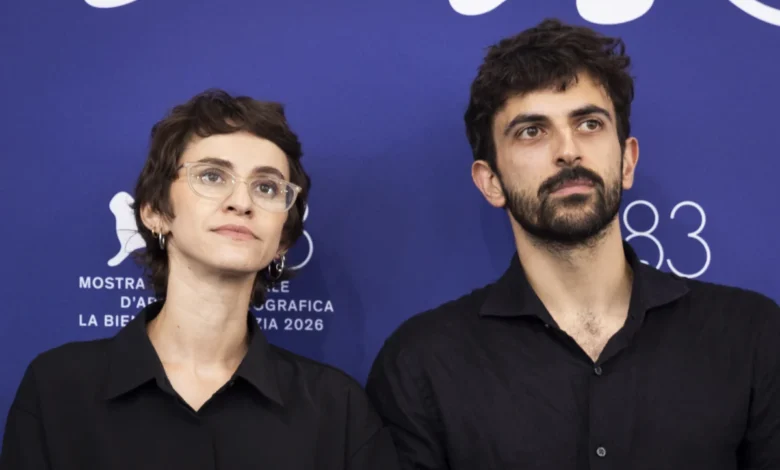
The international film community is currently embroiled in a significant controversy following the Venice Film Festival, where the documentary NAZA received the prestigious Special Jury Prize. The film, directed by Yuval Abraham and Rachel Szor, has become the epicenter of a political firestorm in Israel. Israeli Culture Minister Miki Zohar has publicly announced his intention to pursue the revocation of the filmmakers’ citizenship, characterizing the project as a "vile" act of "treason." This development marks a sharp escalation in the ongoing tension between the Israeli government and independent filmmakers who utilize their medium to critique state military operations and policy.
The Content and Significance of NAZA
At the core of the controversy is the subject matter of NAZA. The documentary features direct testimony from 24 Israeli military officers who provide detailed accounts of the protocols and systems they allege are utilized by the Israel Defense Forces (IDF) to target and neutralize civilian populations in Gaza. The title, NAZA, is derived from a specific military acronym used by IDF personnel as shorthand for civilian casualties. By bringing these internal narratives to the forefront, the film challenges the official operational transparency often cited by the military establishment.
The documentary’s reception at the Venice Film Festival highlights a growing trend of high-profile political filmmaking emerging from the region. While the film has been lauded by international juries for its investigative rigor and human rights focus, it has been met with condemnation from Israeli government officials, who argue that such portrayals distort the reality of the IDF’s mission and undermine national security.
A Chronology of Confrontation
The friction between the Israeli government and the filmmaking duo is not an isolated incident. To understand the current climate, one must look at the recent history of Israeli cinematic discourse:
- 2023: The film No Other Land, directed by Yuval Abraham alongside Palestinian filmmakers Basel Adra and Hamdan Ballal, gains international acclaim and wins an Oscar for Best Documentary. Upon its success, Minister Zohar publicly decried the film as "a sad moment for the world of cinema," signaling a hardening stance against works that depict the occupation.
- Early 2024: Following the success of The Sea—a drama focusing on a Palestinian boy—at the Ophir Awards, Minister Zohar accelerated plans to overhaul the Israeli film financing system.
- Mid-2024: Zohar formally implements reforms to government funding for the Israeli film industry. These reforms shifted resources away from independent, politically sensitive, or "anti-national" projects toward commercially viable content.
- September 2024: NAZA debuts at the Venice Film Festival, winning the Special Jury Prize. Minister Zohar responds on social media platform X, stating the film constitutes treason and initiating discussions on the potential revocation of citizenship for the directors.
The Financial and Structural Overhaul of Israeli Cinema
The political battle is underscored by a fundamental change in how the Israeli state funds the arts. Minister Zohar has been explicit regarding the motivation behind his recent reforms to the Israel Film Fund and other state-sponsored cultural bodies. He has characterized the previous funding model as one that forced Israeli taxpayers to subsidize content that "blackens" the name of IDF soldiers.
Under the new guidelines, state support is prioritized for projects deemed to align with national interests and commercial marketability. Zohar has frequently used the phrase "our money from films that Israel-haters love to films that Israelis love" to justify the redistribution of funds. This policy effectively forces independent filmmakers to seek alternative, often international, sources of funding. NAZA, for instance, received no public Israeli funding and was produced with support from The Guardian, highlighting how the shift in domestic policy is pushing critical narratives toward international production houses.
The Filmmakers’ Response and International Implications
During his acceptance speech in Venice, Yuval Abraham addressed the backlash directly, challenging the politicians and journalists who condemned the film without having viewed its content. He drew a direct connection between the silencing of the documentary and the broader suppression of media in the region, noting that more than 200 journalists have been killed in Gaza during the conflict. Abraham emphasized that the truth contained in the film has been known since the early stages of the war, yet it has been systematically denied or obfuscated.
The filmmakers have expressed an intent to screen NAZA in Israel, despite the legal and social risks. Rachel Szor emphasized that the decision to have the military officers speak in Hebrew was intentional, designed to force a direct confrontation with the domestic audience. Furthermore, the filmmakers have stated their intention to distribute the film widely in the United States and Germany, citing the role of these nations as the primary suppliers of arms to Israel. By targeting these specific audiences, the filmmakers aim to influence the international discourse surrounding the military aid provided to the IDF.
Analysis of Legal and Democratic Implications
The threat to revoke citizenship based on the content of a documentary raises profound questions regarding the limits of free speech and the definition of treason in a democratic society. Legally, stripping a citizen of their nationality is a severe measure, typically reserved for acts of espionage, terrorism, or the voluntary acquisition of foreign nationality in specific circumstances. Using such measures against creative expression is unprecedented in the modern history of the State of Israel.
Legal scholars suggest that such an action would face significant hurdles within the Israeli Supreme Court, which has historically protected freedom of expression as a core pillar of the country’s democracy. However, the current political climate, characterized by intense polarization, has created a environment where the lines between political dissent and national security threats are increasingly blurred.
The impact of this policy goes beyond the individual filmmakers. It creates a "chilling effect" on the artistic community, where producers and directors may self-censor to avoid losing government funding or, more drastically, facing punitive legal action. This dynamic threatens to diminish the diversity of voices within Israeli culture, potentially leading to a monocultural cinematic landscape that serves state narratives rather than challenging them.
Conclusion: The Future of Political Filmmaking
As the controversy over NAZA continues to unfold, it serves as a litmus test for the health of democratic institutions in Israel. The tension highlights a fundamental disagreement over the role of the artist in society: should cinema be an instrument of national unity and state support, or should it serve as a critical mirror reflecting the complexities and failures of state policy?
For now, the international film community remains largely in support of Abraham and Szor, citing the importance of investigative journalism and documentary film in times of conflict. Conversely, the Israeli government remains steadfast in its position that such films are harmful to the national interest. As the debate moves from social media posts to potential legal forums, the outcome will likely have lasting consequences for the future of artistic freedom, the integrity of the Israeli film industry, and the international perception of the country’s democratic values.