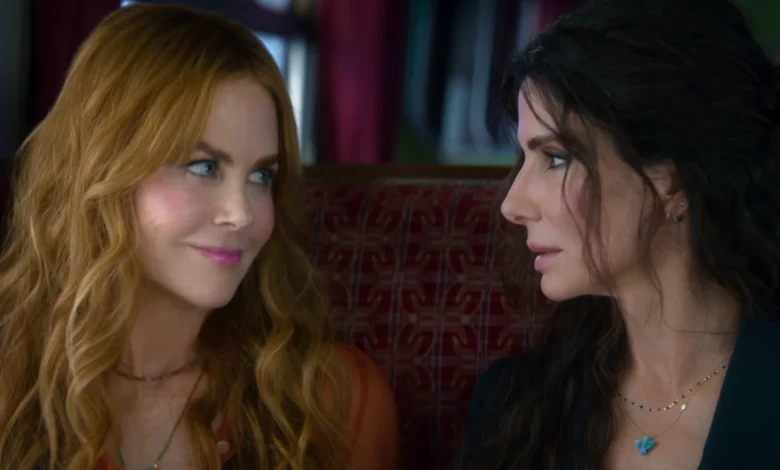
The release of Practical Magic 2 has reignited a familiar cultural debate regarding the widening chasm between professional film criticism and devoted fanbases. Hitting theaters nearly three decades after the 1998 original fantasy-comedy, the sequel opened to a disappointing 34 percent approval rating on Rotten Tomatoes. Directed by Susanne Bier, the film brings back Hollywood heavyweights Sandra Bullock and Nicole Kidman as the magical Owens sisters, Sally and Gillian. Yet, despite its harsh critical reception—with reviewers pointing to overused CGI, an excessive 130-minute runtime, and a jarring shift away from the moody New England aesthetic that defined the cult classic—the film has resonated strongly with audiences, generating robust box-office projections and a starkly contrasting 92 percent audience score.
Background Context and the Legacy of the 1998 Original
To understand the polarizing response to Practical Magic 2, one must examine the rocky history of its predecessor. Based on the novel by Alice Hoffman and originally directed by Griffin Dunne, the 1998 film was itself heavily panned by critics upon its theatrical release. Reviewers at the time struggled to categorize the picture, expressing frustration over its tonal shifts between romantic comedy, family drama, and dark fantasy.
Behind-the-scenes accounts from the production shed light on the challenges faced by the original cast and crew. Reflecting on the film’s initial reception, Sandra Bullock noted that the cast and crew felt thoroughly eviscerated by contemporary critics. Producer Denise Di Novi has frequently highlighted the rampant sexism within the industry during the late 1990s, recalling that some reviewers openly criticized the film simply for featuring an overwhelmingly female-centric cast.
Despite the initial critical backlash, the original movie gradually cultivated a dedicated, multi-generational following. Fans embraced its comforting atmosphere, iconic scenes involving midnight margaritas, and themes of female solidarity. Over the course of 28 years, the film transitioned from a box-office disappointment into a celebrated cult classic, establishing high expectations for any eventual continuation.
Chronology of Development and Narrative Plot Points
The journey toward a sequel was prolonged, influenced by subsequent literary additions to Hoffman’s universe, culminating in the publication of The Book of Magic in 2021. This novel served as the primary narrative blueprint for Practical Magic 2, necessitating specific storyline adjustments, including the aging-up of Sally Owens’ daughters.
In the sequel’s plot, the narrative centers on the family’s centuries-old curse, which dictates that any man loved by an Owens woman will meet an untimely death. This long-standing supernatural threat becomes an urgent reality when Sally’s daughters, Kylie (now played by Joey King) and Antonia (Maisie Williams), discover their own latent witch abilities. The central conflict is triggered when Kylie’s boyfriend, portrayed by Xolo Maridueña, suffers a severe car accident and falls into a coma. Desperate to break the curse, Kylie travels to London, prompting Sally, Gillian, and a newly introduced magic historian played by Lee Pace to mount a rescue and resolution mission overseas.
Critical Grievances Versus Audience Reception
Professional reviewers have structured their critiques around several distinct production and narrative choices. Among the primary complaints is the visual presentation. Critics argue that the bright, harsh lighting of the sequel strips away the moody, autumnal atmosphere that made the original cinematography so memorable. Furthermore, the extensive reliance on computer-generated imagery (CGI) has been cited as a detriment to the understated, tactile magic that grounded the 1980s and 90s aesthetic of the fictional Owens household.
Casting decisions have also drawn scrutiny. The recasting of Sally’s daughters—originally portrayed by Evan Rachel Wood and Alexandra Artrip—sparked industry discussion, with original cast members publicly noting their exclusion from the project. Additionally, critics pointed out that the narrative utilization of supporting characters, such as Maridueña’s comatose boyfriend, underutilized the talent involved.
Conversely, the audience response underscores a fundamental disconnect in expectations. While traditional film critics evaluate the sequel through the lens of rigorous narrative pacing, cinematography, and artistic innovation, the core fan base approaches the film as an exercise in nostalgia and thematic celebration. For these viewers, the primary objective of Practical Magic 2 was not to achieve high-art status, but to honor the enduring themes of sisterhood, resilience, and female empowerment that defined the original work.
Box Office Implications and Market Analysis
Despite the unfavorable critical notices, early financial indicators suggest that Practical Magic 2 will perform strongly at the global box office. Industry tracking estimates a robust opening weekend, projected at approximately $30 million. This performance highlights a growing trend in modern cinema where established intellectual properties with dedicated fanbases remain insulated from traditional critical consensus.
The disparity between the 34 percent critic score and the 92 percent audience approval rating on Rotten Tomatoes demonstrates the diminishing influence of traditional print and digital reviews on nostalgic consumer behavior. Rather than deterring viewers, the negative critical reception has, in some instances, galvanized fan communities to support the film actively, utilizing social media platforms to coordinate viewing parties and drive ticket sales.
Analysis of Industry Trends and Future Outlook
The release and subsequent reception of Practical Magic 2 offer valuable insights into Hollywood’s ongoing reliance on legacy sequels. As studios increasingly tap into nostalgic properties from the 1980s and 1990s, they navigate a complex landscape where multi-generational audiences demand fidelity to source material while contemporary critics evaluate standalone cinematic quality.
The film’s trajectory indicates that emotional resonance and community engagement can successfully outweigh technical and narrative shortcomings in the marketplace. By prioritizing the celebration of female relationships and answering long-standing fan curiosities regarding the Owens family curse, Practical Magic 2 has secured its financial viability, proving that certain cultural artifacts operate outside conventional metrics of cinematic evaluation.