Federal politics in Canberra has plunged into intense controversy following a flurry of major policy announcements, high-stakes political clashes, and escalating tensions over the cost of living, housing, and national security. At the center of the legislative storm is a sweeping new migration proposal introduced by Pauline Hanson’s One Nation party, which aims to slash temporary visa numbers across Australia by 750,000 over a three-year period. The aggressive immigration framework has immediately ignited fierce pushback from both the federal Labor government and the Liberal-National Coalition, while also drawing sharp criticism from key agricultural and economic sectors warning of potential recessionary shocks.
Concurrently, parliamentary proceedings have been dominated by explosive personal recriminations involving opposition figures, debates over public housing histories, a fresh injection of government funding for domestic violence crisis accommodation, and a major national campaign advocating for household electrification to ease soaring energy bills.

One Nation Proposes Radical Temporary Visa Cuts
One Nation’s newly unveiled immigration framework targets international students and the family members of skilled migrants, aiming to drag temporary visa numbers back down to 2017 levels. Party leader Pauline Hanson claimed that net overseas migration (NOM) under the plan would achieve a "net-negative" trajectory for the initial three years before stabilizing at a target of 130,000 annually.
However, the policy rollout was immediately marred by confusion when various One Nation parliamentarians struggled to accurately define net migration during media appearances. Net migration officially measures individuals arriving in or departing from the country for a cumulative period of at least 12 months over a 16-month window, excluding short-term tourists. Ambiguity has surrounded whether seasonal agricultural workers—such as backpackers and participants in the Pacific Australia Labour Mobility (PALM) scheme—would be captured under the proposed caps. Hanson later insisted that these groups would be shielded, though approximately 10% of the targeted visa reductions would focus on individuals currently residing in Australia without valid visas who have exhausted all legal avenues to remain.
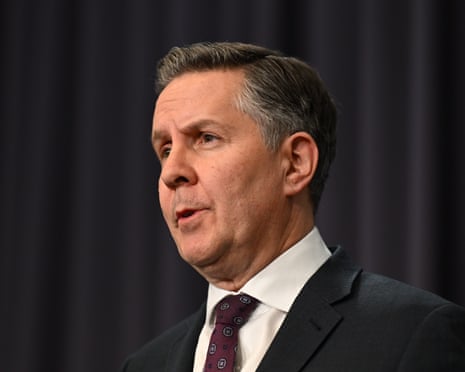
The plan has drawn scathing evaluations from across the political aisle and key industry stakeholders. Health Minister Mark Butler fiercely denounced the policy during a press gallery briefing, arguing that it would severely damage vital economic sectors.
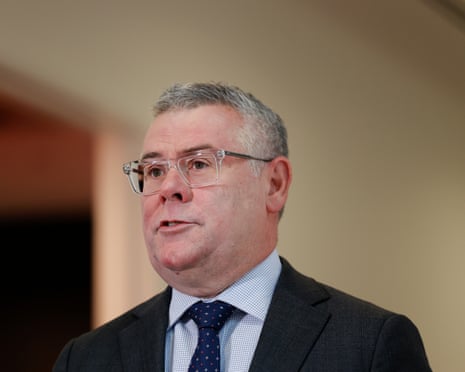
"Pauline Hanson said a few weeks ago that she didn’t care what the impact of her migration policy would be on business, but this is just another level entirely," Butler said. "This is going to smash industries like construction. It would devastate the health sector and aged care and disability."
The National Farmers Federation (NFF) similarly warned of disastrous consequences for primary producers. NFF President Hamish McIntyre told morning television programs that one in seven farm workers is a working holiday maker. "It’s a terrible impact on us," McIntyre stated. "It’s going to prohibit us from planting some of these crops. We rely on these people. We won’t be able to take the risks to spend all the money, farmers, we spend upfront to produce these crops, so we’re not going to take a risk if we can’t harvest them."
Deputy Liberal leader Jane Hume also joined the chorus of condemnation, warning that an abrupt contraction of the labor force could tip the national economy into a recession. Hume criticized One Nation for advancing policies devoid of rigorous economic modeling, asserting that arbitrary population targets would ultimately make all Australians poorer.
Personal Animosity and Parliamentary Clash Over Social Housing
Beyond migration, Parliament has been gripped by fierce personal and political feuds, particularly concerning Pauline Hanson’s recent commentary regarding Prime Minister Anthony Albanese. In a podcast interview recorded earlier in the year, Hanson criticized the duration for which the prime minister’s late mother resided in public housing, later describing the prime minister’s frequent references to his upbringing as "pathetic."
The remarks drew widespread condemnation from government ministers. Environment Minister Murray Watt labeled the comments "cruel and despicable," accusing Hanson of punching down on vulnerable Australians who rely on public safety nets.
"I mean, I’m starting to lose count of the number of groups within our community who Pauline Hanson is picking on," Watt said on ABC Radio National. "She thinks workers are lazy, she doesn’t like migrants. She says parents who use childcare aren’t doing the right thing. Women experiencing domestic violence, she says that’s a two-way street."
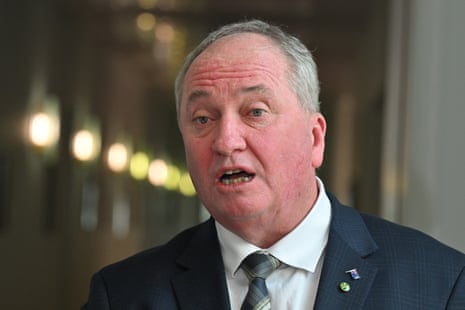
Despite the broad political backlash, senior figures within the conservative ecosystem defended Hanson’s broader policy premise regarding public housing allocation. National Party MP Barnaby Joyce appeared on morning television to defend the stance, arguing that public housing should not serve as permanent accommodation amid an unprecedented national housing shortage.
"The premise of that question was, should people live in public housing forever? Which the answer is no, because we just don’t have enough," Joyce said, while acknowledging the personal narrative traditionally put forward by the prime minister.
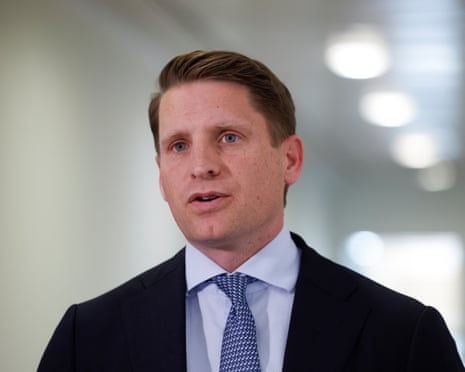
Simultaneously, the rift between One Nation and federal opposition figures deepened following an animated social media video produced by One Nation that labeled former SAS captain and current Liberal MP Andrew Hastie a "traitor" for giving evidence in a high-profile defamation trial. Hastie launched a passionate defense of military veterans on morning broadcast media, characterizing the attacks as "nasty, grubby politics" that demonstrated Hanson’s unsuitability for national leadership. Liberal frontbencher Jane Hume reinforced these sentiments, describing the attacks on veterans as deeply distasteful and indicative of an ongoing pattern of provocative rhetoric within the minor party.
Housing Grants and Economic Indicators
Amid the political crossfire, the federal government announced a redirection of funding toward housing security, confirming a $300 million grants package aimed at constructing crisis and transitional accommodation. Housing Minister Clare O’Neil and Social Services Minister Tanya Plibersek announced that the funding will deliver 500 new homes designed to support roughly 19,000 vulnerable Australians, including women fleeing domestic violence and young people facing homelessness.
The financial commitment reallocates funds previously earmarked as concessional loans for the housing sector, transitioning them into direct grants following extensive industry consultations. Plibersek emphasized the urgency of the initiative, noting that structural solutions are critical to providing safe exit pathways for families in crisis.
Meanwhile, broader economic indicators released over the weekend highlighted continued volatility in the domestic property market. Data compiled by Cotality revealed that national preliminary auction clearance rates climbed to 58.5%, marking a 19-week high. However, housing market analysts cautioned that the uptick in clearance percentages occurred against a backdrop of significantly reduced sales volumes, with auction numbers remaining more than 30% lower than levels recorded during the same period in the previous year.
National Push for Household Electrification
In energy policy developments, a coalition of more than 30 organizations launched a coordinated national campaign at Parliament House calling on the federal government to incentivize household electrification. Aligned with the international "Electrify Now" movement, the campaign argues that Australian households could collectively save up to $5,000 annually by transitioning domestic heating, cooking, and vehicle fleets away from fossil fuels toward electrical infrastructure.
Represented by groups such as Energy Consumers Australia, the Electric Vehicle Council, Farmers for Climate Action, and Rewiring Australia, the sector advocates for targeted federal incentives to accelerate the transition. Jeremy Sung, policy head at the Energy Efficiency Council, argued that current federal policies project contradictory signals to consumers, urging Canberra to firmly establish electrification as the cornerstone of the nation’s future energy framework.
As Parliament enters a packed sitting week, legislators are expected to grapple with mounting pressure over migration reform, housing affordability, and the ethical boundaries of political debate, setting the stage for intense legislative showdowns in the months ahead.