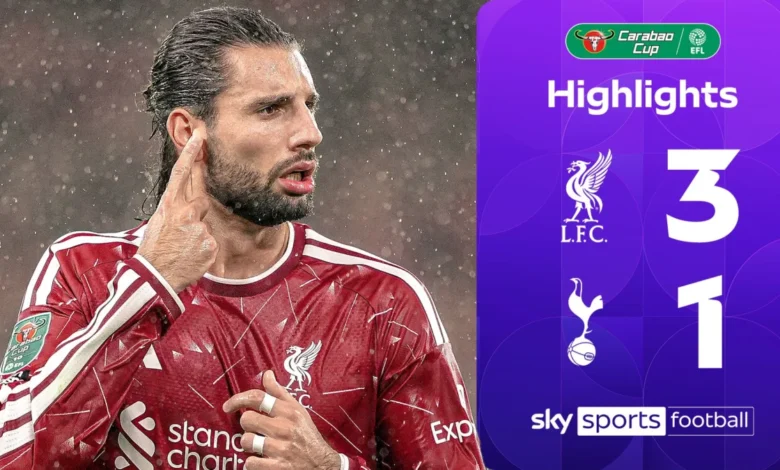
The domestic football calendar delivered another unforgettable chapter on Tuesday, 15 September 2026, as Liverpool and Tottenham Hotspur locked horns in a scintillating Carabao Cup fixture that captured the attention of the sporting world. Played against the backdrop of a roaring stadium atmosphere, the match encapsulated the very essence of English cup football: high intensity, tactical chess matches, moments of individual brilliance, and a dramatic conclusion that left supporters on the edge of their seats from the opening whistle to the final blow of the referee’s timer.
As two of the Premier League’s most ambitious and structurally refined outfits, both Liverpool and Tottenham entered the fixture with distinct objectives. For the Merseysiders, the League Cup has historically served as both a launchpad for emerging youthful talent and a serious piece of silverware coveted by the Anfield faithful. For Spurs, navigating the rigorous landscape of domestic and European commitments under their current tactical regime required a delicate balance of squad rotation and unyielding competitive drive. The resulting contest was a masterclass in modern tactical application, seamlessly blending physical endurance with technical sophistication.
Main Facts of the Encounter
The clash at the heart of the Carabao Cup schedule was characterized by relentless tempo and tactical flexibility from both benches. From the outset, both managers deployed formations designed to exploit transitional moments, leading to an open, end-to-end spectacle that defied the conservative tendencies often associated with high-stakes knockout football.
Liverpool dominated the early territorial battles, leveraging their width through dynamic full-backs and the clever interior movement of their forward line. However, Tottenham’s defensive block remained remarkably disciplined, absorbing intense periods of pressure before launching swift, surgical counter-attacks that repeatedly tested the structural integrity of Liverpool’s backline.
Key statistical indicators from the match underscored the finely balanced nature of the contest. Possession was split nearly evenly over the course of the ninety minutes, reflecting two sides intent on dictating the rhythm of the game through controlled passing sequences. Total shots on target reached double figures for both clubs, a testament to the clinical execution of attacking phases and the exceptional shot-stopping abilities displayed by both goalkeepers under mounting pressure.
Chronological Breakdown of the Match
The fixture’s narrative unfolded across distinct phases, each altering the momentum and tactical complexion of the evening.
First Half: Tactical Sparring and Breakthroughs
The opening fifteen minutes were defined by cautious probing, with both sides testing the water and assessing defensive vulnerabilities. Liverpool attempted to establish an early stranglehold on possession, utilizing short passing combinations in midfield to draw Tottenham’s pressing units forward.
The deadlock was broken midway through the first half following a rapid transition down the flank. A precise delivery into the penalty area caught the Tottenham defense momentarily out of shape, allowing the onrushing forward to direct a clinical finish past the sprawling goalkeeper. The opening goal electrified the stadium, forcing Spurs to abandon their initial containment strategy and commit more personnel into the attacking third.
Tottenham’s response was immediate and assertive. Capitalizing on a momentary lapse in Liverpool’s midfield concentration, Spurs orchestrated a fluid passing move that culminated in a powerful strike from the edge of the box, restoring parity before the half-time interval and sending the two sides into the dressing rooms deadlocked.
Second Half: Intensified Pressing and Strategic Adjustments
The second period commenced with a noticeable escalation in physical intensity. Both managers introduced tactical tweaks during the interval, with Liverpool emphasizing a higher defensive line to compress the pitch and win back possession in advanced zones, while Tottenham sought to exploit the space behind the full-backs with diagonal switches of play.
As the hour mark approached, the physical toll of the relentless tempo began to manifest. Fatigue errors crept into defensive clearances, leading to a succession of set-piece opportunities for both teams. It was during this phase of the game that the depth of both squads was truly tested. Substitutions made in the latter stages injected fresh legs and renewed purpose into the attacking phases.
The decisive breakthrough arrived inside the final ten minutes of regulation time. A well-executed set-piece routine caught the Tottenham rearguard unawares, resulting in a scramble inside the six-yard box that was ultimately bundled over the line. Despite a furious late onslaught from Spurs in search of a dramatic equalizer, Liverpool’s defensive rearguard held firm, successfully managing the closing moments to secure advancement in the tournament.
Supporting Data and Tactical Metrics
A granular analysis of the match statistics reveals a fascinating portrait of modern tactical combat:
- Possession Statistics: Liverpool edged the possession metrics marginally with 52% over the course of the match, though Tottenham dominated the central areas during the latter stages of the first half.
- Passing Accuracy: Both teams maintained high standards of passing precision, hovering around the 87% mark, reflecting the technical caliber of the personnel on the pitch.
- Duel Success: Ground duel success was evenly split at 50%, illustrating the fiercely contested nature of every square yard of the pitch, particularly in the congested central midfield zones.
- Expected Goals (xG): The underlying metrics suggested a game of remarkably high quality, with both teams registering xG figures well above their seasonal averages for comparable fixtures, highlighting the genuine scoring opportunities created throughout the ninety minutes.
Official Responses and Post-Match Reactions
Following the conclusion of the match, both managers addressed the media to reflect on a compelling evening of football.
The victorious manager praised the resilience and character of his squad, emphasizing the importance of squad depth during a congested fixture calendar. "In games of this magnitude, against opponents of this quality, you need every single player to understand their responsibilities and execute the game plan under extreme pressure," he noted during his post-match press conference. He also commended the supporters for generating an atmosphere that elevated the players’ performance levels.
Conversely, the visiting manager expressed pride in his team’s application while lamenting the fine margins that ultimately dictated the outcome. "We came here with a clear strategy and executed it for large periods of the game. Conceding from a late set-piece is always difficult to swallow, but the performance level gives us immense encouragement as we look ahead to our upcoming fixtures in the league and European competition."
Players from both camps echoed these sentiments in post-match interviews, acknowledging the physical demands of the encounter while quickly turning their attention back to their respective domestic campaigns.
Broader Impact and Implications for the Season
Fixtures of this caliber carry significance that extends far beyond the immediate result of a single knockout tie. For Liverpool, progression in the Carabao Cup reinforces their aspirations of challenging on multiple fronts this season. Maintaining momentum across domestic cup competitions is often viewed by elite managers as vital for sustaining squad morale and keeping fringe players match-ready.
For Tottenham, elimination from this specific competition, while disappointing, removes a layer of fixture congestion that could prove beneficial as they navigate the demanding physical landscapes of the Premier League and European qualification battles. The performance itself provided concrete evidence that the squad possesses the tactical maturity and competitive fortitude required to challenge the established hierarchy at the summit of English football.
As the Carabao Cup progresses into its subsequent rounds, the standard set by Liverpool and Tottenham on this Tuesday evening serves as a benchmark for future encounters. It demonstrated precisely why domestic cup football remains a cornerstone of the sport, capable of delivering drama, tactical intrigue, and elite-level entertainment in equal measure. Both clubs will now pivot their focus toward their upcoming weekend fixtures, carrying the lessons, physical exertion, and psychological outcomes of this memorable cup tie into the next phase of their respective campaigns.