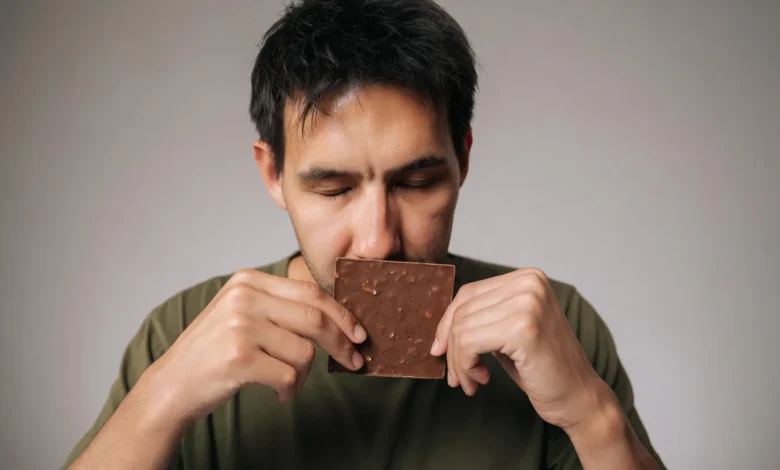
The intersection of sensory neuroscience and physical fitness has yielded a fascinating discovery that may change how athletes approach resistance training: simply inhaling the aroma of chocolate can significantly increase workout volume without making the physical exertion feel any more difficult. Published in the journal Frontiers in Physiology, a recent study conducted by researchers at the University of Malaya reveals that exposure to dark and milk chocolate scents before and during sets of leg extensions can lead to a substantial increase in completed repetitions among moderately trained adults.
This unexpected psychobiological phenomenon bridges the gap between olfaction, appetite regulation, and athletic performance. As fitness enthusiasts and professional athletes constantly seek legal, non-invasive ergogenic aids to enhance training capacity, this research opens up an entirely novel avenue for performance enhancement rooted in the power of scent.
Breaking Down the Study: Methodology and Participant Demographics
To investigate the relationship between olfactory stimuli and resistance exercise capacity, lead researchers designed a controlled trial involving 23 healthy male participants. Ranging in age from their early to mid-20s, the cohort consisted of individuals categorized as moderately trained—meaning they engaged in regular physical activity but were not elite powerlifters or professional athletes.
The experimental design required participants to undergo a fasting period of at least 10 hours prior to testing. Researchers then divided the cohort into three distinct exposure groups. Each group was exposed to one of three olfactory stimuli during their testing sessions: a liquified dark chocolate sample containing 90 percent cocoa, a liquified milk chocolate sample containing 60 percent cocoa, or an odorless water sample that served as the experimental control.
The physical test chosen for the study was the leg extension exercise. Performed on a specialized machine where a seated individual straightens their lower legs against mechanical resistance to lift a weighted load, this movement isolated the quadriceps and allowed for precise quantification of muscular endurance and total training volume. Researchers measured leg extension performance both prior to and throughout the active training sessions. Furthermore, participants completed comprehensive subjective evaluations regarding their hunger, fullness, and immediate desire to eat before training, as well as recurring appetite assessments following brief, 30-second exposures to the scent samples between exercise sets.
Distinct Aromas Yield Divergent Physiological and Psychological Responses
The findings demonstrated clear divergences between the impacts of dark chocolate versus milk chocolate aromas, affecting both subjective appetite states and objective muscular output.
When exposed to the 90 percent dark chocolate aroma, participants exhibited a consistent decrease in subjective hunger, alongside a reduced desire and intention to eat. Crucially, this scent also elicited greater subjective feelings of fullness before exercise commenced. Researchers deduced that the bitter, intense profile of high-cocoa dark chocolate served as a potent psychological cue, tricking the neural circuitry into an anticipatory state of satiety despite the participants having fasted for hours.
Milk chocolate, conversely, operated through an entirely different psychobiological mechanism. While participants rated the aroma of the 60 percent milk chocolate sample as exceptionally pleasant—scoring higher in hedonic appeal than both the dark chocolate and the control samples—it failed to alter baseline hunger or metabolic appetite indicators significantly.
Despite these differing impacts on appetite, both chocolate scents successfully enhanced physical output, though to varying degrees. Participants smelling the 90 percent dark chocolate odor completed an average of approximately 18 additional leg extension repetitions compared to the water control group. Meanwhile, those exposed to the 60 percent milk chocolate odor managed an increase of roughly nine additional repetitions over the control baseline.
The Psychobiological Mechanism: Olfaction, Memory, and Expectancy
To understand why a mere scent can prompt an individual to lift heavier or longer without registering an increase in perceived exertion, scientists must look closely at how the human brain processes olfactory information. Olfaction bypasses the thalamus and has direct neural superhighways leading straight into the brain’s limbic system, which governs emotion, memory, and reward processing.
Dr. Mohamed Nashrudin bin Naharudin, an assistant professor at the Faculty of Sports and Exercise Science at the University of Malaya and senior author of the study, emphasized the novelty of these findings. According to Dr. Naharudin, human beings accumulate learned associations with food from early childhood. Repeatedly experiencing specific aromas in tandem with eating creates deeply embedded neural pathways. Over time, these aromas transform into anticipatory signals that prepare the central nervous system and metabolic pathways for the arrival of nutrients.
In the case of dark chocolate, the robust, bitter profile acts as a learned cue for a high-energy, highly satiating food source. This triggers an anticipatory state of fullness, effectively altering the individual’s mental and physical baseline before a single calorie is consumed. On the other hand, the sweeter, highly pleasurable scent of milk chocolate functions primarily as a hedonic reward cue. Rather than shifting metabolic hunger signals, the sweet aroma fosters a positive sensory environment that elevates the individual’s motivation, thereby boosting training volume through mood and reward modulation.
Context, Limitations, and Methodological Considerations
While the implications of the study are undeniably intriguing, the research team has maintained a rigorous, cautious approach when discussing the broader applications of their findings. The authors readily acknowledge several distinct limitations within their experimental framework.
Foremost among these is the speculative nature of the underlying biological mechanisms. Because the research team did not monitor systemic hormone levels—such as ghrelin or leptin—nor did they track real-time neural activity via functional neuroimaging, the study cannot definitively isolate the exact physiological pathways responsible for the observed shifts in appetite and performance.
Additionally, controlling for scent intensity proved challenging. It remains a possibility that the subjective differences in performance were influenced by minor variations in the perceived strength of the dark versus milk chocolate aromas rather than their chemical compositions alone. The use of odorless water as a control also introduced a potential blinding issue, as participants could easily distinguish the control condition from the scented trials.
Finally, the demographic scope of the trial was intentionally narrow. By focusing exclusively on healthy, moderately trained young men, the study leaves open questions regarding how these olfactory interventions might affect women, older adults, sedentary individuals, or highly elite athletes. Subsequent research initiatives will need to encompass larger, more diverse cohorts to establish universal applicability.
Broader Implications and Future Horizons in Sports Science
The publication of these findings arrives at a time when sports science is increasingly exploring non-pharmacological, low-cost interventions to optimize athletic output. Resistance training protocols often demand immense mental fortitude, particularly during high-rep sets where localized muscular fatigue sets in. If targeted sensory inputs can successfully dissociate actual physical output from perceived exertion, athletes could potentially push through training plateaus with a lower risk of psychological burnout.
The research also opens a compelling line of inquiry regarding whether chocolate possesses unique properties or if other familiar food aromas could yield comparable ergogenic effects. While Dr. Naharudin noted that chocolate likely benefits from universally recognized, powerful reward associations, the core principle could theoretically apply to other pleasant, familiar food scents.
For future applications to succeed, experts suggest that an individual must find the chosen odor familiar and appealing—or at the very least, non-repulsive—to trigger the necessary psychological and neurochemical shifts. Whether gym-goers will soon begin swapping traditional pre-workout supplements for specialized aromatic diffusers remains to be seen. However, this study firmly establishes that the human mind-body connection is far more sensitive to sensory cues than previously understood, proving that sometimes, the simple scent of success is all it takes to power through a grueling leg day.