The summer of 2026 has officially etched itself into the meteorological record books as a watershed moment in planetary history. Across the Northern Hemisphere, countries from the United States to Western Europe grappled with sustained, unprecedented temperatures that shattered previous averages. While heat waves are a historical norm, the intensity, duration, and frequency of this year’s events suggest a fundamental shift in the Earth’s climate system. Experts are now characterizing the current conditions not as an anomaly, but as a "dress rehearsal" for a future where extreme heat becomes the seasonal standard.
A Chronology of Environmental Collapse
The crisis began in earnest as early as June, with Western Europe experiencing a series of five distinct, grueling heat waves. The atmospheric stagnation that caused these events led to a feedback loop of environmental degradation. By mid-July, the lack of precipitation and the relentless solar radiation had effectively "sucked" the moisture from the soil, creating conditions ripe for massive wildfire outbreaks.
In France, Spain, and Italy, the heat was so severe that it triggered a dual crisis: a collapse of agricultural productivity and a hydrological emergency. By August, major European rivers—arteries of commerce and cooling—had shrunk to depths that rendered navigation impossible and decimated local aquatic ecosystems. The ecological toll was matched by a human one; emergency medical services across the continent reported being overwhelmed by heat-related illnesses, ranging from heat exhaustion to severe organ failure. Early mortality data indicates that at least 35,000 excess deaths occurred during the first four waves alone, a figure that experts warn is likely an undercount of the total health burden.
The Convergence of Two Global Forces
The record-breaking heat of 2026 is driven by a volatile combination of anthropogenic climate change and the cyclical, albeit amplified, phenomenon of El Niño. El Niño, which traditionally influences global weather patterns every two to seven years, is currently in a phase that climatologists describe as the strongest in at least a millennium. This natural warming of the central and eastern tropical Pacific Ocean acts as a force multiplier for the heat-trapping effect of greenhouse gases, which have reached their highest concentrations in human history.

The climate-change component is rooted in the steady accumulation of carbon dioxide and methane in the atmosphere, largely the byproduct of over a century of fossil fuel combustion. Despite the 2015 Paris Agreement, where nearly 200 nations committed to limiting global warming to 1.5 degrees Celsius above pre-industrial levels, the trajectory of global emissions remains misaligned with these goals. A United Nations report released in late August concluded with high confidence that the 1.5-degree threshold will be breached within the next few years. This "overshoot" is not merely a symbolic milestone; it represents a threshold where the frequency and severity of extreme weather events—including heat waves, droughts, and glacial melt—are expected to accelerate significantly.
The Failure of Adaptation
The current state of global infrastructure is, by most expert accounts, fundamentally ill-equipped for the "new normal." Kristie Ebi, a professor of global health at the University of Washington and a lead author of the recent U.N. climate report, notes that the lack of preparedness is a systemic issue. "There really is nowhere that is terribly well adapted to these very extreme events," Ebi stated. While developing nations face the most immediate threats due to limited resources, even wealthy, technologically advanced nations are proving unable to adapt at the pace required by the rapidly changing climate.
However, the picture is not entirely bleak. History provides evidence that targeted intervention can save lives. Following the devastating 2003 European heat wave, which claimed roughly 70,000 lives, several nations implemented rigorous adaptation strategies. France, for instance, established a comprehensive national heat-health plan that included mandatory air-conditioning in nursing homes, systematic health-check protocols for the elderly and vulnerable, and the integration of "green spaces" in urban planning to combat the urban heat island effect.
Christopher Callahan, a climate scientist at Indiana University, confirms that such measures have demonstrably reduced the mortality rate of individual heat waves. Nevertheless, he offers a sobering caveat: "The heat waves will become so intense that they will sort of outstrip that adaptation progress." His research suggests that if countries continue to adapt at their current pace, they will only be able to prevent approximately 10 percent of the projected heat-related deaths.
The Medical Threshold of Human Tolerance
The scientific understanding of how heat affects the human body has evolved, with recent studies indicating that the threshold for hazardous conditions is lower than previously assumed. High humidity, when paired with temperatures as low as 26 degrees Celsius (79 degrees Fahrenheit), can prevent the body from cooling itself through evaporation, leading to systemic failure.
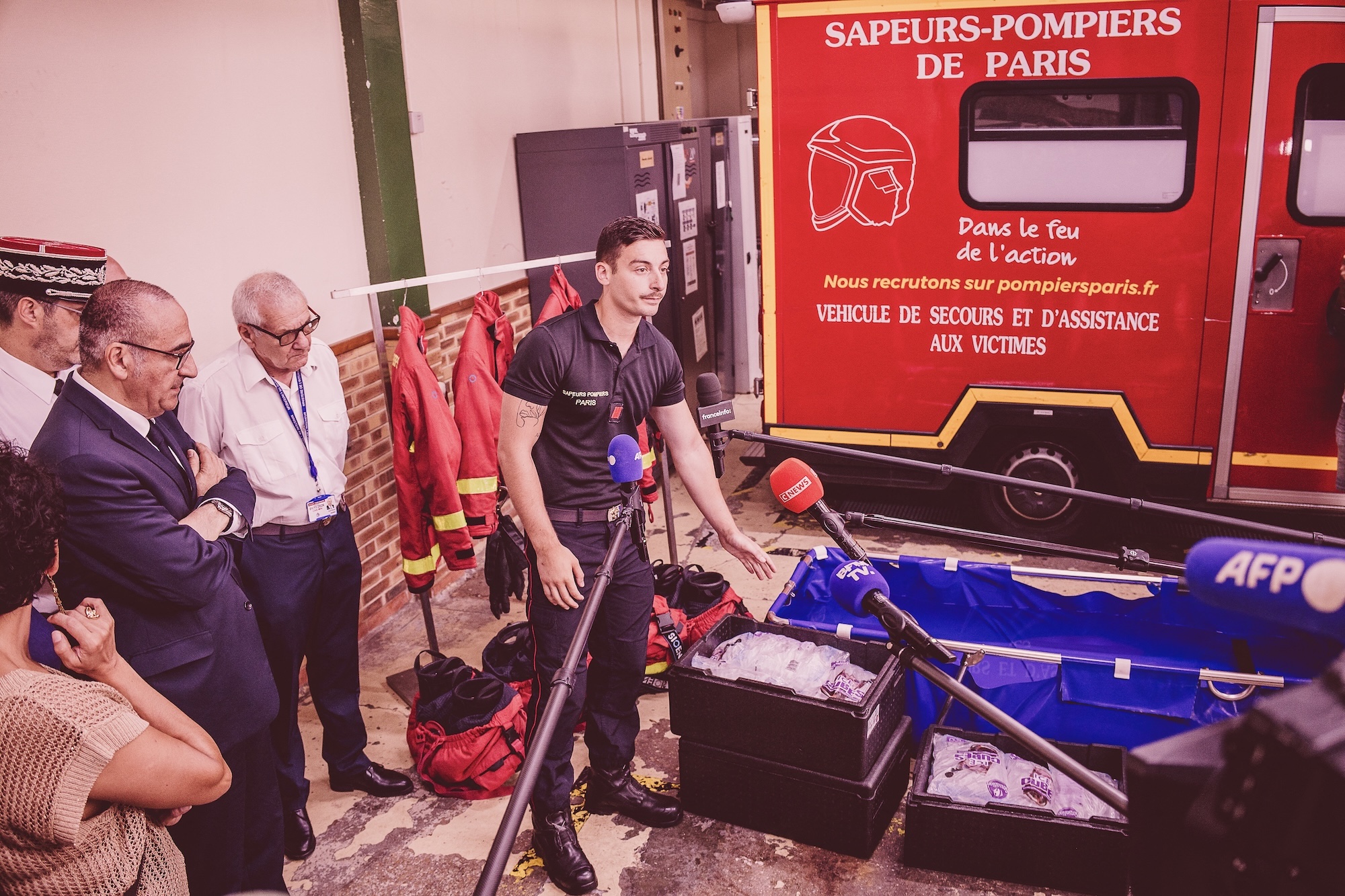
The physiological stress is not limited to the skin or the brain; prolonged exposure to extreme heat places immense, lethal pressure on the cardiovascular, respiratory, and renal systems. The assumption that 1.5 degrees of warming would be a "safe" limit is being discarded in real-time. As Ebi points out, "Europe does not think 1.4 degrees is relatively safe. For most of the U.S., it does not feel like 1.4 is relatively safe." The lived experience of the population is catching up to the data, confirming that the current warming level is already sufficient to cause widespread disruption to public health and infrastructure.
Looking Toward 2027: The Road Ahead
As the world looks toward 2027, the scientific consensus is that it is highly likely to become the hottest year on record. The U.N. report’s projections for an "overshoot" of the 1.5-degree goal imply a future where "no good outcomes" exist without drastic mitigation. The best-case scenario currently identified by researchers involves a peak at 1.8 degrees Celsius, followed by a slow, long-term decline in temperatures.
While such a reduction could mitigate the severity of future heat waves, it may be insufficient to reverse the damage already done to fragile ecosystems. The loss of coral reefs, the permanent thawing of permafrost, and the irreversible melting of land-based glaciers are likely to persist even if the world manages to eventually cool the atmosphere.
To survive the coming decades, experts are calling for a move toward "stress testing" infrastructure. This involves simulating extreme, worst-case scenarios—similar to the 2021 Pacific Northwest "heat dome" that buckled roads and melted power lines—to identify weak points in society. When Portland, Oregon, experienced 116-degree temperatures, the city’s physical fabric essentially disintegrated in places where it was not designed to handle such thermal expansion.
The lesson of 2026 is that climate change is no longer a distant, abstract threat relegated to academic journals. It is a present-tense reality that challenges the resilience of modern civilization. As Callahan concludes, "There are a million different ways in which we can imagine making our society resilient to this kind of threat, and we just aren’t there yet." The gap between current efforts and the required level of systemic change remains the most significant hurdle for humanity in the 21st century. As the planet warms, the window of opportunity to bridge that gap is closing, turning the coming years into a critical test of global political will and engineering capacity.