The contemporary music industry is facing an unprecedented wave of tour-level fallout following a high-stakes controversy involving hip-hop artist Macklemore, British pop star Ed Sheeran, and a coalition of venue owners and pressure groups. What began as a localized dispute over political speech during a major stadium concert has rapidly snowballed into a mass artist boycott, fundamentally crippling Ed Sheeran’s ongoing Loop Tour. In a matter of days, multiple high-profile supporting acts—including Grammy Award-winning singer-songwriter Finneas, Danish pop outfit Lukas Graham, Irish artist Aaron Rowe, and traditional Irish folk band Beoga—announced their withdrawal from the tour.
The cascading series of cancellations highlights the increasingly precarious intersection of live entertainment, corporate venue management, and geopolitical expression. As artists draw a hard line in defense of free speech and Palestinian solidarity, tour promoters, venue executives, and major stakeholders find themselves navigating an increasingly polarized public square.
The Genesis of the Boycott: The MetLife Stadium Catalyst
The controversy traces its roots back to performances by Seattle rapper Macklemore at MetLife Stadium in East Rutherford, New Jersey, during Ed Sheeran’s ongoing Loop Tour. Macklemore, known for his politically charged lyricism and active social commentary, utilized his platform during the New Jersey shows to voice staunch support for Palestinians and heavily criticize Israel’s military campaign in Gaza.
During his sets, Macklemore explicitly shouted "Free Palestine," displayed vivid imagery and documentation of the destruction in Gaza and the occupied West Bank, and performed his recent viral protest song, “Hind’s Hall.” The track, named after Hind Rajab—a six-year-old Palestinian girl killed in Gaza—explicitly lambasts institutional complicity and honors the student-led pro-Palestine demonstrations that took place on university campuses such as Columbia University.
While audience reception inside the stadium was reportedly mixed to largely supportive—with Beoga noting that "most of the audience in MetLife Stadium" supported the message—the external reaction from pro-Israel advocacy groups and prominent corporate figures was immediate and severe.
According to statements released by Macklemore, the backlash quickly translated into behind-the-scenes economic coercion. The rapper claimed that New England Patriots owner Robert Kraft spearheaded an organized push to force Sheeran to drop him from the tour entirely.
"Ed told me that Kraft said I would not be allowed to perform in his stadium," Macklemore stated publicly. "Ed also told me that Kraft had rallied some of the other stadium owners and collectively they gave him an ultimatum: if Macklemore stays on the tour, you will not be allowed to play in our venues."
Kraft later confirmed his refusal to host Macklemore at Gillette Stadium, citing the rapper’s "recent actions, material shared from the stage during Ed Sheeran’s shows in New Jersey, and a broader history of antisemitic rhetoric and imagery that we believe has been deeply offensive and hurtful to the Jewish community." However, Kraft’s office did not directly address allegations regarding coordination or ultimatums directed at other stadium properties.
The Prompt Removal of Macklemore and Ed Sheeran’s Response
Faced with the prospect of being locked out of major American sports and entertainment venues, the tour’s promoter, Messina Touring Group, made the executive decision on Monday to remove Macklemore from the remainder of the Loop Tour bill.
Ed Sheeran himself addressed the public shortly after the decision was finalized, emphasizing that the removal was not his personal choice, but a logistical necessity dictated by promoters and venue operators.
"I have spent this week trying to build bridges, to find a solution and unfortunately, was unable to do so," Sheeran wrote in a public statement. "I know who I am, both as a person and as an artist, and those who know my heart know my values too."
Despite Sheeran’s efforts to distance himself from the punitive measures taken against Macklemore, the decision to drop the rapper acted as a catalyst for a massive counter-backlash from the tour’s remaining support acts. Rather than insulating the tour from controversy, the removal of Macklemore triggered an exodus of supporting talent who viewed the venue owners’ actions as an unacceptable suppression of free expression.
The Artist Walkout: Chronology of Cancellations
The domino effect began immediately following Macklemore’s dismissal, with supporting artists releasing carefully coordinated statements via social media condemning the actions of venue stakeholders and expressing solidarity with the Palestinian population.
Finneas Steps Down from South American Leg
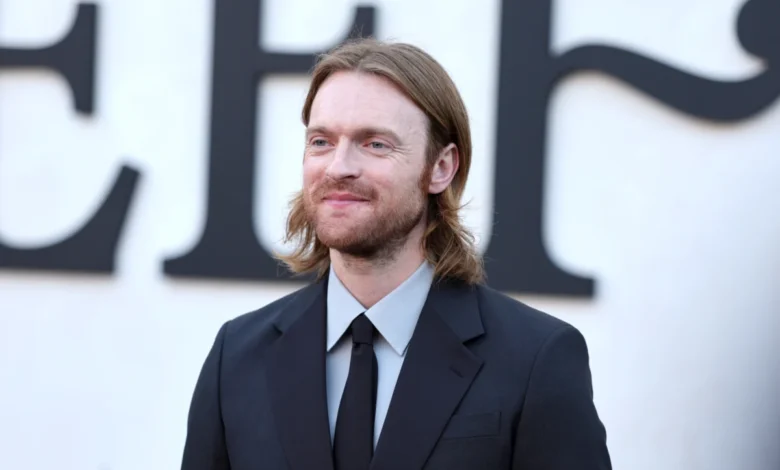
Finneas, the acclaimed singer-songwriter and producer globally recognized for his extensive collaborative work with his sister, pop superstar Billie Eilish, was slated to open for Sheeran on the upcoming South American leg of the Loop Tour, scheduled to begin in November.
Following the news of Macklemore’s removal, Finneas announced his immediate withdrawal via Instagram.
"Artists must not be silenced when they speak up for the oppressed," Finneas wrote. "I have decided to withdraw from my upcoming tour dates with Ed Sheeran. I stand with Palestine and its people."
Lukas Graham Withdraws from U.S. Dates
Danish pop artist Lukas Graham, who served as an opener for the U.S. leg of the tour, followed suit with an emotional and reflective statement addressing the systemic inequalities inherent in global discourse and the music business.
"It’s hard to watch families in other parts of the world burying the people they love. We should be able to speak about war, about civilians being killed, about children who deserve to grow up. Wherever they live. Whatever flag flies over them," Graham wrote on Instagram.
Critiquing the financial power dynamics driving the controversy, Graham added: "Money doesn’t give you the right to own the conversation. Nobody’s bank balance should decide who gets to speak or which suffering we’re allowed to acknowledge… I love Ed, and I’m grateful for everything we’ve shared. That hasn’t changed. But I can’t put these words out into the world and carry on with this tour as things stand."
Aaron Rowe Cites Irish History and Anti-Colonialism
Irish singer-songwriter Aaron Rowe also pulled out of the U.S. leg, framing his decision through the lens of historical parallels between Irish history and the Palestinian experience.
"I cannot stand by and allow billionaires to use their position of power to silence the rightful voices of those who speak up against Israeli genocide and who highlight the savage," Rowe wrote. Acknowledging that he did not take the decision lightly, he thanked Sheeran for the opportunity before drawing direct historical comparisons.
"As Irish people we know all too well about genocide, forced famine and violent occupation… I need to be true to myself and my ancestors who resisted colonization, and fought for a freedom that I enjoy today in Ireland."
(International humanitarian organizations and a United Nations commission have characterized Israel’s military actions in Gaza as amounting to genocide, a designation strongly denied by the Israeli government and international allies, including the United States.)
Beoga Denounces "Zionist Lobbies" and Corporate Censorship
Traditional Irish folk band Beoga, who traditionally join Sheeran on stage for a dedicated segment during his live sets, added their voices to the chorus of departing artists with an uncompromising critique of venue pressures.
In a joint statement, Beoga stated they were leaving the tour "following the silencing of Macklemore by zionist lobbies."
The band elaborated on their artistic and moral positions, noting: "We believe in dialogue as a means of progressing the plight of the Palestinian people. As musicians, playing to those crowds every night is the stuff of dreams but to play in venues that silence anyone advocating for a Free Palestine is simply not an option for us."
Beoga noted that they were physically present for Macklemore’s performance at MetLife Stadium and fully endorsed his message, asserting that the vast majority of the stadium’s attendees shared that sentiment. They further argued that the controversy served as a political diversion from the humanitarian crisis unfolding on the ground in Gaza, pointing to mounting civilian casualties.
Broader Industry Implications and Precedents
The collapse of the support bill for Ed Sheeran’s Loop Tour marks a watershed moment in contemporary live music economics and socio-political engagement. For decades, major touring acts have attempted to maintain political neutrality to avoid alienating diverse fanbases or breaching contracts with corporate venue management groups. However, the intensity of the conflict in Gaza has increasingly made strict neutrality untenable for many artists, particularly younger generations and indie-leaning acts who view political apathy as moral complicity.
The incident underscores a fundamental structural tension within the live entertainment ecosystem. Stadiums in North America and globally are predominantly owned or controlled by major corporate conglomerates, professional sports franchises, and high-net-worth investors. When the political speech of an artist clashes with the personal values, political donations, or corporate interests of these venue owners, contractual disputes can rapidly escalate into ultimatums.
Legal and industry analysts note that while venue owners possess broad discretion regarding property access and booking policies, utilizing collective bargaining power to compel a headliner to fire a supporting act over political speech sets a volatile precedent. It blurs the line between legitimate venue management and viewpoint-based blacklisting, raising complex questions about freedom of expression within privately owned, publicly subsidized entertainment infrastructure.
Moreover, the willingness of multiple supporting acts to walk away from high-paying, high-exposure arena and stadium dates demonstrates a profound shift in artist calculus. For performers like Finneas and Lukas Graham, the reputational and ethical cost of remaining associated with a tour marked by ideological censorship was deemed higher than the substantial financial rewards of performing alongside one of the world’s top-grossing touring artists.
Current Status of the Tour and Future Outlook
As of late this week, representatives for Ed Sheeran have not issued formal responses regarding the individual departures of Finneas, Aaron Rowe, Beoga, or Lukas Graham. The promoter, Messina Touring Group, faces the daunting logistical challenge of restructuring upcoming legs of the Loop Tour with severely depleted support bills or finding replacement acts willing to enter an environment fraught with ideological friction.
With international dates approaching and public scrutiny intensifying, the controversy surrounding the Loop Tour serves as a stark reminder that the modern concert stage is no longer insulated from the geopolitical conflicts shaping the global landscape. As artists, promoters, and venue executives grapple with these irreconcilable differences, the fallout from the Sheeran-Macklemore dispute is likely to reverberate across the live touring industry for months to come.